Whatsapp
  X
X  Mail
Mail  Copy link
The four-in-one natural fertilizer
Brand details Polysulphate<sup>®</sup>Growing Broccoli crop nutrition advice
Everything you need to know about Broccoli fertilization, best practice, field trials, and more.
Introduction & Market / Nutrition
Broccoli is a cool‑season brassica originating from the Mediterranean. Commercial classes include Calabrese (single crown), sprouting broccoli (side shoots), and Romanesco (spiral curd). Fresh and frozen markets dominate; quality is judged by bead size uniformity, compact curd, firmness and color.
Global production of both Cauliflowers & Broccoli together is ≈ 26.5 Mt grown on more than 1.4Mha (2023). Production of them is strongly determined by regional demand and cousine. Main producing countries are China and India followed by the US with Spain and Italy leading within the EU.
Nutritional value: high levels of vitamin C & K and provitamin A, fibres, antioxidants like glucosinolates (sulfur‑containing) and anthocyanins support the crop’s market value.

Site, Climate, Planting Density & Water
- Soils: well‑drained loams/sandy loams; avoid waterlogging (root disease, hollow stem)
- avoid other Brassicaceae in the crop rotation (3-4 years) to prevent Clubroot (Plasmodiophora brassicae). The more sandy the soil, the less problematic pH: 6.0–7.0 preferred; maintain Ca/Mg base saturation—lime to target pH; Calciumsulfate supplies Ca without raising pH.
- Salinity & sodicity: quality and yield decline beyond ECe ≈ 2.8 dS m⁻¹; sodicity (high SAR/Na) reduces infiltration—use soil amendments (Calciumsulfate/lime and increase drainage (5-10 cm deep before planting).
- Temperature: 15–20 °C ideal; heat spikes during head initiation raise risk of buttoning/loose heads. Drought and malnutrition in early stages increase early-flowering.
- Density: fresh crowns typically 30–55 cm in‑row × 50–100 cm between rows (~22,000–44,000 plants/ha). Higher density → smaller heads & earlier maturity.
- Irrigation: ET‑based scheduling (ETo×Kc) with soil‑moisture checks. Coastal‑Mediterranean: ~230–360 mm post‑establishment irrigation; seasonal ET often 400–550 mm (local weather dependent).
- Indicative Kc: early 0.4–0.5 → mid 1.05–1.15 → late 0.95–1.0.
Nutrient Roles & Field Diagnostics
Tables below list primary roles, field deficiency symptoms, potential excess/toxicity notes, and common checks.
Macronutrients
| Nutrient | Primary role | Deficiency (field) | Excess / interactions | Checks |
|---|---|---|---|---|
| N | Proteins, leaf area, growth rate | Uniform chlorosis, stunting; purple tints in cool weather | Excess → hollow stem, delayed maturity, softer curds | Soil nitrate/petiole sap; canopy color |
| P | Roots, energy transfer | Purpling, stunting (cool, low‑P soils) | Rare; high P may antagonize Zn | Soil test P; starter bands on Low soils |
| K | Osmotic balance, firmness, quality | Marginal scorch/chlorosis; lodging risk low | Rare in mineral soils; high K may antagonize Mg | Soil test K; tissue K during curd swell |
| S | Amino acids & glucosinolates (high demand) | Uniform yellowing resembling N deficiency leaves are stiff and curl inwards | Rare; leaches on sands | Soil S on sands; tissue S (leaf/blade) |
| Ca | Cell walls, curd integrity tolerance to biotic and abiotic stress storage quality and shelf life | Tip‑burn; brown bead; internal browning, Necrotic lesions on leaf tips and margins | — (leaf scorch if foliar excess). High Ca precipitates with P | pH/CEC/Ca supply; tissue Ca in curd leaves |
| Mg | Chlorophyll | Interveinal chlorosis on older leaves necrotic spots between the veins | — (decrease in the passability of the field—the soil becomes smeary) | Soil test Mg; tissue Mg; consider dolomitic lime if pH low |
Micronutrients
| Nutrient | Primary role | Deficiency (field) | Excess / interactions | Checks |
|---|---|---|---|---|
| B | Cell division, flowering/curd | Hollow stem; distorted curds; brown bead brown patches are visible with in the stem | Leaf burn/toxicity at high B | Soil/tissue B; split small doses |
| Mo | Nitrate reduction | Whiptail on acidic soils | — | Soil pH ≥6.0; seed/plug Mo or early foliar |
| Fe | Chlorophyll | Interveinal chlorosis (young leaves) | Toxicity on very acid soils | Soil pH; tissue Fe; chelated Fe if needed |
| Mn | Photosynthesis enzymes | Interveinal chlorosis; necrotic spots | Toxicity at low pH | Soil pH; manganese availability rises <pH 5.8 |
| Zn | Enzymes, auxin | Small leaves, resetting stunted growth with shortened internodes | — | Soil Zn (DTPA); foliar Zn if confirmed low |
| Cu | Enzymes, lignin | Rare in brassicas | Toxicity more likely on peats if over‑applied | Soil organic matter & Cu |
Fertility Planning (soil‑test based)
Base P and K on soil test categories; credit residual soil N and nitrate in irrigation water.
Nitrogen program
- Seasonal total up to 300 kgN /ha (soil residual included).
- Nitrogen per 10 t harvest: 28 kg N
- Typical split: 20–40 kg N/ha at/near transplant; balance in 1–3 side‑dressings from week 2–6 and before curd initiation.
- Typical split in Europe:
- Under fleece : 200 kgN/ha stabilized; 8 weeks after transplant 180kgN/ha
- Normal: 100 kgN/ha stabilized; earliest 4 weeks after transplant rest (not more then 100kgN/ha)
- Use pre‑sidedress soil nitrate or petiole sap to fine‑tune; reduce late N to limit hollow stem/loose curds.
P₂O₅ & K₂O (mineral soils; apply per soil test category)
| Soil category | P₂O₅ (kg/ha) | K₂O (kg/ha) |
|---|---|---|
| General needs per 10 t harvest | 10 | 36 |
| Low | 110–150 | 150–230 |
| Medium | 75–110 | 130–170 |
| Optimum | 40 – 50 | 100-130 |
| High | 0–40 | 0–70 |
Secondary & micronutrient targets (typical)
- Sulfur (S): 30–50 kg S/ha (≈75–125 kg SO₃/ha) on sands/low‑S soils, mainly at planting in sulfate form; top‑up early vegetative if needed.
- Calcium (Ca): ensure supply via liming to pH target; add Ca‑nitrate or Ca‑thiosulfate during curd swell if tissue indicates risk of tip‑burn.
- Magnesium (Mg): 20–40 kg MgO/ha where soil test is Low/Very Low;
- Boron (B): 0,3 – 1 kg B/ha total per crop (broadcast +/or foliar) on low‑B soils; avoid over‑application in arid regions. Maximum 0,2 kg per treatment during season. Occurs in high pH soils, pH >7 or at drought
- Molybdenum (Mo): 50–100 g Mo/ha as seed/plug or early foliar or whiptail risk is high. Occurs in low pH Soils pH<6
Growth‑stage Program
Use soil‑test–derived seasonal totals (Section 4), then split by stage. Adjust with tissue tests and ET/weather. Make sure that numbers chosen from ranges add up to 100% in total.| Stage | Timing | N % | P₂O₅ % | K₂O % | SO₃ % | CaO/MgO note |
|---|---|---|---|---|---|---|
| Pre-planting | Ensure CaO via lime; MgO if Low | |||||
| Establishment | 0–2 wk | 20 | 50 | 35 | 70 | Ensure nutrient availabilty |
| Vegetative (rosette) | 2–6 wk | 40 | 30 | 25 | 25 | Top‑up Mg on sands if Low |
| Curd initiation | Heat‑sensitive | 25 | 10 | 20 | 5 | Add Ca if tip‑burn risk |
| Curd development | Swell | 15 | 10 | 20 | 0 | Maintain Ca; avoid late heavy N |
| Pre‑harvest | Last 1–2 wk | 0 | 0 | 0 | 0 | — |
| Harvest | When 1-2 leaves fall onto the flower |
Irrigation, Salinity & Sodicity Management
- Schedule irrigations using ETc and soil‑moisture probes; keep uniform moisture to reduce hollow stem and brown bead.
- Use leaching fractions only when soil salinity trends upward; monitor ECe and ECw.
- Sodicity (high SAR/Na) reduces infiltration; apply gypsum, improve drainage, and avoid sodic water sources when possible.
| Challenge Type | Issue | Impact | Management |
|---|---|---|---|
| Biotic | Downy mildew (Hyaloperonospora) | 20-40% yield loss | Resistant varieties; fungicides |
| Clubroot (Plasmodiophora) | Loss of field fertility for Brassicaceae for 10-12 years | Lime to pH >7.0; long rotations | |
| Aphids, caterpillars | Quality defects; virus vectors | IPM; insecticides | |
| Abiotic | Heat during curd initiation | Buttoning, loose heads | Variety selection; timing |
| Hollow stem | Unmarketable heads | Moderate N; uniform water; spacing | |
| Tip burn / brown bead | Ca deficiency; quality loss | Ca nutrition; steady moisture | |
| Coloration of harvest good | Unmarketable yield | Cover, increase vegetative growth |
Climate Risks & Adaptation
- Heat during head initiation increases buttoning/uneven heads; select heat‑tolerant cultivars and adjust sowing dates; deploy shade/evaporative cooling where feasible.
- Greater rainfall variability increases N/S leaching on sands—use split applications and fertigation.
- Reinforce post‑harvest cold chain to limit yellowing under warmer conditions.
Quality & Post‑harvest (market cues)
- Harvest at compact curd with fine, uniform beads; avoid over‑maturity. Avoid yellowing (cauliflower) or darkening (broccoli).
- Rapid hydrocooling/forced‑air cooling to core <5 °C; maintain cold chain.
- Low transpiration rates by humidified atmosphere or watering supports firmness and shelf‑life.
References
- UC ANR (2011; 2nd ed. updates 2024). Broccoli Production in California. University of California Agriculture & Natural Resources (Pub. 7211).
- OMAFRA (2023–2024). Vegetable Crops – Fertility (Brassicas). Ontario Ministry of Agriculture, Food and Rural Affairs.
- AHDB (2021). RB209 Nutrient Management Guide.
- FAOSTAT (2023). Cauliflowers & Broccoli – Production quantities by country.
- UCCE/UCANR (2014–2024). ET‑based irrigation scheduling and CropManage resources for coastal vegetables.
- Maas & Hoffman / FAO Irrigation & Drainage Paper 29 Rev.
- Vegetable production 2024 according to directive for integrated crop production. AELF, Bayern, Germany.
Other interesting trials
Q&A
Here are some frequently asked questions we received from farmers regarding growing Broccoli
Both cause yellowing; N begins on older leaves and responds quickly to N; S is more uniform and persists until sulfate is applied.
Avoid late heavy N, maintain uniform irrigation, and moderate spacing to prevent excessive rapid growth.
Low rates at planting plus a foliar before curd initiation on low‑B soils; verify with tissue tests.
Monitor ECw/ECe and SAR; leach only as needed; gypsum for sodicity; protect infiltration.
Advance irrigations, provide shade where feasible, avoid late heavy N, and harvest promptly post‑heat.
Explore Broccoli Solutions by Brand
Find the right solutions to improve crop quality and yield

Giving your crops a more sustainable, efficient nitrogen supply
Brand details Nova Complex<sup>®</sup> Optima
Water soluble NPK fertilizers for fertigation enriched with seaweed
Brand details Nova NPKelp
Master your crop nutrition in any condition
Brand details Agromaster<sup>®</sup>The four-in-one natural fertilizer
Brand details Polysulphate<sup>®</sup>Giving your crops a more sustainable, efficient nitrogen supply
Brand details Nova Complex<sup>®</sup> OptimaWater soluble NPK fertilizers for fertigation enriched with seaweed
Brand details Nova NPKelpMaster your crop nutrition in any condition
Brand details Agromaster<sup>®</sup>Discover Our Solutions for Growing Broccoli
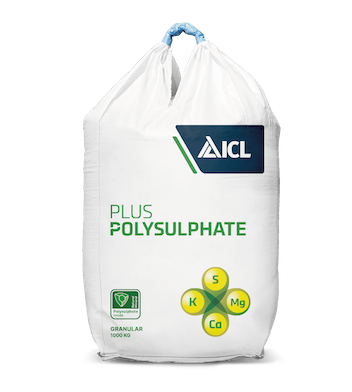
Polysulphate®
Nova Complex® Optima

Nova NPKelp

Agromaster®

Agromaster®
Polysulphate®

Digital Tools
Calculators to improve nutrient management and boost productivity