


 Whatsapp
  X
X  Mail
Mail  Copy link
 Stop Trying to Change Your Whole Field’s pH
Why precision rhizosphere management is more effective than whole-field correction

On this page:
Trying to adjust the pH of an entire field is often expensive, slow, and inefficient. By targeting pH in the rhizosphere, the root zone where nutrient uptake actually occurs, growers can unlock nutrients, improve efficiency, and reduce input costs.
Across global agriculture, one of the most common, and costly, mistakes in soil management is the attempt to “fix” the pH of an entire field.
But as ICL Growing Solutions specialist Christi Falen explains:
“We’re not after trying to change the whole soil… what we can do is influence the soil pH in the rhizosphere.”
This shift in thinking, from field-wide correction to root-zone precision, can dramatically improve nutrient efficiency while reducing cost and environmental impact.
Why Is Trying to Change the pH of an Entire Field Often Inefficient?
Trying to change the pH of an entire field can be a challenge as soil is naturally buffered. Soil with a high buffering capacity, such as clay soils, or those with a high level of organic matter, constantly move back toward its original chemical state.
Large-scale pH correction, whether liming acidic soils or attempting to acidify alkaline soils, requires high material volumes, significant cost, and long timelines. Even then, results can be uneven across soil layers. In many cases, growers are investing in changing soil zones that plant roots will never actively explore.
Whole-field correction may be justified in some scenarios. But in many production systems, it is not the most efficient path to improving crop performance.
What Is the Rhizosphere, and Why Does It Matter More Than the Whole Field?
The rhizosphere is the narrow zone of soil, typically just 1 to 5 millimetres from the root surface, where nutrient uptake actually occurs.
That means the chemistry influencing crop performance is happening in this microscopic band of soil surrounding each root, not across the entire field profile. Attempting to change the pH of 20 or 30 centimetres of topsoil when roots are actively interacting with only a few millimetres at a time can be economically inefficient.
This zone is chemically and biologically dynamic. Root exudates, microbial activity, moisture, and fertilizer placement all interact here. Because nutrient absorption occurs within this confined space, influencing pH locally in the rhizosphere can have a disproportionate impact on plant performance.
Instead of attempting to alter the entire soil profile, growers can focus on optimizing conditions exactly where roots are active, where every millimetre matters.
Using products such as ICL Nova PeKacid or Agrolution pHLow in fertigation systems are shown to enhance the nutrient availability, not only of what is being applied, but also enhance the nutrient availability of other nutrients in the soils.
Can Small pH Adjustments in the Root Zone Really Improve Nutrient Availability?
Yes. Even small, targeted shifts in rhizosphere pH can significantly increase nutrient solubility.
Soil chemistry is not linear. For example, a modest reduction in pH in alkaline soils can unlock phosphorus that is otherwise tied up with calcium. It can also improve the availability of micronutrients such as iron, zinc, and manganese.
Importantly, this approach does not require changing soil pH from 8.0 to 6.5 across an entire field. It focuses on creating a more favorable micro-environment at the point of nutrient uptake.
The objective is not to change the soil everywhere, it is to improve plant access where it counts.
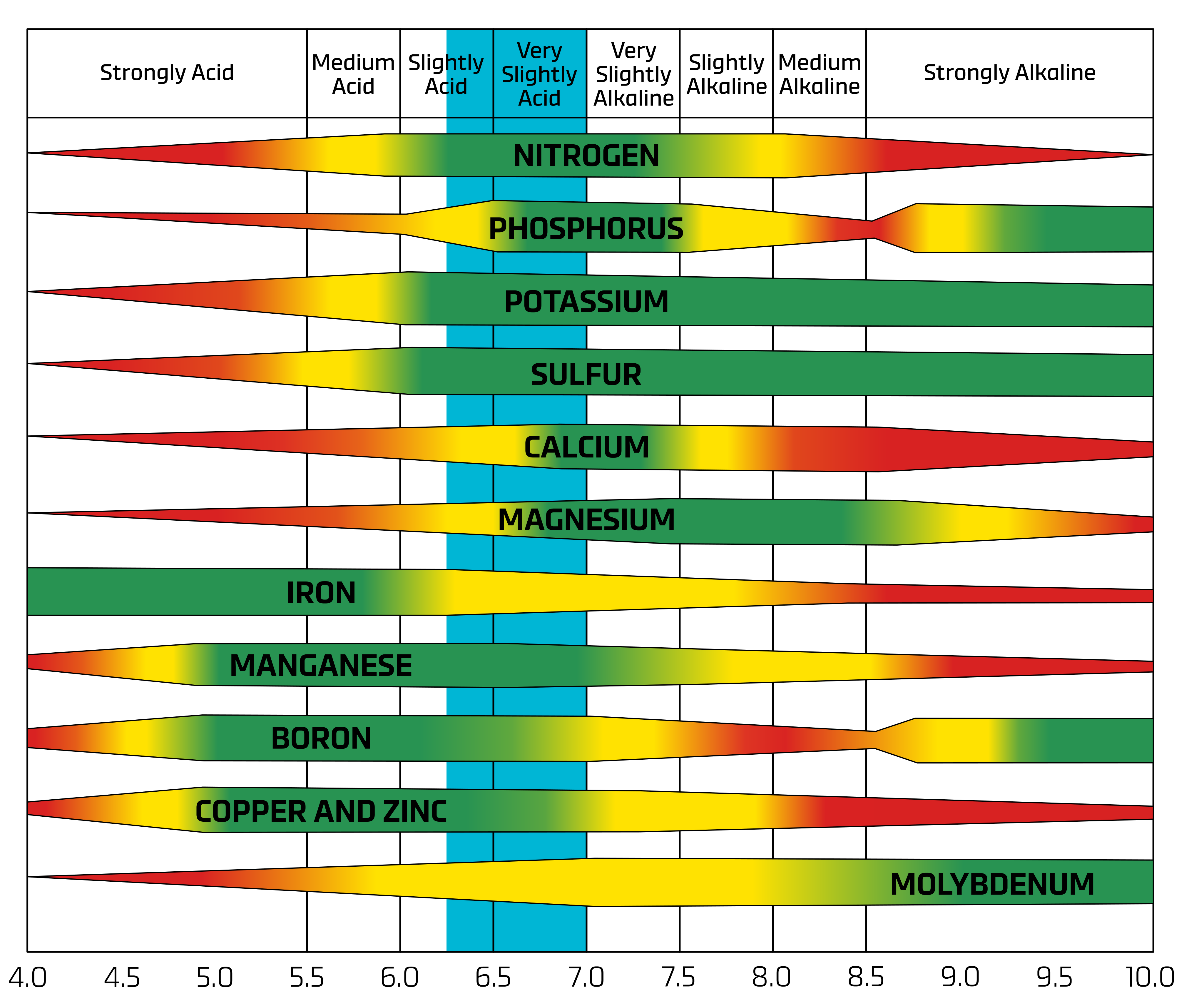
How Soil pH affects availability of plant nutrients
How Does Rhizosphere pH Management Improve Nutrient Use Efficiency?
When pH is optimized in the root zone:
- Applied nutrients remain more plant-available
- Existing soil reserves can be mobilized
- Less total phosphorus may be required
- Nutrient losses can be reduced
This leads directly to improved nutrient use efficiency (NUE). In systems using fertigation, banded starters, or precision placement, influencing pH at the root interface can produce measurable yield and quality gains without increasing total fertilizer inputs.
Why Is This Approach Especially Relevant Today?
Modern agriculture faces increasing pressure to produce more while reducing environmental impact.
In addition, reducing the quantity of inputs can help to reduce overall costs, while regulatory scrutiny around nutrient losses is growing. Sustainability metrics are becoming part of market access and supply chain requirements.
Targeting the rhizosphere aligns with all these priorities:
- Lower total fertilizer rates
- Reduced nutrient accumulation in soil
- Improved return on investment
- Greater environmental stewardship
Rather than fighting the soil’s natural buffering capacity across an entire field, growers can work strategically within the zone that drives crop performance.
What Is the Key Takeaway?
You do not need to change your whole field to change your results.
By focusing on the rhizosphere, the small but powerful zone where roots interact with soil, growers can unlock nutrients, improve efficiency, and support stronger crop development in a more cost-effective and sustainable way.
In today’s precision-driven agricultural systems, influencing the root zone is not just an alternative strategy. It is a smarter one.


Related crops


