Whatsapp
  X
X  Mail
Mail  Copy link
 7 Reasons Polysulphate® Is the Perfect Sulfur Fertilizer for Fall
When it comes to fall sulfur application finding the best product is an important choice. Learn why Polysulphate® is a smart, sustainable choice for fall fertilizer- offering multi-nutrient efficiency, reduced leaching, and proven yield gains.

On this page:
Polysulphate® is a natural, multi-nutrient fertilizer containing sulfur, potassium, magnesium, and calcium in a single granule, designed for fall application. Its gradual sulfate release improves nutrient-use efficiency, reduces leaching risk, supports soil health, and delivers proven yield gains across crops- making it a strategic choice for building a strong fertility foundation before winter.
Choosing the right fall-applied sulfur.
As harvest wraps up and the combines cool down, growers across the U.S. are already thinking ahead. For us, fall isn’t just the end of one season- it’s the beginning of the next, making it an ideal time to build a strong fertility foundation, especially when it comes to sulfur.
For fall fertilizer planning, Polysulphate® (also known as polyhalite) is proving to be a game-changer. Why? Because it’s not just another sulfur source- it’s a 4-in-1 (S, K, Mg, Ca) natural fertilizer that delivers balanced nutrition, logistical efficiency, and agronomic advantages that outperform traditional options like ammonium sulfate and elemental sulfur.
Let’s dig into why Polysulphate is becoming a go-to choice for fall applications- and how it fits into a smarter, more sustainable nutrient strategy.
1. Multi-Nutrient Power in a Single Pass
What Makes Polysulphate Different?
Polysulphate is a naturally mined 4-in-1 mineral fertilizer that contains potassium, sulfur, magnesium and calcium (0-0-14 + 48% SO₃, 17% CaO, 6% MgO). The multi-nutrient benefits mean simplified logistics, fewer blends, nutrient synergy and more efficient field passes. While traditional products like AMS (ammonium sulfate) only supply nitrogen and sulfur, Polysulphate (low in salt and chloride) takes it further- supporting everything from early root development to improved soil structure and nutrient uptake.
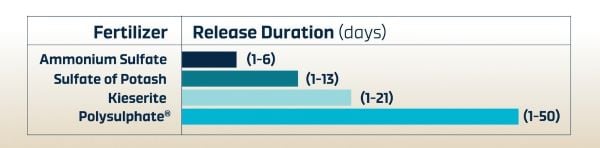
Compared to fertilizers like AMS, which releases sulfur rapidly and has a high salt index, or Elemental Sulfur, which requires microbial activity and takes months to oxidize, Polysulphate offers a gradual sulfur release over 50 days. This aligns better with crop uptake and reduces leaching, making it a more efficient, safe and balanced fall fertilizer.
2. Builds a Stronger Spring with Fall Application
Why Apply Polysulphate in the Fall?
Fall is not just a convenient time to apply nutrients- it’s a strategic opportunity. Post-harvest fields are typically drier and easier to work, allowing for efficient nutrient incorporation and tillage. Nutrients applied in the fall integrate into the soil and can remain available for perennial crops as they resume growth, as well as for spring-planted crops in the following growing season. This timing also helps distribute workload across seasons, reducing springtime pressure. Additionally, fall applications support root development and soil structure heading into winter. However, timing is key, as unfavorable weather can delay application or affect nutrient retention.
Fall fertility applications come with risk: heavy rains or melting snow can send nutrients down the drain. But Polysulphate’s natural, plant-available sulfate form moves slowly in the soil profile. That means less leaching, improved nutrient use efficiency, and better return on your fertility investment and particularly well-suited for fall use.
3. Improves NUE While Protecting Soil and Sensitive Crops
How Does Polysulphate Compare to Other Fertilizers?
When planning fall fertility programs, it’s important to evaluate not just sulfur sources, but the full nutrient profile and behavior of each fertilizer option. Polysulphate stands out for its unique combination of sulfur, potassium, magnesium, and calcium- all delivered in a gradual, soil-friendly release pattern. This multi-nutrient synergy is especially valuable in the fall, when building a fertility foundation that supports nitrogen-use efficiency.
While sulfur is essential for improving nitrogen uptake, it doesn’t work in isolation. Without adequate potassium and calcium- both of which are included in Polysulphate- plants may struggle to absorb and utilize nutrients effectively. Applied in the fall, Polysulphate’s release aligns with soil integration and early root development, minimizing leaching risks and priming the soil for spring growth.
Here’s how Polysulphate compares to other common fertilizer sources:
| Fertilizer | Nutrients Supplied | Release Pattern | Leaching Risk | Nutrient Benefits |
|---|---|---|---|---|
| Polysulphate | S, K, Mg, Ca | Gradual | Low | Multi-nutrient, soil-friendly, low salt, low chloride, improves NUE |
| Ammonium Sulfate | N, S | Rapid | High | Quick N and S, no K, Mg, or Ca |
| Elemental Sulfur | S only | Very slow months | Low | Long breakdown time, no K, Mg, or Ca |
| SOP (K₂SO₄) | K, S | Moderate | Low–Moderate | Chloride-free K source with sulfur, no Mg or Ca |
| MOP (KCl) | K only | Rapid | Moderate–High | Cost-effective K source, high chloride, salt-sensitive crops beware |
4. Delivers Proven Yield Gains Across Crops
Is Polysulphate Effective for Fall Applications?
Field trials have demonstrated the effectiveness of Polysulphate in various crops. These results highlight Polysulphate’s ability to enhance soil quality, nutrient use efficiency, and economic return.
Corn (Waseca, Minnesota, USA):
- University of Minnesota: Polysulphate was applied in fall 2017 ahead of the 2018 corn-growing season, improving sulfur uptake and increasing grain yield.
- Grain yield increased by 5.4%.
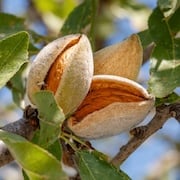
Almonds (Parlier, CA):
- Fall-applied Polysulphate increased kernel yield by 4.8% when applied post-harvest with MAP and SOP
- Improved soil quality, nutrient use efficiency, and economic return
5. Supports Sustainable and Regenerative Farming Goals
What Are the Environmental and Agronomic Benefits?
Polysulphate is OMRI-listed for organic use and is safe for sensitive crops. It has a low salt index, low chloride content, and is pH-neutral. Additionally, it has a lower environmental footprint than synthetic fertilizers, supporting carbon-smart farming practices. It aligns with sustainability goals, improves long-term soil fertility, and helps growers balance productivity with stewardship.
Polysulphate is:
- OMRI-listed for organic use
- Naturally low in salt index and chloride, and pH-neutral
- Gradual-release, helping reduce nutrient leaching and runoff
- Carbon-smart, with a lower footprint than other fertilizers
- Safe for sensitive crops
6. Simplifies Fall Fertility Logistics
How Does Polysulphate Simplify Fall Fertility?
Fall application spreads out spring workload, reduces compaction, and takes advantage of drier soils. Plus, with superior granule uniformity and spreading characteristics, Polysulphate lets you cover more hectares per load and blend easily with other fertilizers.
Polysulphate simplifies fall fertility planning by combining four essential nutrients in one granule. This reduces the need for multiple products and application passes. Its superior spreading characteristics allow for more hectares per load, and its compatibility with fall blends offers flexibility in timing. By supporting soil structure and root health heading into dormancy, Polysulphate enhances both operational efficiency and agronomic outcomes.
If weather or harvest delays your plans, no problem- Polysulphate is flexible enough to apply in spring too.
7. Flexible Fertility – Application Tips for Success
To maximize the benefits of fall-applied Polysulphate, start by testing your soil to determine nutrient needs. Adjust application rates between 170–390 kg/ha based on crop and soil conditions. If weather delays fall application, Polysulphate can be stored and applied in spring. Collaborating with agronomists can help fine-tune your fertility program for optimal results.
To get the most from fall-applied Polysulphate:
- Test Your Soil: Establish a baseline for nutrient needs
- Adjust Rates: Apply 170–390 kg/ha depending on crop and soil
- Stay Flexible: If weather delays fall application, Polysulphate can be held for spring
- Collaborate: Work with agronomists to fine-tune your fertility program
The Final Take
Polysulphate is more than just a fertilizer- it’s a strategic solution for modern farming. It helps growers improve nutrient efficiency, reduce spring stress, protect the environment, and boost yield potential. I encourage every grower to consider how Polysulphate can fit into their cropping system.
Connect with an expert or explore our product portfolio and research data to learn more about how Polysulphate can work for you.