


 Whatsapp
  X
X  Mail
Mail  Copy link
 Nitrogen Deficiency in Ornamental Plants: Symptoms and Treatment
Nitrogen is one of the key macronutrients for plant growth, being the backbone of amino acids, proteins, and chlorophyll. Learn how to fix the deficiencies of this essential element for continuous, healthy development.
On this page:
Nitrogen (N) deficiency is one of the most common nutritional problems in horticulture. Plants require a steady supply of nitrogen for growth and development, as it forms the basis of amino acids, proteins, chlorophyll, and nucleic acids, i.e. molecules essential for virtually every physiological process. Because nitrogen is highly mobile within the plant, symptoms typically appear first on the oldest leaves.
Which are the Nitrogen Deficiency Symptoms of Ornamental Plants
- Leaf yellowing (chlorosis): the earliest and most characteristic sign. Older, basal leaves turn yellow first, usually starting at the tips and margins and progressing in a V‑shaped pattern toward the midrib. Leaf veins often remain green. Severely affected older leaves may eventually drop.
- Stunted growth: plants show reduced overall vigor, with shorter stems and noticeably smaller leaves, giving a compact, restricted appearance.
- Reduced flowering: nitrogen deficiency can limit flower initiation and development, resulting in fewer or smaller blooms.
- Stem weakening: in more advanced cases, stems become thin, weak, and more prone to damage or breakage.
- General plant yellowing: as the deficiency progresses, the entire plant may take on a pale green or yellowish tone.
- Red or purple discoloration: some species may develop reddish or purplish hues on older leaves. This is common in sensitive plants such as begonia, marigold, and violet celosia.
- Root system changes: deficient plants often develop thinner, elongated roots as they search for available nitrogen.
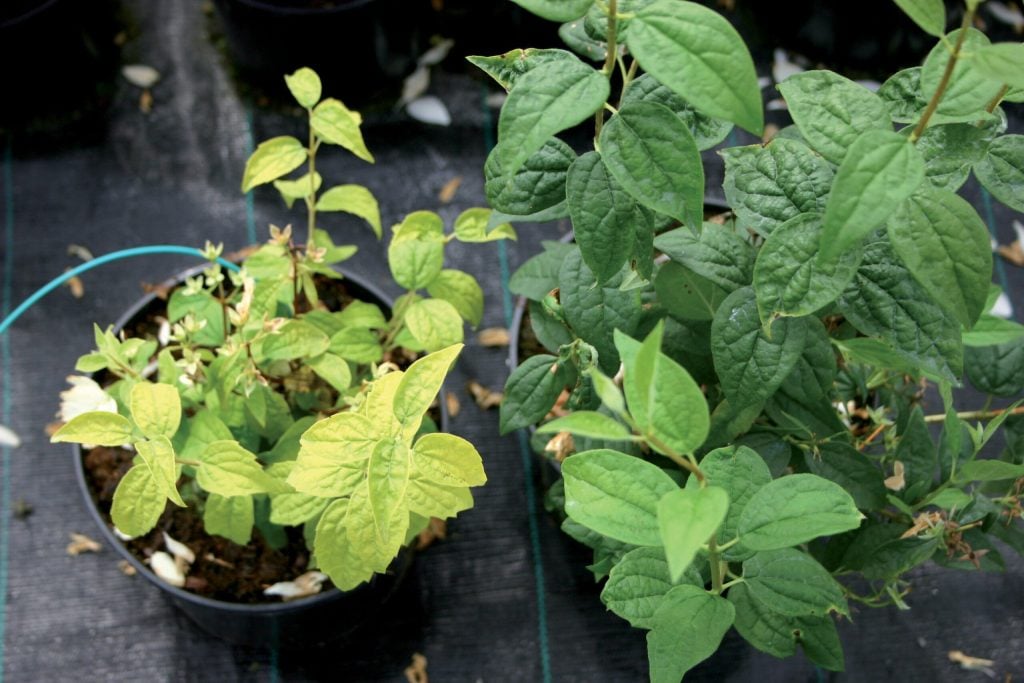
Philadelphus showing symptoms of nitrogen deficiency as yellow leaves and stunted growth.
Nitrogen Deficiency Effects on Ornamental Plants
- Reduced photosynthesis: nitrogen is a core component of chlorophyll, the pigment responsible for capturing light energy. When nitrogen is lacking, chlorophyll production drops, limiting the plant’s ability to photosynthesize and generate energy.
- Lower yields and quality: nitrogen deficiency can significantly reduce the commercial value of ornamental crops. Plants may show smaller overall size, weaker flowering, and aesthetic flaws that make them less marketable.
- Higher susceptibility to stress: plants weakened by nitrogen shortage are more vulnerable to pests and diseases because they lack the resources to maintain strong natural defenses.
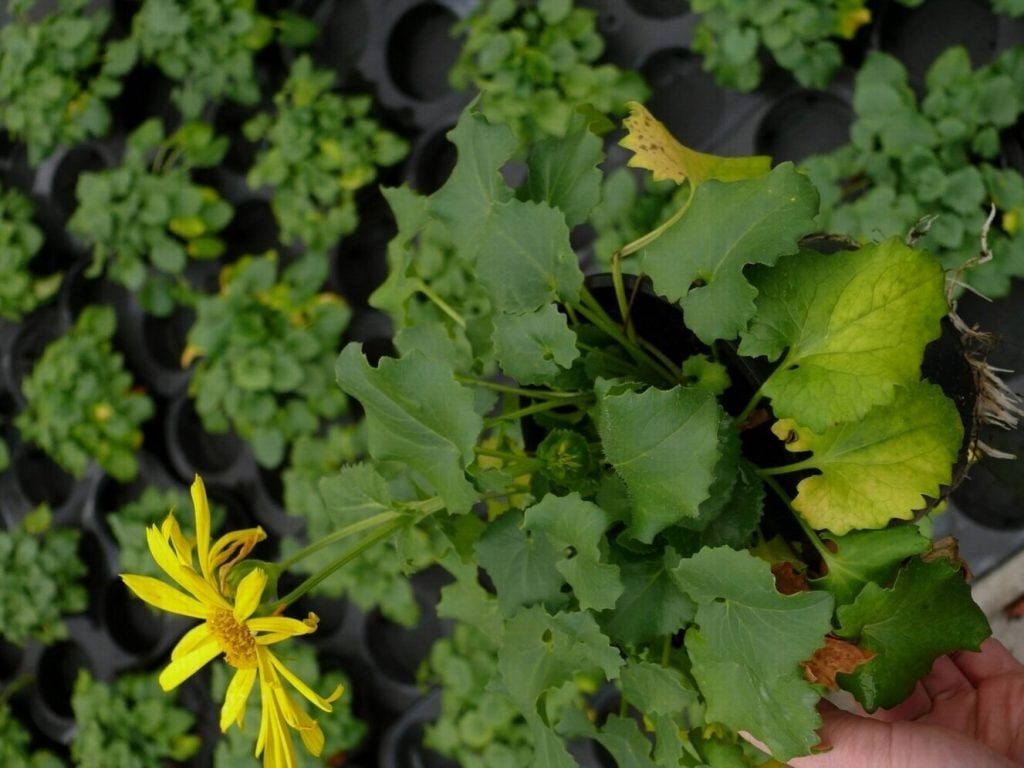
Nitrogen-deficient Doronicum shows yellowing in older leaves.
How to Manage Nitrogen Nutrition to Avoid Deficiencies
- Fertilization: To restore adequate nitrogen levels, supply nitrogen through a balanced fertilization strategy. The choice of product and application method should reflect both the plant’s needs at its specific phenological stage and the characteristics of the irrigation water. Each nitrogen form, nitrate, ammonium, and urea—behaves differently in the substrate, so selecting the most effective form for the crop and conditions is essential.
- Targeted nitrogen applications: when a deficiency is already established and a rapid correction is needed, especially during critical growth phases, a fertilizer with a higher nitrogen content can be applied. In severe cases, foliar feeding with dedicated nitrogen formulations can provide a quick, temporary boost while root nutrition is restored.
- Field-grown ornamental nursery: for open‑field ornamental production, prepare the soil in advance by incorporating organic matter to improve nitrogen retention and stimulate microbial activity. A controlled‑release fertilizer tailored to the crop can ensure a steady nutrient supply over time. Mulching helps conserve soil moisture and reduces nutrient leaching, keeping available nitrogen more accessible to the root zone.
- pH management: keep the substrate or soil pH within the optimal range for nutrient uptake. pH strongly influences the availability of nitrogen and other essential elements, so maintaining the correct pH is a key part of preventing recurring deficiencies.
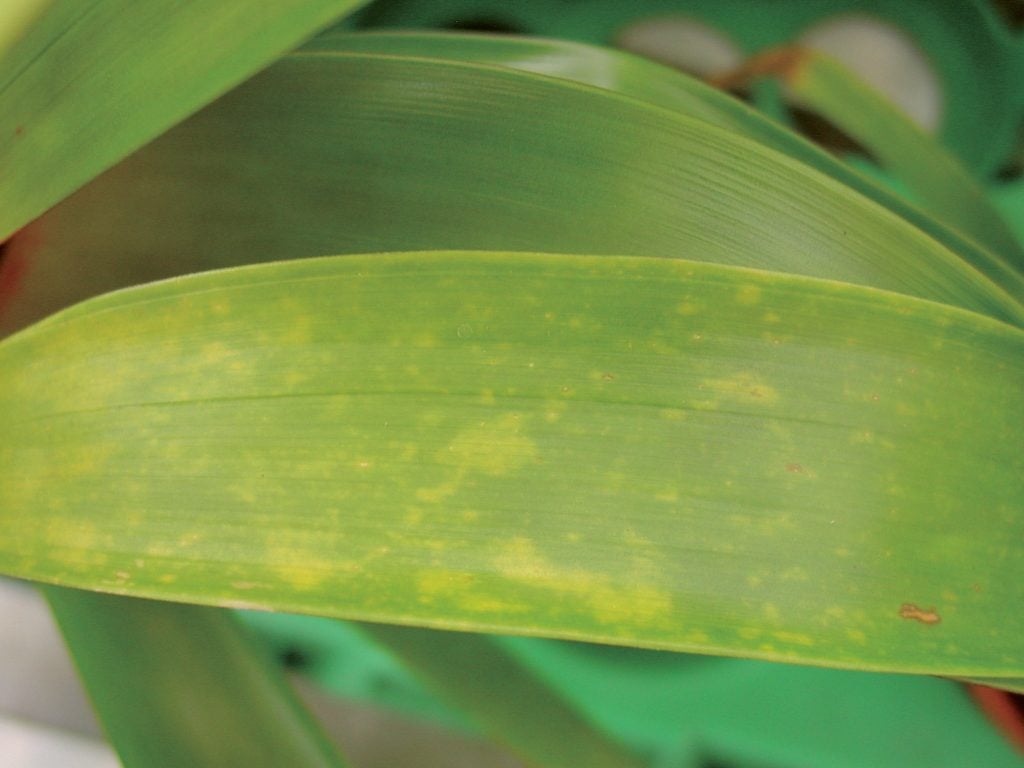
Yellow spots with reduced chlorophyll appearing on nitrogen-deficient Guzmania ‘Ostara’.
Adequate fertilization and good soil management are the most effective ways to prevent or correct nitrogen deficiency. By maintaining balanced nutrition and a healthy root environment, plants grow more vigorously, yields improve, and the risk of nutrient‑related disorders is significantly reduced.
How to Fix Nitrogen Deficiency in Ornamental Plants
Nitrogen‑deficient plants need a targeted boost to restore healthy growth and leaf color. Peters Professional water‑soluble fertilizers (NPK + trace elements) provide an immediate, balanced supply of nutrients, supported by the exclusive M‑77 technology that enhances uptake and helps plants return quickly to a normal growth curve.
To prevent deficiency symptoms from developing, your local ICL technical advisor can design a tailored nutrition program using AngelaWeb 3.0. This approach combines CRF (Controlled Release Fertilizers) with WSF (Water‑Soluble Fertilizers) to match your crop, substrate, water quality, and production goals. In many cases, the optimal combination includes Osmocote 5 together with water-soluble products Peters or Universol.
For personalized guidance, contact your regional technical support by visiting your country’s website. You find a link to your country web site on the top right corner of this page.




Our knowledge
Tips & tricks, disease prevention, crop and market related information
Explore our knowledge