


 Whatsapp
  X
X  Mail
Mail  Copy link
 Sulfur Deficiency in Ornamental Plants: Symptoms and Treatment
Sulfur is an important secondary macroelement involved in protein synthesis, enzyme activity, and chlorophyll formation.
On this page:
Because sulfur is relatively mobile, deficiency symptoms appear first on the youngest leaves. When sulfur is limited, key physiological processes slow down: plants develop smaller, chlorotic leaves, growth is reduced, and overall quality declines. Maintaining adequate sulfur levels is therefore crucial for balanced, healthy plant development.
Which are the Sulfur Deficiency Symptoms of Ornamental Plants
- Leaf yellowing (chlorosis) – one of the earliest and most characteristic symptoms is the yellowing of young leaves. Chlorosis typically begins at the tips and margins and progresses inward. In severe cases, the entire leaf may turn yellow, and the discoloration can gradually extend to older leaves. This differs from nitrogen deficiency, where yellowing starts on the oldest, basal leaves.
- Stunted growth – plants remain smaller, less vigorous, and show reduced shoot development due to impaired protein and chlorophyll synthesis.
- Delayed physiological processes – flowering may be delayed, reducing the plant’s reproductive performance and overall ornamental value.
- Reduced nutrient uptake – sulfur deficiency can limit the plant’s ability to absorb other nutrients, especially nitrogen, leading to broader nutritional imbalances.
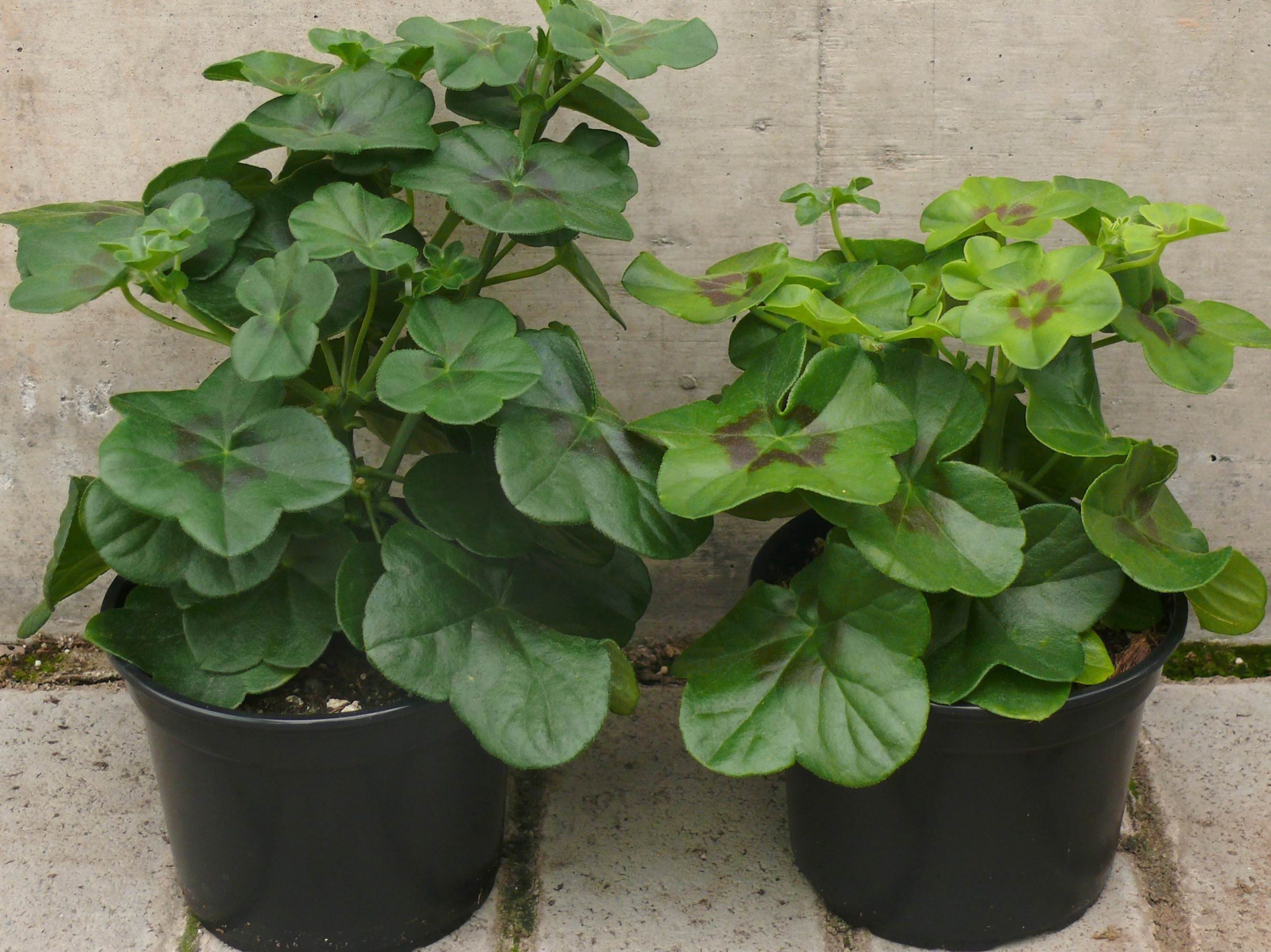
Pelargonium with sulfur deficiency symptoms (right) manifested as yellowing on the youngest leaves and stunted growth.
Sulfur Deficiency Effects on Ornamental Plants
- Lower ornamental quality – insufficient sulfur significantly reduces visual quality, color intensity, and uniformity.
- Reduced resilience – weakened plants are more vulnerable to fungal diseases, pests, and abiotic stress, further compromising yield and marketability.
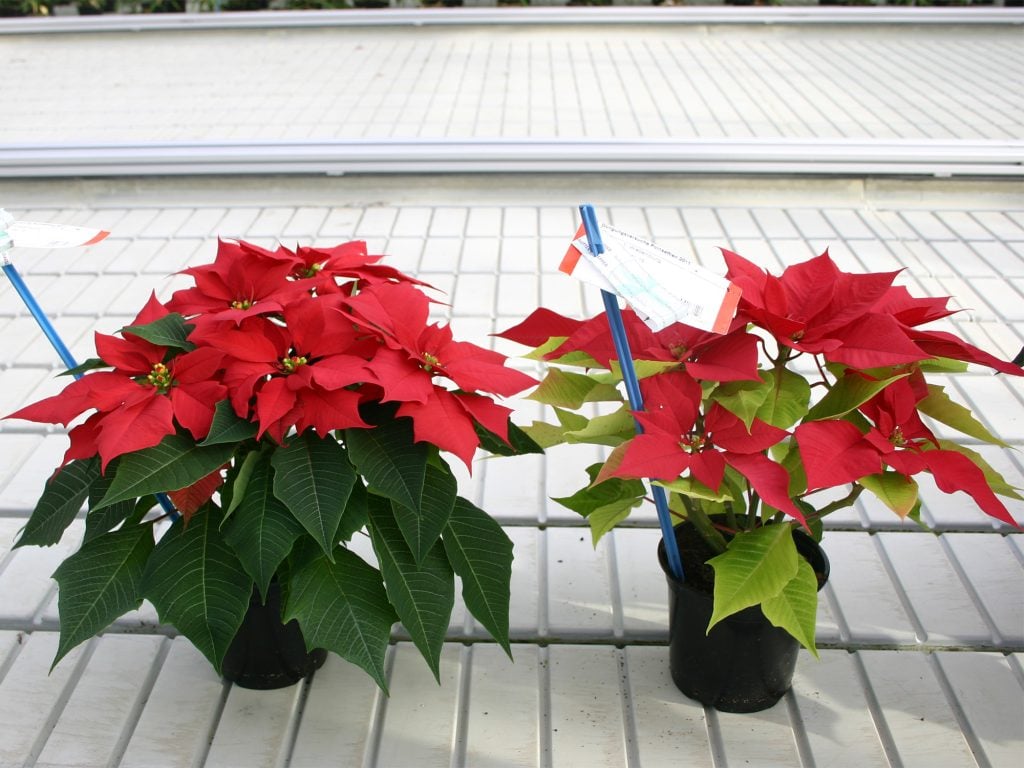
Sulfur deficiency symptoms as yellowing youngest leaves in Poinsettia.
How to Manage Sulfur Nutrition to Avoid Deficiencies
- Fertilization – you can correct sulfur deficiency by applying sulfur‑containing fertilizers such as ammonium sulfate or potassium sulfate. Always follow recommended rates and application guidelines to avoid over‑fertilization.
- pH management – substrate pH strongly influences nutrient availability. Maintaining a slightly acidic pH supports optimal sulfur uptake and overall nutrient balance.
- Foliar applications – in cases of severe deficiency or when a rapid response is needed, sulfur can be supplied through foliar sprays for quicker correction.
- Avoiding excess – just as deficiency is harmful, excessive sulfur can cause toxicity or disrupt the balance of other nutrients. Regular substrate analysis is essential to maintain optimal levels and intervene promptly when needed.

Poinsettia with sulfur deficiency manifested by chlorosis on the youngest leaves.
Sulfur deficiency is a relatively common issue in ornamental horticulture, especially in low‑sulfur substrates or when nutrient balance is disrupted. Fortunately, it can be effectively managed through regular substrate analysis, appropriate fertilization, and proper pH control. While preventing deficiency is important, excessive sulfur should also be avoided, as it may lead to nutrient imbalances or toxicity. Maintaining a well‑balanced nutrition program and monitoring growing conditions are essential to ensure strong, healthy, and resilient plants.
How to Fix Sulfur Deficiency
Instead of relying solely on sulfur‑based fertilizers, applying a balanced micronutrient package such as Micromax Premium ensures a complete, well‑proportioned supply of essential trace elements. This supports strong, uniform growth and reduces the risk of micronutrient imbalances.
Sulfur-deficient plants need a targeted boost to restore healthy growth and leaf color. Peters Professional water‑soluble fertilizers (NPK + micronutrients) provide an immediate, balanced supply of nutrients, supported by the exclusive M‑77 technology that enhances uptake and helps plants return quickly to a normal growth curve.
To prevent deficiency symptoms from developing, your local ICL technical advisor can design a tailored nutrition program using AngelaWeb 3.0. This approach combines CRF (Controlled Release Fertilizers) with WSF (Water‑Soluble Fertilizers) to match your crop, substrate, water quality, and production goals. In many cases, the optimal combination includes Osmocote 5 together with water-soluble products Peters or Universol.
For personalized guidance, contact your regional technical support by visiting your country’s website.



Our knowledge
Tips & tricks, disease prevention, crop and market related information
Explore our knowledge