


 Whatsapp
  X
X  Mail
Mail  Copy link
 Molybdenum Deficiency in Ornamental Plants: Symptoms and Treatment
Molybdenum (Mo) is a trace element that plants need in small quantities. However, if it is lacking, it gives pronounced symptoms: leaf yellowing, necrosis and deformation. Learn how to fix the deficiencies of this essential element for continuous, healthy development.
On this page:
Although required only in trace amounts, molybdenum (Mo) is essential for plant development. It plays a key role in several biochemical processes, particularly in the conversion of nitrate (NO₃⁻) into amino acids and proteins, and it is also involved in the synthesis of certain plant hormones. Molybdenum is partially mobile within the plant, which influences how symptoms appear and progress.
When molybdenum becomes limiting, plants show distinct and often severe symptoms, including leaf yellowing, marginal necrosis, deformation of young leaves, and necrosis in the apical parts. In sensitive species (e.g. Zinnia) flower production may be reduced, while plants prone to micronutrient imbalances (e.g. poinsettia) tend to show symptoms early and clearly.
Whih are the Molybdenum Deficiency Symptoms of Ornamental Plants
- Interveinal chlorosis and marginal necrosis – one of the earliest and most common symptoms is interveinal chlorosis, where tissue between the veins turns yellow while the veins remain green. This typically begins at the leaf margins, with necrosis developing as the deficiency progresses. Symptoms are often most visible on older leaves, but may spread throughout the plant.
- Curling and deformation of young leaves – young leaves and shoot tips may show upward curling, distortion, and in severe cases apical necrosis. These symptoms reflect molybdenum’s role in nitrate reduction and protein formation in actively growing tissues.
- Stunted growth – plants may exhibit reduced vigor, shorter internodes, and overall smaller size due to impaired nitrogen metabolism.
- Poor flower development – flowering may be reduced, and blooms that do form can be smaller and of lower quality. This is particularly noticeable in sensitive ornamental species.
- Reduced nitrogen utilization – because molybdenum is required for the enzyme nitrate reductase, deficiency leads to poor nitrate conversion, reduced amino acid and protein synthesis, and overall lower nitrogen-use efficiency.
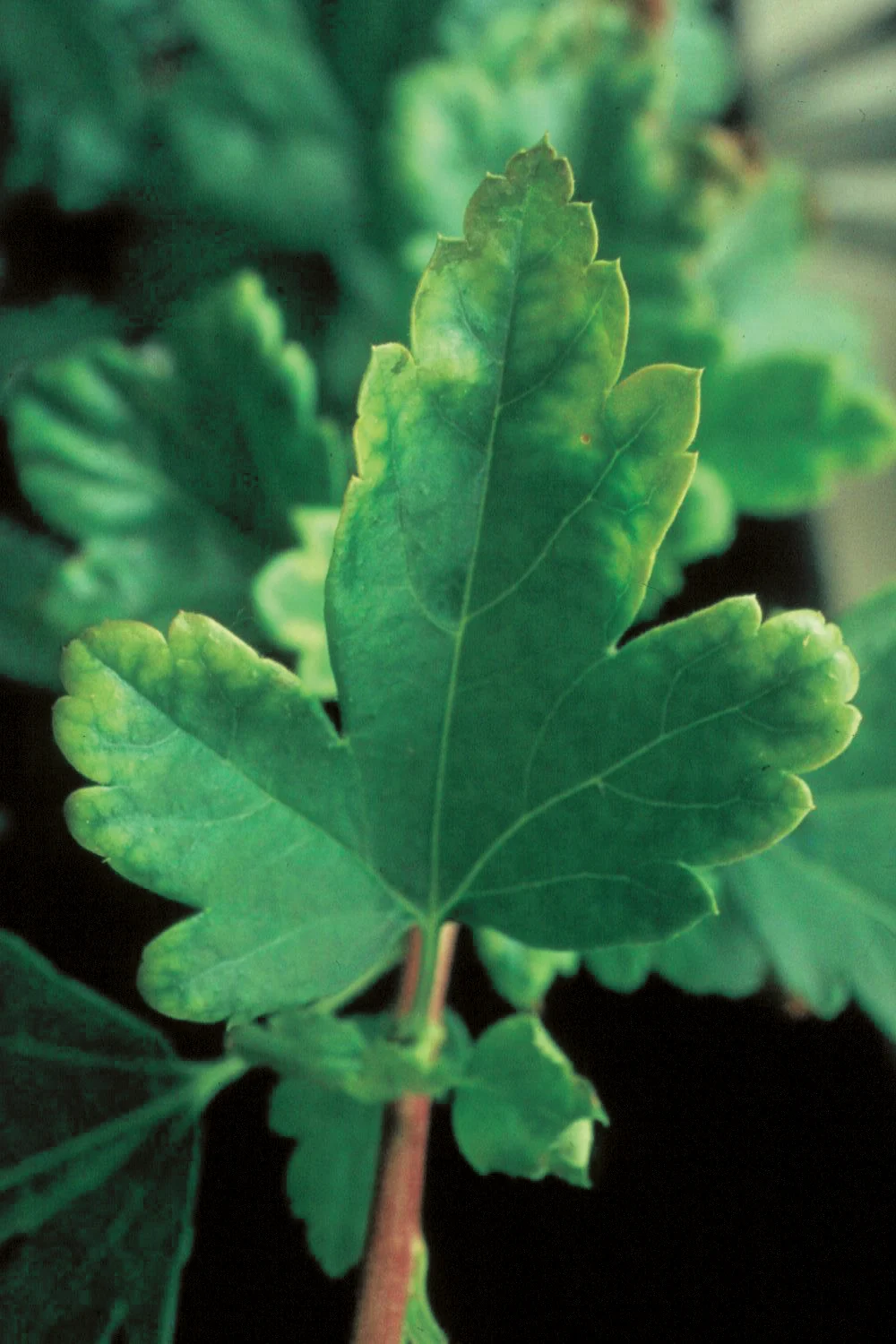
Ribes showing molybdenum deficiency with yellowing margins on young leaves.
Molybdenum Deficiency Effects on Ornamental Plants
- Lower plant quality – stunted growth, leaf deformation, and reduced flowering significantly decrease the market value of ornamental crops.
- Reduced nitrogen efficiency – plants become less capable of using available nitrogen, which can lead to higher fertilizer costs and lower production efficiency.
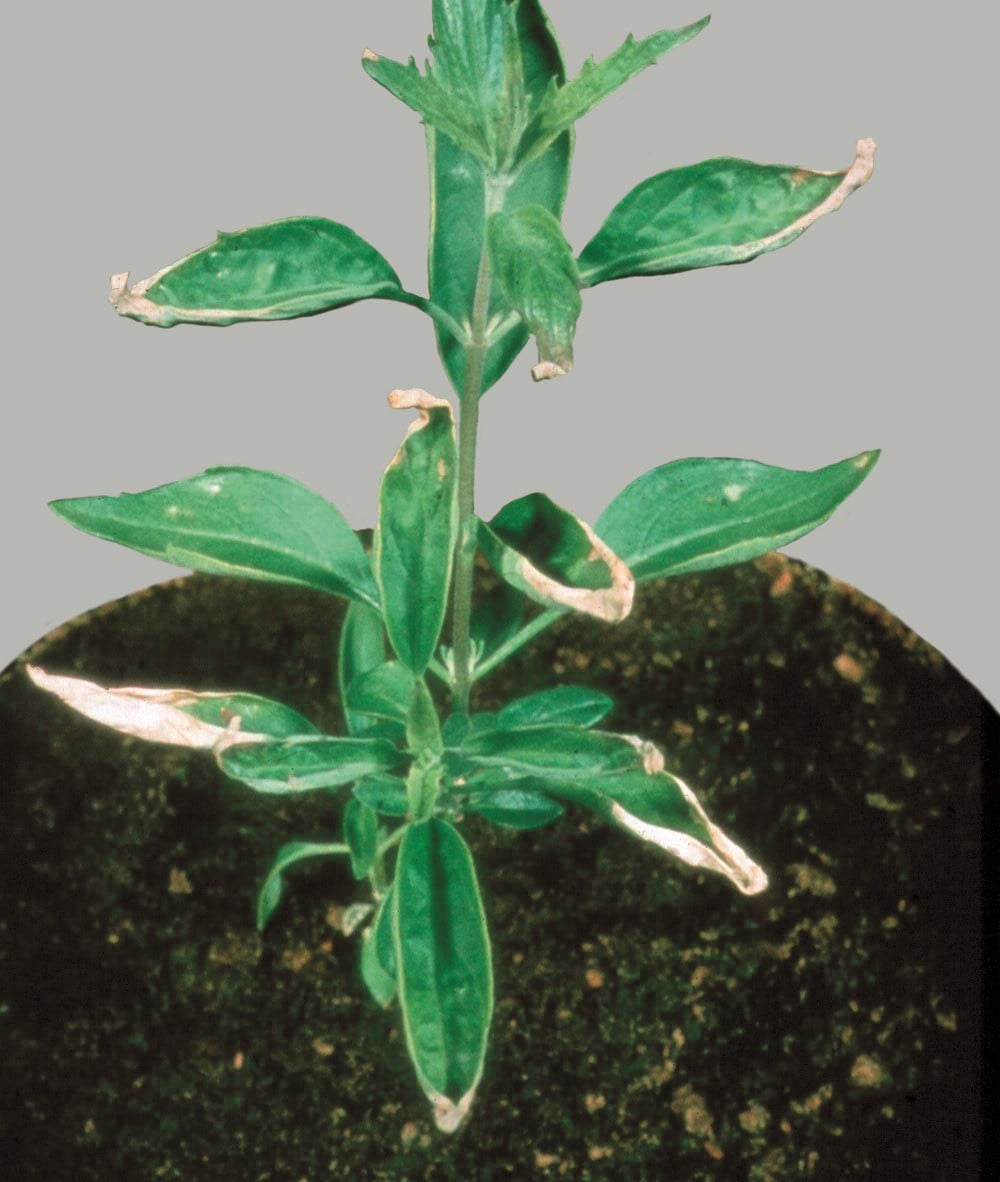
Molybdenum deficiency in Caryopteris with deformations, and marginal necrosis on leaves
How to Manage Molybdenum Nutrition to Avoid Deficiencies
- Test the growing media – regular analysis of the substrate and leaf tissue helps identify molybdenum deficiency early. Leaf analysis is especially useful in poinsettia, where symptoms can resemble other micronutrient disorders.
- Use the rigt fertilizers – when deficiency is confirmed, molybdenum can be supplied through adequate fertilizers (i.e. containing molybdates). To prevent issues, use formulations that include the correct Mo level, such as Peters® Professional Poinsettia Mix, which provides a balanced micronutrient profile.
- Adjust substrate pH – molybdenum availability decreases sharply at low pH, unlike many other micronutrients. Avoid allowing the substrate pH to drop too low, especially in peat‑based mixes. Maintaining an appropriate pH range helps ensure consistent Mo uptake.
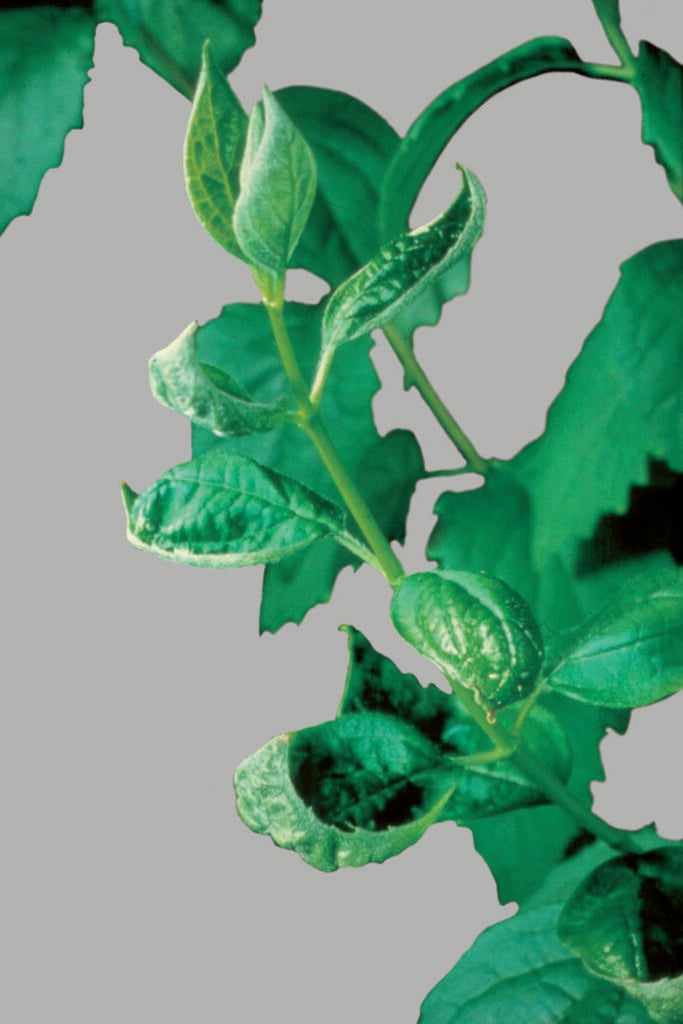
Philadelphus with molybdenum deficiency shows deformed leaves with marginal necrosis.
Molybdenum is required in very small quantities, which means both deficiency and excess can occur. While deficiency leads to chlorosis, deformation, and reduced flowering, over‑application can cause molybdenum toxicity, particularly at low substrate pH. Toxicity symptoms, often seen on young leaves, may resemble deficiency, making accurate diagnosis essential. Molybdenum toxicity can interfere with the absorption and utilization of other essential nutrients, leading to imbalances in the plant.
For growers working with Mo‑sensitive species, regular monitoring of nutrient levels, careful pH management, and the use of balanced, high‑quality fertilizers are the most effective strategies to maintain healthy growth and avoid production losses.
How to Fix Molybdenum Deficiency
Instead of relying solely on molybdenum‑based fertilizers, applying a balanced micronutrient package such as Micromax Premium ensures a complete, well‑proportioned supply of essential trace elements. This supports strong, uniform growth and reduces the risk of micronutrient imbalances.
Molybdenum-deficient plants need a targeted boost to restore healthy growth and leaf color. Peters Professional water‑soluble fertilizers (NPK + micronutrients) provide an immediate, balanced supply of nutrients, supported by the exclusive M‑77 technology that enhances uptake and helps plants return quickly to a normal growth curve.
To prevent deficiency symptoms from developing, your local ICL technical advisor can design a tailored nutrition program using AngelaWeb 3.0. This approach combines CRF (Controlled Release Fertilizers) with WSF (Water‑Soluble Fertilizers) to match your crop, substrate, water quality, and production goals. In many cases, the optimal combination includes Osmocote 5 together with water-soluble products Peters or Universol.
For personalized guidance, contact your regional technical support by visiting your country’s website.



Our knowledge
Tips & tricks, disease prevention, crop and market related information
Explore our knowledge