


 Whatsapp
  X
X  Mail
Mail  Copy link
 Zinc Deficiency in Ornamental Plants: Symptoms and Treatment
Zinc (Zn) is an essential micronutrient involved in auxin synthesis, enzyme activation, and protein formation.
On this page:
Because zinc is poorly mobile within the plant, a continuous external supply is required to support uniform growth and development. When zinc availability is limited, biochemical processes slow down, leading to visible symptoms that compromise plant quality and overall performance.
Which are the Zinc Deficiency Symptoms of Ornamental Plants
- Interveinal chlorosis on young leaves – one of the earliest and most characteristic symptoms. Leaf tissue between the veins turns pale yellow, whitish, or light green, while the veins remain distinctly green. In advanced stages, affected areas may progress to necrosis.
- Stunted growth and shortened internodes – plants exhibit reduced shoot elongation, smaller leaves, and in some species a rosette‑like appearance.
- Leaf deformation – young leaves may emerge distorted, with irregular margins, puckering, or a rippled surface.
- Delayed and reduced flowering – zinc deficiency slows floral initiation and results in smaller, lower‑quality blooms.
- Weak root systems – root growth is restricted, producing finer, less extensive root structures that increase susceptibility to stress and disease.
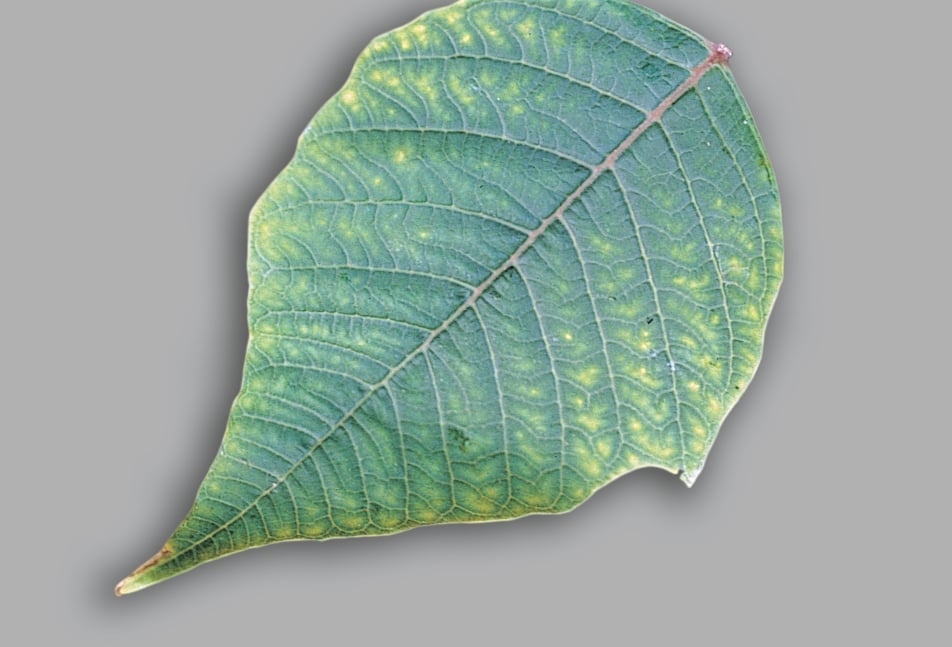
A leaf of a zinc-deficient Poinsettia with interveinal chlorosis.
Zinc Deficiency Effects on Ornamental Plants
- Reduced ornamental quality – chlorosis, deformation, and poor flowering significantly diminish the commercial value of plants.
- Higher susceptibility to stress and pathogens – weak root systems and impaired metabolic activity increase vulnerability to abiotic stress and certain diseases.
- Economic loss – lower vigor and aesthetic quality directly impact marketability and production efficiency.
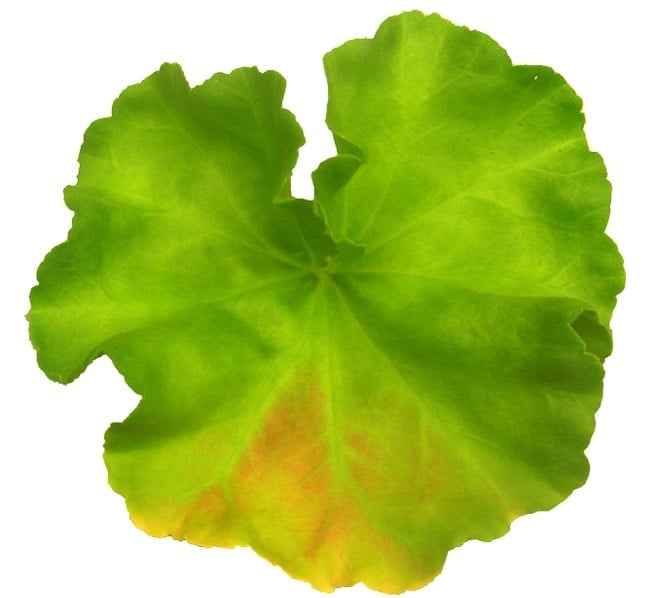
A yellowish leaf of Pelargonium shows zinc deficiency symptoms.
How to Manage Zinc Nutrition to Avoid Deficiencies
- Fertilization – correct deficiencies using zinc‑containing fertilizers such as zinc sulfate or other soluble Zn sources. Application rates should be based on substrate or leaf analysis and tailored to crop sensitivity.
- Foliar applications – in acute deficiency, foliar Zn treatments provide rapid uptake and visible improvement in new growth. These applications offer short‑term correction but should be integrated into a broader nutrition plan.
- pH management – zinc availability decreases sharply in alkaline substrates. Optimal Zn uptake occurs at pH 5.6–6.5. Adjusting substrate pH is often essential for long‑term correction.
- Irrigation management – over‑watering or uneven moisture distribution can limit Zn uptake. Maintain consistent moisture levels and avoid excessive leaching.

Poinsettia with yellowing leaves suffers from zinc deficiency
Symptoms may vary by species, so regular monitoring, substrate analysis, and leaf tissue testing are essential. While correcting deficiencies is important, excessive zinc can cause toxicity, so applications must be carefully calibrated to crop needs.
How to Fix Zinc Deficiency
Instead of relying solely on zinc‑based fertilizers, applying a balanced micronutrient package such as Micromax Premium ensures a complete, well‑proportioned supply of essential trace elements. This supports strong, uniform growth and reduces the risk of micronutrient imbalances.
Zinc-deficient plants need a targeted boost to restore healthy growth and leaf color. Peters Professional water‑soluble fertilizers (NPK + micronutrients) provide an immediate, balanced supply of nutrients, supported by the exclusive M‑77 technology that enhances uptake and helps plants return quickly to a normal growth curve.
To prevent deficiency symptoms from developing, your local ICL technical advisor can design a tailored nutrition program using AngelaWeb 3.0. This approach combines CRF (Controlled Release Fertilizers) with WSF (Water‑Soluble Fertilizers) to match your crop, substrate, water quality, and production goals. In many cases, the optimal combination includes Osmocote 5 together with water-soluble products Peters or Universol.
For personalized guidance, contact your regional technical support by visiting your country’s website.


Our knowledge
Tips & tricks, disease prevention, crop and market related information
Explore our knowledge