


 Whatsapp
  X
X  Mail
Mail  Copy link
 Calcium Deficiency in Ornamental Plants: Symptoms and Treatment
Calcium is an essential secondary macronutrient that plays a key role in building strong cell walls and supporting numerous metabolic processes.
On this page:
Calcium is not very mobile within the plant and therefore the deficiency symptoms appear first in young, actively growing tissues.
When plants do not receive enough calcium, their structural integrity and growth processes are compromised. Early recognition and proper management are crucial to prevent long‑term damage and maintain high ornamental quality.
Which are the Calcium Deficiency Symptoms of Ornamental Plants
- Marginal necrosis on young leaves – one of the earliest and most typical signs is necrosis at the tips and edges of young leaves, often preceded by marginal chlorosis.
- Leaf distortion – affected leaves may curl, twist, or become misshapen, and often remain smaller than normal.
- Irregular leaf development – new foliage may emerge deformed or with uneven growth patterns.
- Weak floral stems – flowering shoots may bend or collapse due to weakened cell structure.
- Poor flower formation – buds may be small, weak, or malformed
- Bract necrosis in sensitive species – in highly sensitive plants such as poinsettia, calcium deficiency often causes marginal necrosis on the bracts.
- Blossom end rot and fruit deformation – in susceptible species (e.g. Solanacae), fruits may develop irregular shapes or uneven growth.
- Roots – may appear thickened, brittle, and lacking root hairs, resulting in reduced nutrient and water uptake.
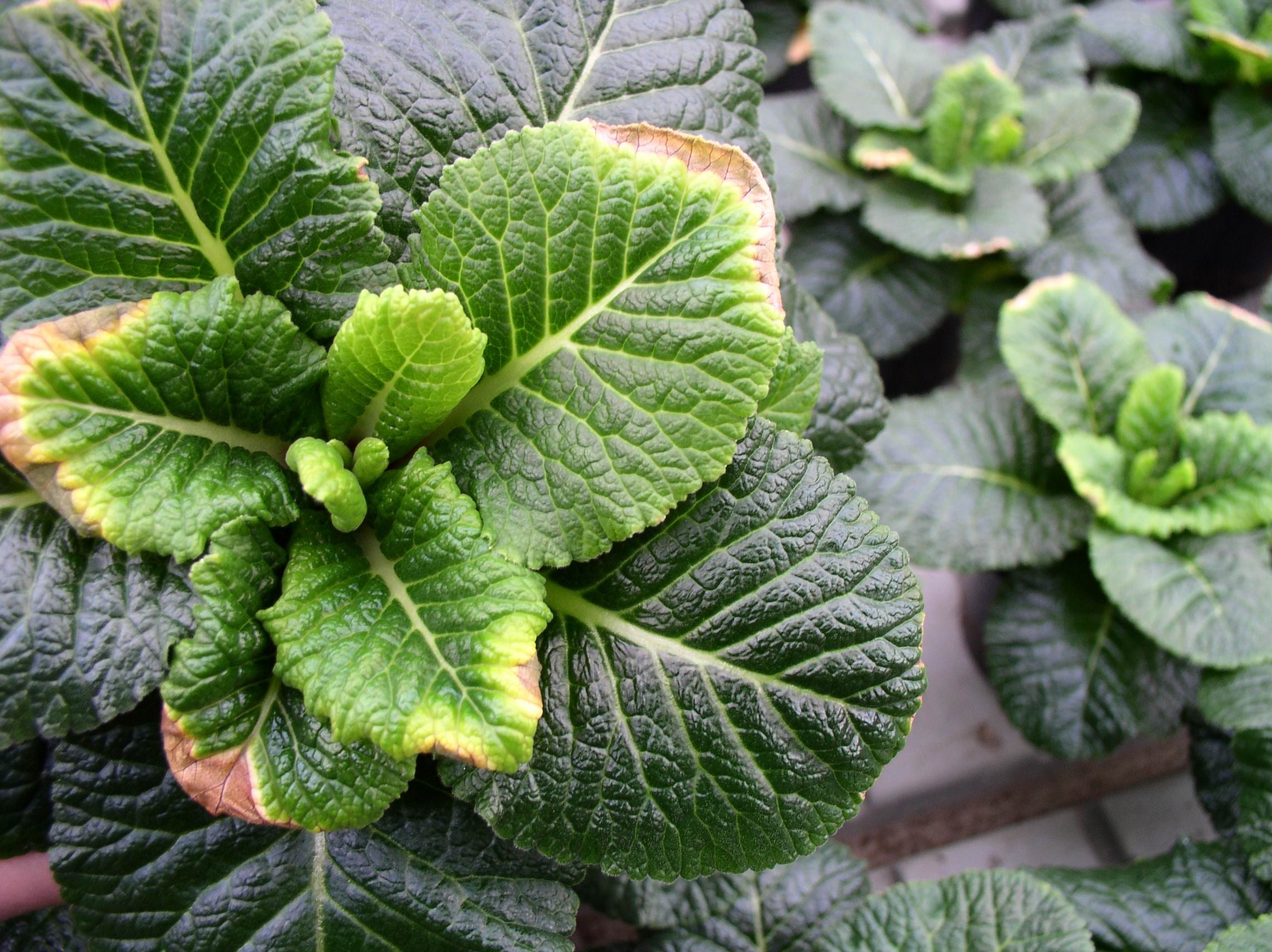
Calcium-deficient Primula showing with yellowing leaf edges and marginal necrosis.
Calcium Deficiency Effects on Ornamental Plants
- Stunted growth: calcium is vital for cell division and elongation. Deficiency slows growth, reduces plant size, and limits root development, further restricting nutrient uptake.
- Increased susceptibility to stress: weakened cell walls make plants more vulnerable to diseases, pathogens, and environmental stress.
- Reduced ornamental value: leaf necrosis, poor flowering, and distorted growth significantly reduce the aesthetic and commercial value of ornamental plants.
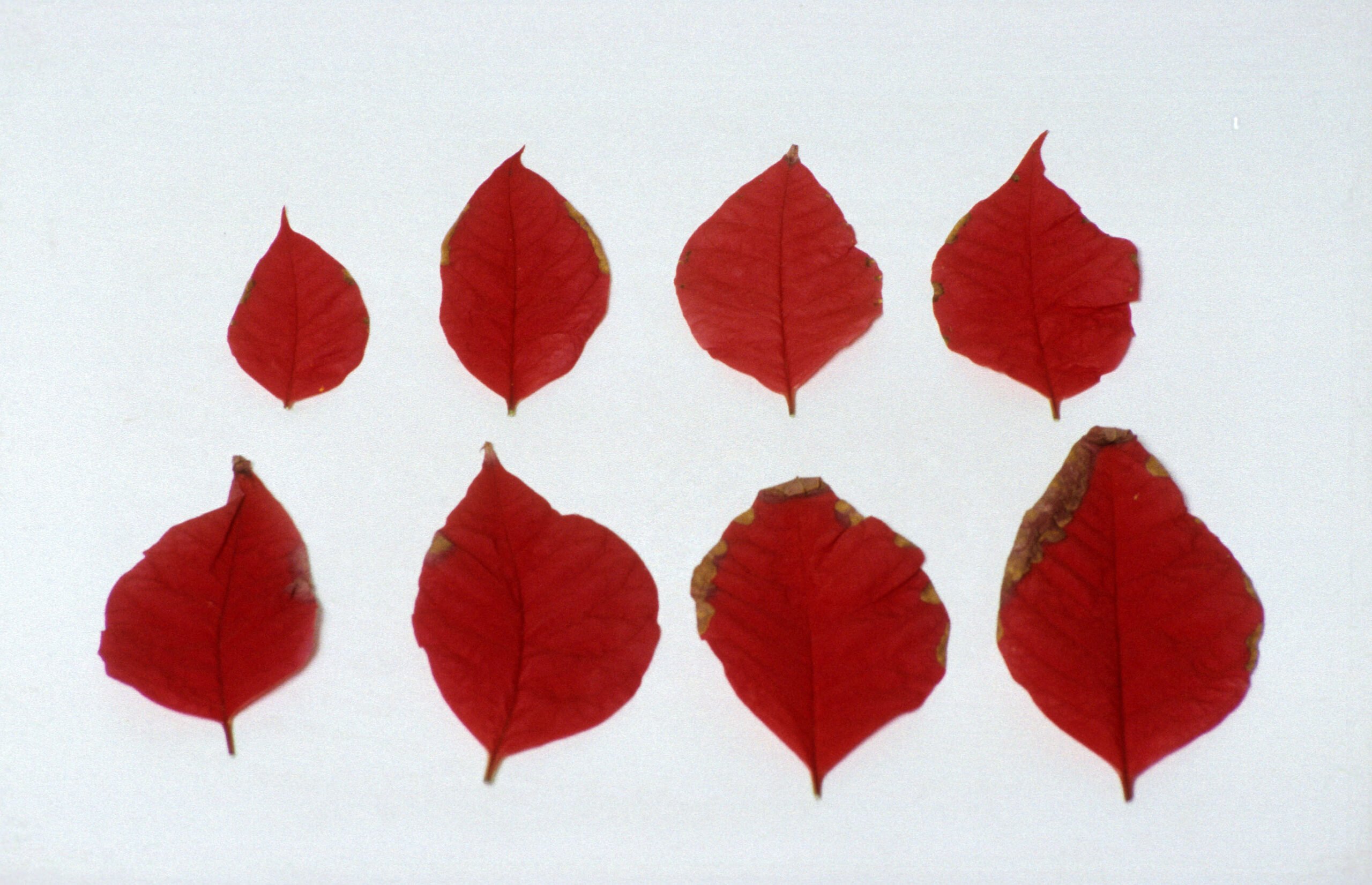
Bracts of Poinsettia with necrotic edges caused by calcium deficiency.
How to Manage Calcium Nutrition to Avoid Deficiencies
- Irrigation water analysis: testing irrigation water helps determine whether calcium supplementation is needed. Soft or reverse‑osmosis water may require calcium enrichment. Hard water may contain calcium, but its availability can be limited by pH or bicarbonates.
- Substrate calcium content: growing media often contain calcium from lime (calcium carbonate or calcium–magnesium carbonate) used to adjust pH. Knowing the substrate’s buffering capacity and calcium release is essential.
- Fertilization strategies: use calcium‑containing fertilizers such as calcium nitrate, Peters® Excel CalMag, or Universol® Soft Water formulations with calcium. For rapid correction, foliar applications (calcium chloride or calcium chelates) can provide immediate support.
- Irrigation management: irregular watering or fluctuating substrate moisture can worsen calcium deficiency. Maintaining consistent, even moisture improves calcium uptake.
- Nutrient balance: excess cations such as Mg⁺, K⁺, NH₄⁺, and Na⁺ compete with calcium and reduce its absorption. Balanced fertilization is essential.
- Environmental factors: high humidity reduces transpiration, limiting calcium transport to growing tissues. Excessive salinity or very low pH can restrict calcium availability. Monitoring pH is especially important, as it directly affects nutrient uptake.
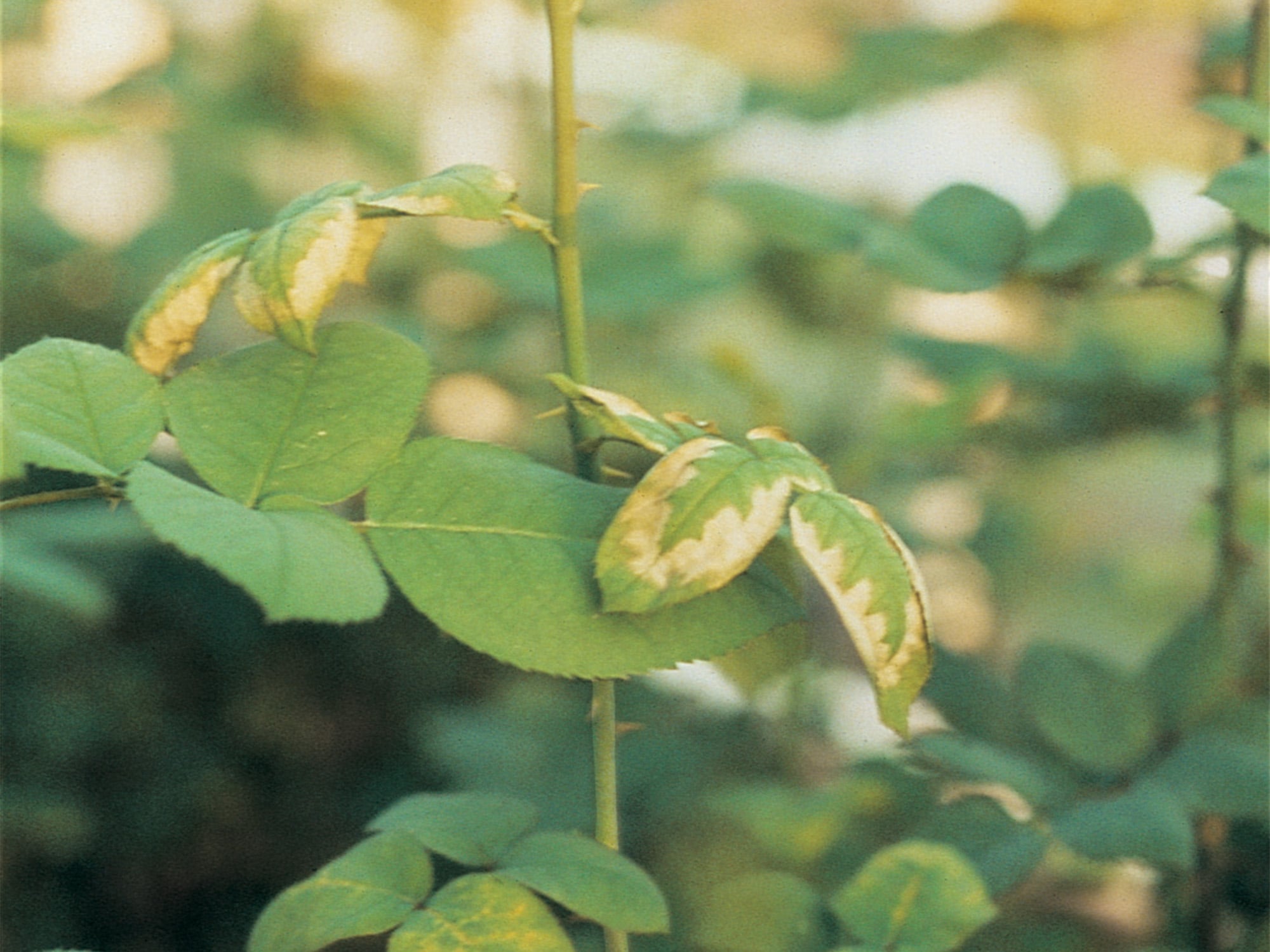
Calcium-deficient Rosa with leaf necrosis.
Accurate diagnosis is essential before applying corrective measures. Maintaining balanced nutrition, stable irrigation practices, and appropriate environmental conditions significantly reduces the risk of calcium deficiency in ornamental crops.
How to Fix Calcium Deficiency in Ornamental Plants
Calcium‑deficient plants need a targeted boost to restore healthy growth and leaf color. Peters Professional water‑soluble fertilizers (NPK + trace elements) provide an immediate, balanced supply of nutrients, supported by the exclusive M‑77 technology that enhances uptake and helps plants return quickly to a normal growth curve.
To prevent deficiency symptoms from developing, your local ICL technical advisor can design a tailored nutrition program using AngelaWeb 3.0. This approach combines CRF (Controlled Release Fertilizers) with WSF (Water‑Soluble Fertilizers) to match your crop, substrate, water quality, and production goals. In many cases, the optimal combination includes Osmocote 5 together with water-soluble products Peters or Universol.
For personalized guidance, contact your regional technical support by visiting your country’s website. You find a link to your country web site on the top right corner of this page.


Our knowledge
Tips & tricks, disease prevention, crop and market related information
Explore our knowledge