Whatsapp
  X
X  Mail
Mail  Copy link
 How to Fix Crop Nutrient Deficiencies: Causes, Symptoms and Solutions

On this page:
Nutrient deficiencies can significantly reduce yield and crop quality, particularly during periods of rapid growth or environmental stress. While soil-applied fertilizers provide a strong foundation, they may not always meet crop demand at critical stages. This guide explains how to identify common deficiency symptoms, understand their underlying causes, and apply targeted solutions, including foliar nutrition, to correct deficiencies quickly and improve overall nutrient use efficiency.
Nutrient deficiencies are a common and often underestimated constraint in modern crop production. Symptoms such as leaf chlorosis, poor fruit development, uneven crop growth, or reduced grain fill can appear rapidly and, if not addressed, may lead to irreversible yield losses.
In many cases, these deficiencies are not caused by a lack of fertilizer input, but by a temporary imbalance between nutrient availability and crop demand. Environmental stress, soil chemistry, and plant physiological limitations can all reduce the plant’s ability to access nutrients at critical growth stages.
Understanding how and why these deficiencies occur is the first step toward managing them effectively. By combining well-structured soil nutrition programs with targeted foliar interventions, growers can respond more precisely to crop needs and maintain consistent performance across variable field conditions.
What are the Nutrient Deficiency Symptoms in Crops?
Early identification of nutrient deficiencies is essential for effective correction. While visual symptoms alone do not always provide a complete diagnosis, they offer valuable first indicators of underlying issues.
Deficiency symptoms typically reflect the role of the nutrient within the plant and its mobility. Mobile nutrients such as nitrogen tend to show symptoms in older leaves first, while immobile nutrients such as calcium affect younger tissues and developing organs.
Common Visual Indicators
- Chlorosis (yellowing): Often linked to nitrogen, sulfur, iron, or magnesium deficiencies
- Necrosis (tissue death): May indicate potassium deficiency or severe stress
- Stunted growth: Common under nitrogen, phosphorus, or micronutrient deficiencies
- Poor flowering or fruit set: Often associated with phosphorus or boron limitations
- Deformed or weak tissues: Frequently linked to calcium and potassium deficiency
| Crop | Visual Symptom | Likely Cause |
|---|---|---|
| Potato | Yellowing of younger leaves; hollow heart | Rapid growth fluctuations; localized calcium limitation |
| Wheat | Pale flag leaf; poor grain fill | Insufficient nitrogen and sulfur availability |
| Tomato | Blossom end rot; uneven fruit development | Calcium transport limitations under stress |
| Citrus | Small fruit; leaf mottling | Micronutrient deficiencies (e.g. zinc, manganese) |

Blossom end rot (BER) in tomato caused by calcium deficiency
It is important to note that similar symptoms can result from different causes. For example, chlorosis may be linked to nitrogen deficiency, iron deficiency, or root stress. For this reason, visual assessment should ideally be supported by soil or tissue analysis where possible.
What Causes Nutrient Deficiencies in Crops?
Nutrient deficiencies are typically the result of interacting factors rather than a single limitation. These can be broadly grouped into soil-related constraints, environmental conditions, and plant physiological characteristics.
Soil-related Factors
Soil pH
Soil pH is one of the most important factors influencing nutrient availability. At high pH levels, micronutrients such as iron, zinc, and manganese become less available, while phosphorus can form insoluble compounds. At very low pH, other nutrients may become less accessible or even reach toxic levels.
Nutrient Fixation and Interactions
Certain nutrients can become chemically bound within the soil, reducing their availability to plants. Phosphorus fixation is a well-known example, particularly in calcareous or highly weathered soils. In addition, nutrient interactions, such as excess potassium reducing magnesium uptake, can create imbalances even when total nutrient levels appear adequate.
Soil Structure and Root Environment
Compacted soils, poor aeration, or limited rooting depth can restrict root development and reduce the plant’s ability to explore the soil for nutrients. This can lead to localized deficiencies even in otherwise fertile soils.
Environmental Conditions
Temperature
Low soil temperatures reduce root metabolic activity and slow nutrient uptake. This is particularly relevant in early-season crops or in regions with cool spring conditions.
Moisture availability
Both drought and waterlogging can limit nutrient uptake. In dry conditions, nutrient movement into roots is reduced, while in saturated soils, oxygen deficiency impairs root function.
Rapid changes in conditions
Sudden shifts in weather, such as rapid warming, heavy rainfall, or drought, can disrupt the balance between nutrient supply and crop demand, leading to temporary deficiencies.
Plant Physiological Factors
Growth stage demand
Nutrient demand is not constant throughout the crop cycle. Periods such as flowering, fruit set, tuber bulking, and grain filling represent peak demand. If nutrient supply does not keep pace, deficiencies can develop quickly.
Nutrient mobility within the plant
Some nutrients, such as nitrogen and potassium, can be redistributed within the plant. Others, such as calcium and boron, have limited mobility and must be continuously supplied to developing tissues. This makes them more sensitive to disruptions in uptake.
Transpiration and nutrient transport
Nutrient movement within the plant is often linked to water flow. Under conditions of low transpiration (e.g. high humidity or low light), nutrients such as calcium may not reach rapidly growing tissues, even when soil supply is adequate.
How can Nutrient Deficiencies be Corrected Quickly?
Addressing nutrient deficiencies effectively requires a combination of short-term corrective measures and long-term management strategies. The goal is to ensure that nutrients are both available in the soil and accessible to the plant when needed.
Improve Nutrient Availability and Delivery
Water quality and solution chemistry play a critical role in nutrient availability, particularly in fertigation and foliar systems.
In high pH conditions, certain nutrients may precipitate or become less soluble. Adjusting the pH of irrigation water or spray solutions can help maintain nutrients in an available form. Acidifying inputs such as Nova PeKacid can be used to optimize solution pH, improve nutrient stability, and support efficient delivery through irrigation or foliar application systems.
Maintain a Strong Nutritional Foundation
A well-balanced soil or fertigation program provides the baseline from which crops can meet most of their nutritional requirements.
Fully soluble NPK+TE fertilizers, such as those used in fertigation systems, allow for precise control over nutrient supply and can be adjusted according to crop stage and environmental conditions. At the same time, multi-nutrient mineral sources such as Polysulphate contribute to long-term soil fertility by supplying sulfur, potassium, magnesium, and calcium in a gradual and sustained manner.
Maintaining this foundation is essential, as corrective measures are most effective when underlying nutrient supply is adequate.

ICL FertiBuzz is designed for ultra-low volume application by drones
Use Foliar Nutrition for Rapid Response
Foliar applications are an effective tool for correcting nutrient deficiencies quickly, particularly when root uptake is limited by environmental or soil-related factors.
By delivering nutrients directly to the leaf surface, foliar applications bypass many of the constraints associated with soil uptake. This allows for a faster response, especially during periods of high demand or stress.
Modern foliar formulations, such as those in the ICL FertiBuzz range, designed for ultra-low volume application by drones, are designed to improve nutrient absorption through the leaf cuticle and enhance uptake efficiency. These formulations can be used strategically during key growth stages to support crop performance.
It is important to emphasize that foliar nutrition is most effective when used as part of an integrated program, complementing soil and fertigation strategies rather than replacing them.
Fertilization Strategies for Key Crops
Different crops have distinct nutrient requirements and sensitivities. Tailoring nutrition strategies to crop type and growth stage is essential for achieving consistent results.
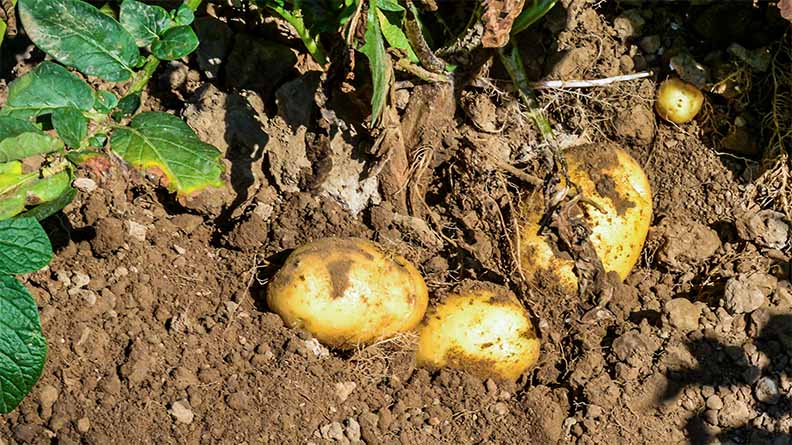
Maintaining potassium and calcium availability during tuber bulking is essential for potato crops
Potato: Supporting Tuber Development and Quality
Key challenge: Maintaining potassium and calcium availability during tuber bulking
Potatoes have a high demand for potassium during tuber development, as it plays a critical role in carbohydrate transport and water regulation. Calcium is also essential for cell structure and tuber quality.
Under dry conditions or during rapid growth, nutrient uptake may not keep pace with demand, leading to quality issues such as internal defects.
Recommended approach:
- Tuber initiation: Apply a high-phosphorus and zinc foliar/fertigation formulation (e.g. 10-52-10, ZincPhos) at 3–5 kg/ha to support early tuber development
- Tuber bulking: Apply foliar/fertigation nutrition (e.g. 10-10-40) rich in potassium, calcium, and magnesium at approximately 5 kg/ha, repeating every 10–14 days
- Late season: Maintain balanced nutrition to support skin set, reduce defects, and improve storability
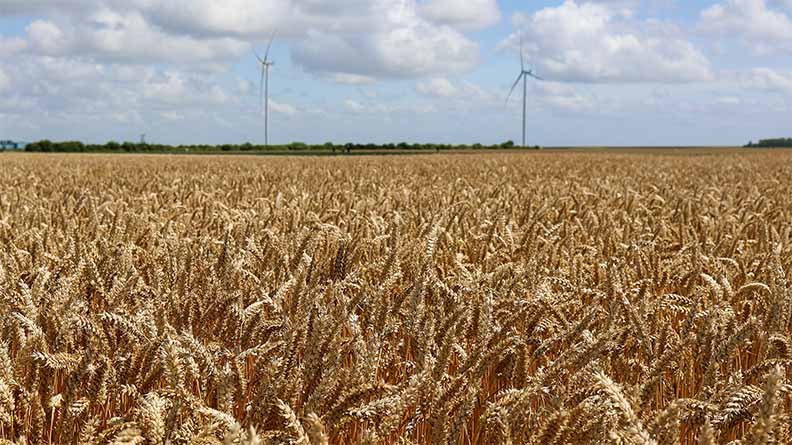
Foliar nutrition supports grain filling and protein accumulation in wheat and cereals
Wheat and Cereals: Improving Grain Fill and Protein
Key challenge: Ensuring nitrogen and sulfur availability during reproductive stages
Grain yield and protein (Gluten) content in cereals are strongly influenced by nutrient availability during the later stages of crop development. The flag leaf contributes significantly to photosynthesis during grain filling, making its health critical.
Deficiencies in nitrogen or sulfur during this period can limit protein synthesis and reduce overall grain quality.
Recommended approach:
- Tillering: Ensure sufficient sulfur and phosphorus supply through base fertilization
- Stem elongation: Apply balanced foliar nutrition (e.g. 20-20-20) at 2–4 kg/ha to maintain canopy development
- Flag leaf to flowering: Apply nitrogen- and sulfur-containing foliar nutrition to support grain filling and protein accumulation
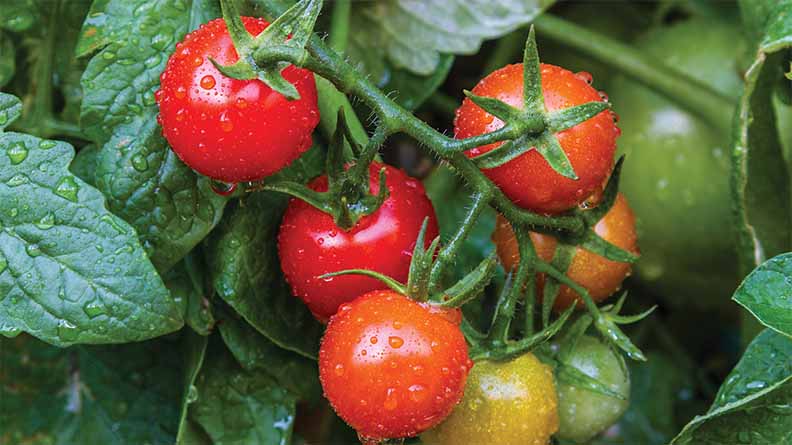
High-phosphorus foliar nutrition supports reproductive development in tomato
Tomato and Vegetables: Improving Fruit Quality
Key challenge: Managing calcium supply to developing fruit
Calcium plays a key role in cell wall structure and fruit integrity. However, it has limited mobility within the plant and depends on consistent transpiration for distribution.
Under stress conditions, such as irregular irrigation or high humidity, calcium transport to fruit may be reduced, leading to disorders such as blossom end rot.
Recommended approach:
- Establishment: Maintain balanced fertigation to support root development and nutrient uptake
- Flowering: Apply high-phosphorus foliar nutrition (around 3 kg/ha) to support reproductive development
- Fruit development: Apply foliar nutrition rich in potassium and calcium (4–6 kg/ha) to improve fruit size, firmness, and quality
How to Apply Foliar Nutrition Effectively
The effectiveness of foliar applications depends not only on the product used, but also on how and when it is applied.
- Apply under suitable environmental conditions
Moderate temperatures and higher relative humidity improve droplet retention and allow more time for nutrient absorption through the leaf surface. The best times for foliar spraying are early morning and late afternoon, under light wind conditions. - Optimize solution pH
Maintaining a slightly acidic spray solution (typically pH 5.0 ± 0.5) helps ensure nutrient stability and enhances uptake efficiency. - Ensure thorough coverage
Uniform coverage across the leaf surface is essential. Fine droplets and appropriate spray volumes help maximize contact and absorption. - Integrate with overall crop management
Foliar nutrition should be coordinated with irrigation, fertilization, and crop protection programs to ensure compatibility and maximize effectiveness.
Frequently Asked Questions
Can foliar fertilizers be mixed with crop protection products?
In many cases, foliar fertilizers can be tank-mixed with crop protection products. However, a jar test should always be performed prior to large-scale application to confirm physical compatibility (always add products to the jar in the same order they will be added to the spray tank).
Why use foliar nutrition alongside soil fertilization?
The amount of nutrients that plants can absorb via foliar application are limited and generally much less than their total nutrient requirements. Thus, foliar applications are supplementary and cannot replace soil-fertility programs.
How quickly do foliar applications work?
In many cases, improvements in crop condition can be observed within days, depending on the nutrient and severity of the deficiency.
Are these strategies suitable for sustainable farming systems?
Yes. Improving nutrient timing and delivery increases nutrient use efficiency and can help reduce losses to the environment.
Improving Nutrient Use Efficiency in Modern Agriculture
Correcting nutrient deficiencies is not simply about increasing fertilizer inputs. Instead, it requires a more precise approach to nutrient management, one that considers timing, placement, and plant demand.
By integrating soil, fertigation, and foliar strategies, growers can respond more effectively to changing conditions in the field. This approach supports consistent crop performance, improves nutrient use efficiency, and contributes to more sustainable agricultural systems.
In an environment where both economic and environmental pressures are increasing, precision nutrition offers a practical pathway to maintaining productivity while optimizing resource use.