


 Whatsapp
  X
X  Mail
Mail  Copy link

Master your crop nutrition in any condition
Brand details Agromaster<sup>®</sup> Growing Maize
Crop Nutrition Advice
Everything you need to know about maize fertilization, best practice, suitable products, field trials and more.
Crop nutrition advice for growing maize (Zea mays)

Nitrogen deficiency in maize
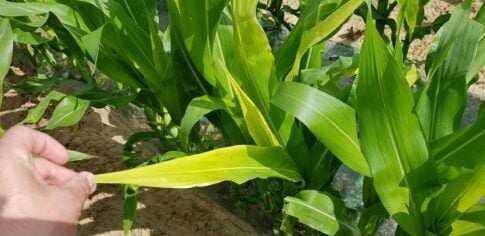
Yellowing of the leaves showing sulfur deficiency in maize
Introduction & Origin
Maize (Zea mays L.) is one of the world’s most important cereal crops and is cultivated for grain, silage, food products, animal feed, biofuel production, and numerous industrial applications. Owing to its exceptional productivity and adaptability, maize is grown across a wide range of climates, from temperate regions to tropical production systems.
Modern maize is originated from domestication of teosinte in southern Mexico approximately 9,000 years ago. From its center of origin in Central America, maize spread throughout the Americas and later across Europe, Africa, and Asia, becoming a staple crop in many agricultural systems worldwide.
Today, maize is cultivated on a larger scale than any other cereal crop and plays a critical role in global food security. Because maize produces large amounts of biomass and grain, it has a high demand for nutrients and responds strongly to adequate fertilization programs. Effective nutrient management, combined with appropriate water and soil management, is essential for achieving high yields and maximizing nutrient use efficiency.
Growing conditions
Climate & temperature
Maize is a warm-season crop with a C4 photosynthetic pathway, enabling highly efficient carbon fixation under warm growing conditions. Optimal growth generally occurs when temperatures range between 20 and 30°C, with maximum productivity typically achieved between 25 and 30°C.
Germination begins at soil temperatures of approximately 10°C, although more rapid and uniform emergence occurs when temperatures exceed 15°C. Mean daily temperatures above 26°C generally promote vigorous early development, while cooler conditions can slow establishment and nutrient uptake. The crop is particularly sensitive to environmental stress during flowering and pollination.
Soil requirements
Maize grows best in deep, fertile, well-drained soils with good water-holding capacity and aerationAlthough maize can tolerate a wide range of soil pH conditions, both acidic and alkaline soils may reduce nutrient availability and limit crop performance. Therefore, a soil pH of 6.0 to 6.5 is generally considered optimal for maximizing productivity. In addition, good soil structure is essential to promote root development and support efficient nutrient and water uptake.
Water & irrigation
The seasonal water requirement of maize varies considerably depending on climate, cultivar, geographical location, soil type, growing season, yield potential, and irrigation management.. In general, maize requires between 400 and 800 mm of water during the growing season (Ray et al., 2023).
Water demand increases rapidly during vegetative growth and reaches its peak from V6 through the reproductive stages, when crop evapotranspiration and nutrient uptake are at their highest levels. These stages are the most sensitive to water stress, and even short periods of drought can reduce pollination success, kernel number, grain weight, and final yield. In addition, adequate potassium nutrition can improve water-use efficiency by enhancing stomatal regulation, osmotic adjustment, and plant tolerance to drought stress.
Global Production
Maize is the most widely produced cereal crop in the world, with global production reaching approximately 1.33 billion metric tonnes in the 2025/26 season (USDA, 2026). Production is distributed across a wide range of environments in the Americas, Asia, Africa, Europe, and Oceania, reflecting the crop’s exceptional adaptability and yield potential.
The leading maize-producing countries are the United States (32.5%), China (22.6%), Brazil (10.6%), Argentina (4.7%), and India (4.1%), which together account for the majority of global production. In 2025/26, the United States produced approximately 432 million tonnes, followed by China (301 million tonnes) and Brazil (141 million tonnes) (USDA, 2026).
Globally, maize serves multiple purposes. Approximately 60% of production is utilized as livestock feed, while additional volumes are processed for food products, industrial starches, sweeteners, ethanol production, and bio-based materials. Its versatility, high yield potential, and broad adaptation have made maize one of the most economically significant crops worldwide.
Continuous improvements in genetics, agronomic practices, irrigation management, and nutrient stewardship have have driven substantial increases in maize yields over recent decades. As yield potential continues to rise, effective nutrient management remains critical for sustaining productivity, maximizing profitability, and preserving long-term soil fertility.
Maize Growth Stages
Germination and emergence (BBCH 00-09) – seed imbibition, germination, emergence, and establishment of the primary root system. Seedlings rely primarily on seed reserves during this stage.
Leaf development (BBCH 10-19) – sequential leaf emergence, canopy establishment, and increasing nutrient demand; rapid nutrient uptake typically begins around BBCH 16 (6-leaf stage).
Stem elongation (BBCH 30-39) – rapid biomass accumulation, stem development, extensive root growth, and increasing nutrient and water uptake. This stage is characterized by high demand for nitrogen and potassium.
Panicle emergence and flowering (BBCH 51-69) – tassel emergence, pollen shed, silking, pollination, and fertilization; the most critical period for yield determination, as environmental or nutritional stress can reduce kernel set and final grain yield.
Kernel development and grain filling (BBCH 71-89) – kernels accumulate starch, and dry matter; nutrient uptake continues, while remobilization of nutrients from vegetative tissues increasingly contributes to grain development.
Ripening and physiological maturity (BBCH 89-99) – kernels reach maximum dry matter accumulation and the crop progresses towards harvest maturity.
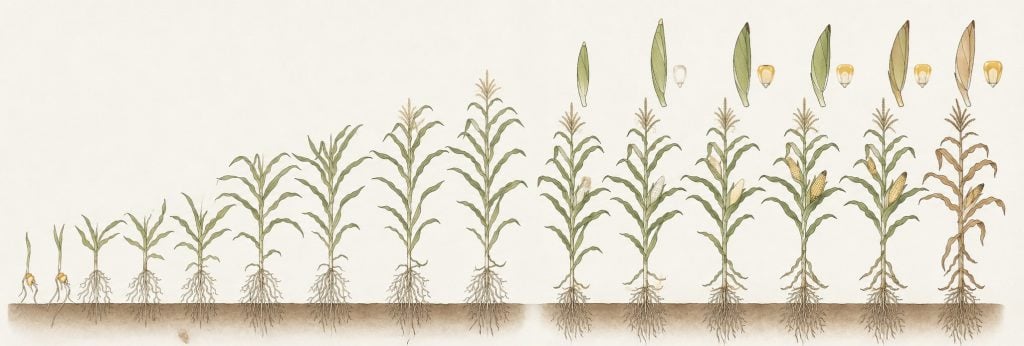
Maize growth stages from germination to maturity.
Nutrient Requirements
Maize is a high-demand crop with a characteristic pattern of nutrient uptake throughout the growing season. During early development, total nutrient requirements remain relatively modest. However, demand increases rapidly after the six-leaf stage and remains high until flowering. The period from BBCH 16 (6-leaf stage) to BBCH 65 (full flowering) represents the greatest daily nutrient uptake for most nutrients.
Potassium is one of the most accumulated nutrients in maize and is taken up rapidly during vegetative growth, with approximately two-thirds of total uptake occurring before tasseling and silking (VT/R1). Nitrogen follows a similar pattern with most uptake occurring before flowering, although significant N accumulation continues during grain filling (1/3 of the total N).. In contrast, phosphorus uptake is more evenly distributed throughout the growing season, with more than half of total phosphorus accumulation occurring after flowering (Figure 1).
Sulfur also exhibits substantial post-flowering uptake, highlighting the importance of maintaining nutrient availability throughout reproductive development.Micronutrients follow distinct uptake patterns. Zinc and boron demand increases rapidly during late vegetative growth, while continued Zn uptake during grain filling contributes significantly to grain development. These observations demonstrate that nutrient management strategies should not focus solely on early-season fertilization but should ensure nutrient availability throughout the crop cycle.
Because nutrient demand changes considerably during the season, synchronizing nutrient supply with crop demand is essential for maximizing nutrient use efficiency and achieving high yields. The use of split applications or controlled-release fertilizers can help align nutrient availability with crop uptake patterns.
Dynamic of Nutrient Uptake Over a Crop Season in Maize
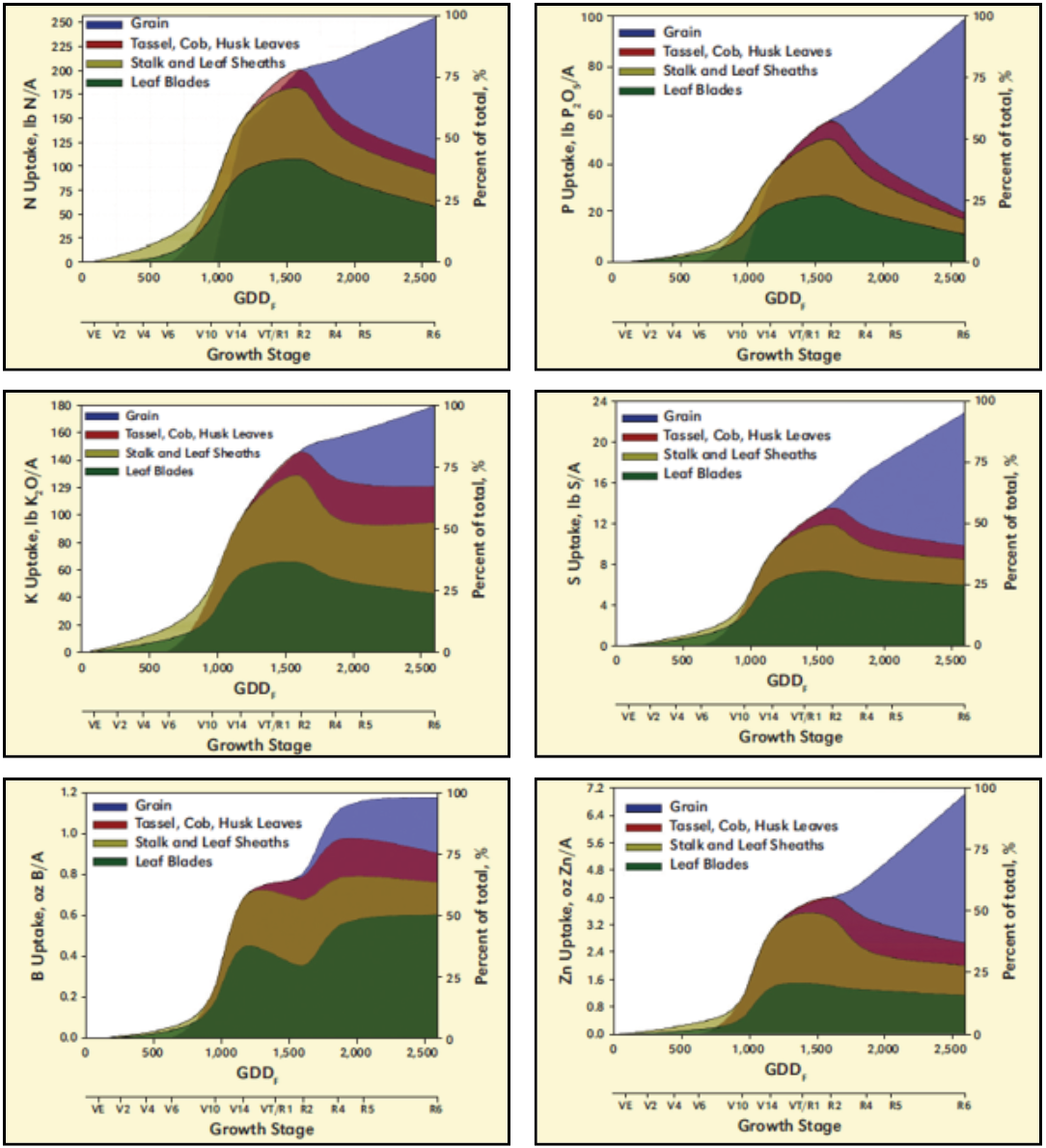
Figure 1. Total maize nitrogen, phosphorus, potassium, sulfur, boron and zinc uptake and partitioning across four plant stover fractions: leaf, stalk, reproductive, and grain tissues. Each value is a mean of six hybrids across two site-years at Urbana, IL (2010) and DeKalb, IL (2010). GGDF = growing degree days (Fahrenheit). Source: Bender et al. (2013).
Nitrogen (N)
Nitrogen is the primary driver of maize growth and yield. It is essential for chlorophyll production, photosynthesis, protein synthesis, and vegetative development.
Adequate N nutrition promotes vigorous canopy growth, greater photosynthetic capacity, and improved kernel development. Since maize continues to absorb significant amounts of N throughout vegetative growth and into reproductive stages, N applications are commonly split to better synchronize nutrient supply with crop demand. Controlled-release or enhanced-efficiency fertilizers can be used to improve N use efficiency and reduce losses.
Phosphorus (P)
Phosphorus supports root development, energy transfer, and early plant establishment. Adequate P availability is particularly important during the early stages of development when root systems are still developing and nutrient acquisition is limited. Although P demand begins early, uptake continues throughout the growing season, with a significant proportion of total P accumulation occurring after flowering (Figure 1).
Phosphorus availability is strongly influenced by soil pH and mineralogy, being reduced in acidic soils rich in iron and aluminum and in alkaline soils where it can react with calcium. Cool, wet soils condiyions can further restrict P uptake, even when soil P levels are adequate.
Potassium (K)
Potassium is the nutrient absorbed in the greatest quantity by maize and plays a central role in water regulation, enzyme activation, carbohydrate transport, and stress tolerance. Approximately two-thirds of total K uptake occurs before flowering, reflecting the crop’s high demand during rapid vegetative growth. Adequate K nutrition improves drought tolerance, supports kernel development, and contributes significantly to overall crop productivity.
Particular attention should be paid on sandy soils where K may be susceptible to leaching beyond the rooting zone.
Calcium (Ca)
Calcium is essential for cell division, membrane stability, and cell wall formation. Adequate Ca availability supports healthy root development, structural integrity, and the growth of young tissues. Although Ca requirements are lower than those of N and K, deficiencies can restrict root growth and impair crop establishment.
Magnesium (Mg)
Magnesium is the central component of the chlorophyll molecule and therefore directly influences photosynthesis. It also plays a key role in energy metabolism, enzyme activation, and carbohydrate transport throughout the plant.
Sulfur (S)
Sulfur is required for protein formation, enzyme activity, and N utilization. A large proportion of S uptake occurs after flowering, making season-long S availability essential. Adequate S nutrition improves N use efficiency and supports vigorous crop growth, particularly in high-yielding maize systems.
Micronutrients (Zn, B, Fe, Mn, Cu, Cl, and Ni)
Although required in smaller quantities, micronutrients play essential roles in plant metabolism and development.
Zinc is often the most limiting micronutrient in maize cultivation and is particularly important during early growth because it supports enzyme activity, auxin synthesis, root development, and leaf expansion.
Boron (B) contributes to reproductive development, pollination, and kernel formation, while iron (Fe), manganese (Mn), and copper (Cu) are involved in photosynthesis, and enzyme activation. Deficiencies of chlorine (Cl) and nickel (Ni) are less commom in maize cultivation.
Deficiency Symptoms
Nitrogen deficiency
- Pale green to yellow coloration beginning on older leaves.
- V-shaped yellowing progressing from leaf tips toward the midrib.
- Reduced vegetative growth and thinner stalks.
- Reduced grain yield due to incomplete kernel formation.
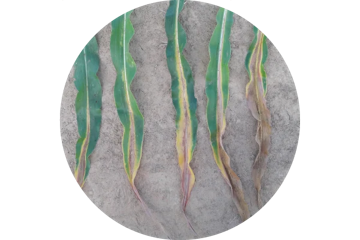
Nitrogen deficiency
Phosphorus deficiency
- Reduced plant growth and delayed development.
- Purple-red coloration on older leaves.
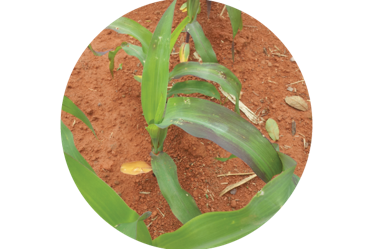
Phosphorus deficiency
Potassium deficiency
- Chlorosis along leaf margins of older leaves.
- Browning and necrosis of leaf edges and tips.
- Reduced cob filling and smaller kernels.
- Increased sensitivity to drought stress.
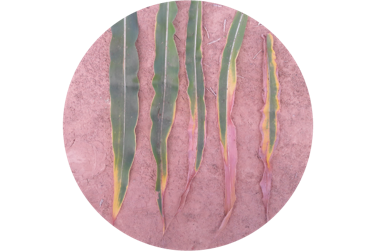
Potassium deficiency
Calcium deficiency
- Symptoms appear first on young leaves.
- Curled, wavy, or wrinkled leaves.
- Hooked leaf tips and distorted growth.
- Reduced root development and impaired crop establishment.
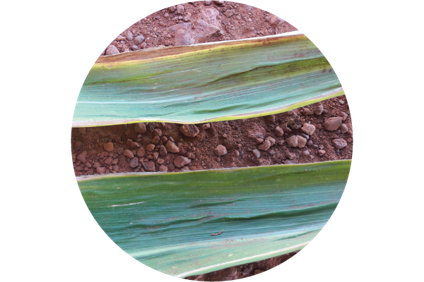
Calcium deficiency
Magnesium deficiency
- Interveinal chlorosis on older leaves.
- Yellow-green discoloration progressing to rust-brown or purple necrosis.
- Reduced photosynthetic activity and plant growth.
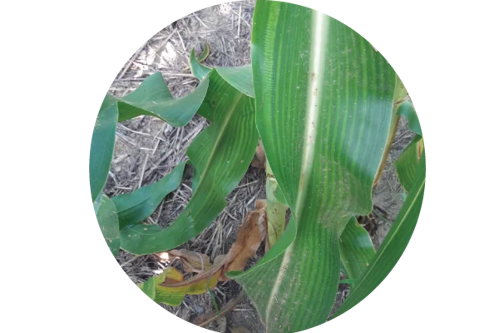
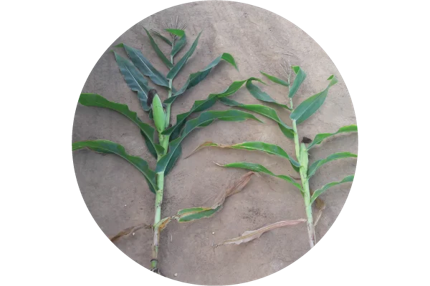
Sulfur deficiency
- Uniform chlorosis on young leaves.
- Stunting under severe deficiency.
Boron deficiency
- Wrinkled and distorted leaf blades.
- Loss of uniformity in leaf tissue development.
- Reduced pollination and kernel set.

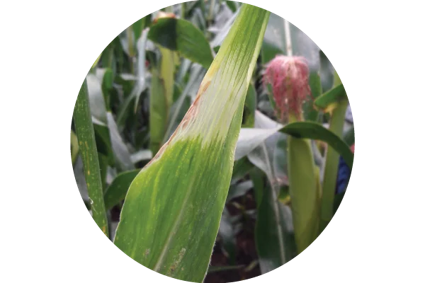
Copper deficiency
- Young leaves emerge with yellowing and twisted growth.
- Curling and necrosis of leaf tips.
- Soft stalks and dieback of growing points.
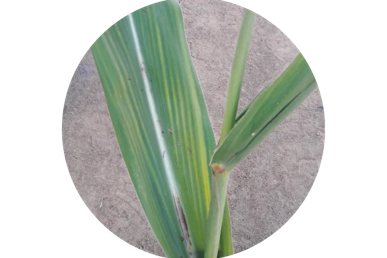
Iron deficiency
- Interveinal chlorosis on young leaves while veins remain green.
- Severe deficiencies may cause leaves to become almost white.
- Reduced plant growth
Manganese deficiency
- Interveinal chlorosis (whitish stripes) on young leaves.
- Necrotic lesions may develop along affected areas.
- Symptoms often resemble iron deficiency and may require tissue analysis for confirmation.

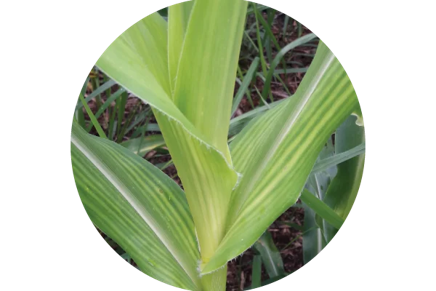
Zinc deficiency
- White or yellow bands developing between the midrib and leaf margins.
- Shortened internodes.
- Reduced leaf expansion and overall crop growth.
Fertilization Practices
An effective maize fertilization program begins with comprehensive soil analysis to determine nutrient status, soil pH, organic matter content, and potential constraints to productivity.
Fertilizer recommendations should be based on:
- Soil test results.
- Expected yield targets.
- Soil type and nutrient supply capacity.
- Climatic conditions and water availability.
- Local management practices and production system.
Because maize accumulates nutrients rapidly from the six-leaf stage (V6) onwards, nutrient availability must be maintained throughout the period of greatest demand. Nutrient management should focus on matching nutrient supply with crop uptake patterns to maximize nutrient use efficiency and minimize losses.
Key nutrient management considerations include:
- Correcting nutrient deficiencies and soil pH limitations before sowing.
- Base fertilizer recommendations on soil analysis, expected yield, and nutrient removal.
- Match nutrient supply with crop demand and nutrient uptake patterns throughout the growing season.
- Apply nutrients using the most appropriate source, rate, timing, and placement to maximize nutrient use efficiency.
- Split applications, controlled-release fertilizers, or enhanced-efficiency fertilizers where appropriate to reduce nutrient losses.
- Monitor crop nutritional status through tissue analysis.
- Adjusting nutrient strategies according to yield potential and environmental conditions.
Conclusion
Maize is a highly productive crop with substantial nutrient requirements throughout its growth cycle. Achieving high yields and grain quality depends on matching nutrient supply with crop demand throughout development. Adequate nutrition, supported by soil and tissue analyses and guided by the principles of 4R Nutrient Stewardship, improves nutrient use efficiency, contribute to greater productivity, profitability, and long-term soil fertility, ensuring sustainable maize production across a wide range of environments.
Reference
Bender, R.R. et al. (2013). Nutrient uptake, partitioning, and remobilization in modern, transgenic insect-protected maize hybrids. Agronomy Journal, 105(1), 161-170. https://doi.org/10.2134/agronj2012.0352
Ray et al., Strategies for water productivity enhancement in maize—A comprehensive review, August 2023, Irrigation and Drainage 73(1):359-374 DOI:10.1002/ird.2879
USDA Foreign Agricultural Service (FAS). 2026. Production – Corn. Available at: https://www.fas.usda.gov/data/production/0440000
Related Trials
Guides & Articles
Q&A
Here are some frequently asked questions we received from farmers regarding growing maize.
Potassium is the nutrient most closely associated with drought tolerance because it regulates stomatal activity, water balance, and osmotic adjustment within the plant. . Magnesium also plays an important role under stress conditions because it is a key component of chlorophyll and supports photosynthesis. Crops with adequate nutrition are generally better able to tolerate periods of high temperatures and maintain productivity during hot summer conditions.
Silage maize removes significantly more nutrients than grain maize because the entire aboveground biomass is harvested. Particular attention should be paid to:
- Nitrogen (N) to support biomass production.
- Potassium (K) because nutrient removal is substantially greater in silage systems.
- Magnesium (Mg) and Sulfur (S) to maintain crop growth and forage quality.
Fertilization programs should account for the higher nutrient removal associated with silage harvest and ensure adequate nutrient replacement to maintain long-term soil fertility and crop productivity.
The current world record for maize yield was achieved by David Hula in Virginia, USA, with a yield of approximately 33.4 t/ha of grain. This achievement highlights the importance of combining high-yielding genetics with excellent crop, water, and nutrient management.
The amount of irrigation required depends on weather conditions, soil type, crop growth stage, and atmospheric evaporative demand. Water requirements increase as maize grows and are highest during tasseling, silking, and grain filling. Irrigation should be scheduled according to crop demand and soil moisture availability. Applying excessive water at one time can reduce soil aeration and increase nutrient losses, while inadequate irrigation may limit yield. Satellite imagery and remote sensing tools can be valuable for monitoring crop water status and irrigation performance.
Controlled-release and enhanced-efficiency fertilizers can help synchronize nutrient availability with crop demand, particularly for nitrogen. These products may improve nutrient use efficiency, reduce nutrient losses, especially in environments where leaching, volatilization, or denitrification risks are high.
Explore Maize Solutions by Brand
Find the right solutions to improve crop quality and yield

State-of-the-art nutrition giving you higher Nutrient Use Efficiency (NUE) with fewer applications.
Brand details Agrocote<sup>®</sup>
The four-in-one natural fertilizer
Brand details Polysulphate<sup>®</sup>
Granular potassium fertilizer combining Polysulphate and potash for improved performance
Brand details ICL PotashpluSMaster your crop nutrition in any condition
Brand details Agromaster<sup>®</sup>State-of-the-art nutrition giving you higher Nutrient Use Efficiency (NUE) with fewer applications.
Brand details Agrocote<sup>®</sup>The four-in-one natural fertilizer
Brand details Polysulphate<sup>®</sup>Granular potassium fertilizer combining Polysulphate and potash for improved performance
Brand details ICL PotashpluSDiscover Our Solutions for Growing Maize
Maize Solutions: Increase Your Harvest
Agromaster®

Agromaster®
Agrocote®

Polysulphate®

Polysulphate®

Digital Tools
Access calculators to improve nutrient management and boost productivity


