Whatsapp
  X
X  Mail
Mail  Copy link
 How to Choose Between Humic Substances and Seaweed-Based Nutrition
Humic substances and seaweed-based nutrition both support crop performance, but they work through different mechanisms.

On this page:
Humic substances primarily improve nutrient availability and root-zone functionality, while seaweed extracts support plant physiological processes related to root development, osmotic balance, and recovery from environmental stress. Understanding these differences can help growers select the most appropriate technology for their production goals and growing conditions.
Why Are Growers Increasingly Using Biological Nutrition Technologies?
Modern crop production faces increasing challenges, including:
- Variable irrigation water quality
- Rising salinity levels
- Intensive production systems
- Soil degradation
- More frequent heat and drought events
- Greater pressure to improve nutrient-use efficiency
As a result, growers are increasingly integrating biological technologies alongside mineral nutrition programs.
Among the most widely used approaches are humic substances and seaweed-based nutrition. Although both can support crop performance, they influence different processes within the soil-plant system.
Understanding where and how they work is essential for building an effective nutrition strategy.
What Are Humic Substances?
Humic substances are naturally occurring organic compounds formed during the decomposition of plant and microbial residues.
They are typically divided into:
- Humic acids
- Fulvic acids
- Humins
In agricultural systems, humic acids have a complex structure, and their main effect is on the colloidal structure of the soil and its ability to absorb minerals and efficiently transfer them to plants.
What Is Seaweed-Based Nutrition?
Seaweed-based nutrition uses extracts derived from marine algae, most commonly Ascophyllum nodosum. These extracts contain a complex mixture of naturally occurring compounds, including:
- Betaines
- Alginates
- Polysaccharides
- Organic acids
- Trace bioactive molecules
Unlike humic substances, which primarily act in the soil, seaweed extracts influence plant physiological processes directly. They are widely used to support crop establishment, root development, and crop performance under challenging environmental conditions.
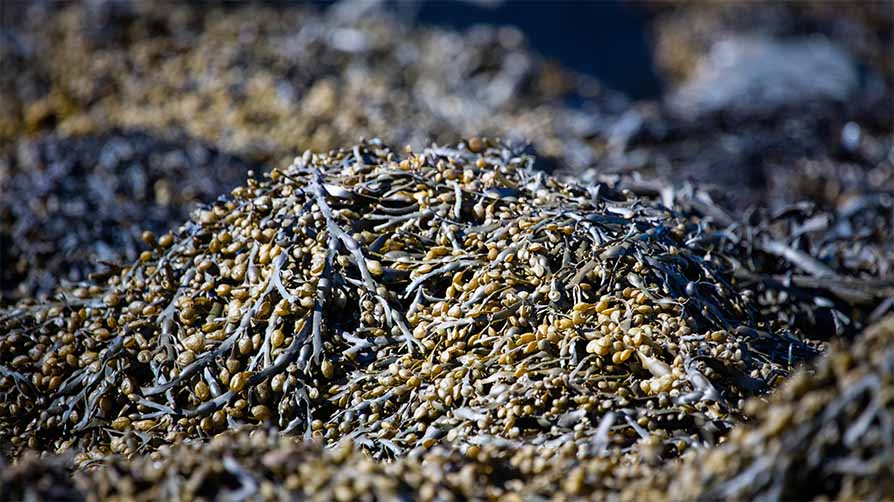
Ascophyllum nodosum is a seaweed used for the production of extracts containing many bioactive substances.
How Do Humic Substances and Seaweed Extracts Work Differently?
Although both technologies support crop performance, they operate through different biological and chemical mechanisms.
Humic Substances: Improving the Root-Zone Environment
Humic substances primarily act within the soil and around the root system.
Their effects include:
- Supporting Nutrient Retention – Humic molecules contain active functional groups that can temporarily bind nutrient ions such as potassium, calcium, magnesium, and micronutrients. This helps maintain nutrient availability in the root zone and can reduce nutrient losses in certain soil types.
- Supporting Phosphorus Availability – In many soils, phosphorus becomes unavailable after reacting with calcium, iron, or aluminum compounds. Humic substances can help reduce these fixation processes, allowing phosphorus to remain available for root uptake for longer periods.
- Stimulating Root Activity – Research has shown that humic substances can stimulate root membrane activity, including proton pump (H⁺-ATPase) activity, which plays a role in nutrient uptake processes.
- Supporting the Rhizosphere – Humic substances contribute to a more active rhizosphere environment, supporting interactions between roots, nutrients, water, and soil microorganisms.
As a result, humic technologies are often selected when nutrient availability and root-zone efficiency are primary objectives.
Seaweed-Based Nutrition: Supporting Plant Stress Physiology
Seaweed extracts primarily act within the plant itself. Their benefits are linked to naturally occurring bioactive compounds that help plants maintain physiological activity during periods of environmental stress.
- Supporting Osmotic Balance – Seaweed extracts contain natural betaines that help plant cells maintain water balance under drought, salinity, and high-temperature conditions. These compounds contribute to osmotic adjustment, helping cells maintain turgor pressure when water availability becomes limiting.
- Supporting Root Protection During Stress – Seaweed-derived polysaccharides and alginates can contribute to the formation of protective microenvironments around roots. These compounds help retain moisture near the root surface and support root function during temporary water deficits.
- Supporting Recovery Following Stress – Plants exposed to heat, salinity, transplanting, or water stress often experience reduced metabolic activity. Seaweed extracts help support physiological recovery processes, allowing plants to resume normal growth more efficiently when favorable conditions return.
- Supporting Root Development – Seaweed-based technologies are frequently associated with enhanced lateral root formation and improved root architecture, increasing the plant’s ability to access water and nutrients.
For this reason, seaweed-based nutrition is often used proactively before periods of expected environmental stress.
Humic Substances vs Seaweed-Based Nutrition: A Practical Comparison
| Characteristic | Humic Substances | Seaweed-Based Nutrition |
|---|---|---|
| Primary area of activity | Soil and rhizosphere | Plant physiology |
| Main objective | Nutrient availability and root-zone functionality | Stress support and plant performance |
| Key active compounds | Humic and fulvic fractions | Betaines, alginates, polysaccharides |
| Supports phosphorus availability | High | Limited |
| Supports nutrient retention | High | Indirect |
| Supports osmotic adjustment | Limited | High |
| Supports recovery after environmental stress | Indirect | High |
| Supports root development | Yes | Yes |
| Suitable for fertigation | Yes | Yes |
When Should Growers Prioritize Humic Substances?
Humic-based nutrition may be particularly relevant when:
- Soil fertility is declining
- Nutrient-use efficiency needs improvement
- Phosphorus fixation limits nutrient availability
- Sandy soils are prone to nutrient losses
- Root-zone functionality is a priority
Example
A vegetable grower working in alkaline soil with recurring phosphorus availability challenges may prioritize humic-based nutrition to support nutrient accessibility and improve fertilizer efficiency.
When Should Growers Prioritize Seaweed-Based Nutrition?
Seaweed-based nutrition may be particularly relevant when:
- High temperatures are expected
- Irrigation water has elevated salinity
- Crops are entering critical growth stages
- Transplant stress is anticipated
- Rapid root establishment is required
Example
A greenhouse tomato grower entering the summer season may incorporate seaweed-based nutrition to support crop performance during periods of elevated temperature and increased water demand.
Can Humic Substances and Seaweed-Based Nutrition Be Used Together?
Yes. Many advanced crop nutrition programs combine both technologies because they support different aspects of crop performance. Humic substances improve the efficiency of the root-zone environment by supporting nutrient availability and nutrient uptake. Seaweed extracts support plant physiological processes that influence root development, osmotic regulation, and stress recovery. When integrated within a balanced nutrition program, these technologies can complement each other throughout the growing season.
Choosing the Right Technology for Your Growing Conditions
The decision should be based on the primary challenge affecting crop performance.
Consider Humic Substances When:
- Nutrient availability is limiting growth
- Soil conditions reduce fertilizer efficiency
- Root-zone functionality requires improvement
- Long-term nutrient management is a priority
Consider Seaweed-Based Nutrition When:
- Environmental stress is expected
- Crop establishment is critical
- Root development needs support
- Crops require additional physiological support during demanding growth stages
Consider Both Technologies When:
- Nutrient efficiency and crop resilience are equally important
- Intensive fertigation programs are used
- Crops face both soil-related and environmental challenges
Conclusion
Humic substances and seaweed-based nutrition are not competing technologies. They address different agronomic challenges through distinct mechanisms.
Humic substances primarily improve nutrient availability, root-zone functionality, and fertilizer efficiency. Seaweed extracts support plant physiological processes related to root development, osmotic balance, and recovery from environmental stress.
Understanding these differences allows growers to make more informed decisions and build crop nutrition programs that address the specific limitations of their production system.