


 Whatsapp
  X
X  Mail
Mail  Copy link
 Understanding a Soil Analysis
What soil test results can tell you, what they cannot, and how to use them when planning turf nutrition.
On this page:
For many turf professionals, soil analysis is the starting point for creating a fertilizer program.
The process is familiar: take a soil sample, send it for analysis, and use the results to shape nutrient applications. It is a logical approach. Soil testing provides valuable information about pH, nutrient levels, and the chemical characteristics of the rootzone.
But is that enough?
A soil analysis provides useful evidence, but it does not tell the full story of turf nutrition. Grass species, climate, root development, and maintenance practices all influence how nutrients become available to the plant.
Understanding what a soil analysis can tell you, and where its limitations lie, is essential for making better fertilizer decisions.
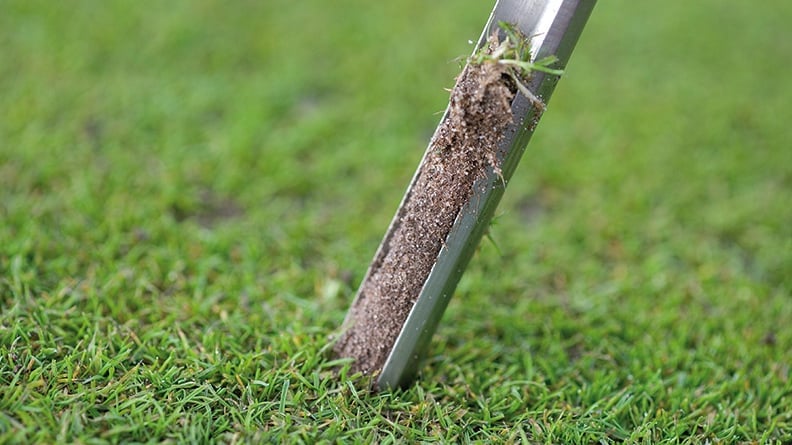
What does a soil analysis tell you?
A soil analysis provides a snapshot of the chemical conditions beneath the turf at the time the sample was taken. Depending on the analysis package, a report may include:
- pH levels – Indicates how acidic or alkaline the rootzone is and helps identify conditions that could restrict nutrient availability.
- Cation exchange capacity (CEC) – Provides an indication of the soil’s capacity to retain positively charged nutrients.
- Salinity – Helps identify levels of soluble salts that could contribute to turf stress.
- Macronutrients (N, P, K) and micronutrients – Shows the quantities of nutrients extracted using the laboratory’s chosen testing method.
- Organic matter content – Provides an indication of the organic material present within the sampled rootzone.
These results can help identify potential imbalances, constraints, and longer-term changes.
However, the figures do not necessarily show how much of each nutrient is currently available to the plant or how effectively the turf can absorb it.
Turf nutrition depends on more than soil chemistry. Nutrient uptake is also influenced by rooting, temperature, moisture, aeration, and ongoing management.
Why nutrient levels do not tell the whole story
A result that appears acceptable on a laboratory report does not automatically mean that the plant can access the nutrient effectively.
For example, a soil analysis may show that phosphorus is present, but poor rooting or unsuitable rootzone conditions could still restrict uptake. In that situation, applying more phosphorus may not address the underlying problem.
Soil pH is another important consideration. Extremes of pH can reduce the availability of certain nutrients, meaning that addressing the conditions affecting availability may be more effective than simply adding more fertilizer.
This does not mean that every pH imbalance can be corrected easily. Soil type and the underlying chemistry of the rootzone will influence what can realistically be achieved.
Nitrogen should also be considered differently from many other nutrients. Nitrogen is highly mobile, and its availability is affected by temperature, moisture, plant growth, and seasonal conditions. For this reason, nitrogen recommendations should be based primarily on plant demand and the desired turf response rather than a single soil test result.
Soil analysis provides an important benchmark, but fertilizer decisions need to go beyond the numbers shown on the report.

Why one soil test is rarely enough
Soil analysis is most useful when it is used to monitor trends over time.
A single test captures the conditions present in one sample at one moment. Results can be influenced by where the sample was taken, the sampling depth, recent applications, and environmental conditions.
Repeated testing allows turf managers to build a clearer picture of how the rootzone is changing.
For meaningful comparison, sampling should be carried out consistently. Where practical, use:
- Similar sampling locations
- A consistent sampling depth
- The same laboratory
- The same analysis methods
- A similar time of year
This makes it easier to identify genuine changes rather than differences caused by the sampling or testing process.
Long-term results may show whether pH is changing, nutrient levels are accumulating or declining, or changes to the management program are having the intended effect.
Why soil analysis can appear more definitive than it is
Laboratory reports present clear figures, ranges, and recommendations. This can make them appear to provide a definitive answer to what should be applied.
There are several reasons why soil analysis is sometimes treated as a fertilizer prescription:
- Industry tradition: Soil testing is often presented as the first and most important step in fertilizer planning.
- Simplicity: A report provides clear numbers that can be easier to act on than observations made in the field.
- Standard recommendations: Laboratory interpretations may not fully account for the grass species, surface type, management intensity, rootzone conditions, or performance objectives of the site.
The issue is not the value of soil testing. The problem comes when the results are interpreted in isolation.
A figure marked as low does not automatically mean a nutrient application is required. Equally, a value within a standard range does not guarantee that the plant can access the nutrient or that turf performance will be satisfactory.
The report needs to be interpreted in the context of the site.
What should you consider alongside soil analysis?
Soil results should be combined with practical observations of how the turf is performing.
Consider:
- Turf color
- Growth rate
- Turf density
- Root development
- Stress symptoms
- Grass species
- Weather conditions
- Rainfall and irrigation
- Soil drainage
- Aeration
- Organic matter management
- Previous fertilizer applications
- The intended quality and performance of the surface
These factors provide the real-world context needed to interpret the laboratory results properly.
Visual assessment should not replace analysis, but it can show how the plant is responding under current conditions. Used together, soil data and practical observations provide a much more useful basis for decision-making than either one alone.
How to use soil analysis in a fertilizer plan
A soil analysis should help inform the program rather than determine it automatically.
A more effective approach is to:
Use the results to identify potential constraints
Look for issues such as unsuitable pH, salinity, or nutrient levels that may require further investigation.
Track changes over time
Avoid making major changes in response to a single result unless there is clear evidence of an immediate problem.
Observe turf performance
Assess color, growth, rooting, and stress response to understand whether the laboratory findings are reflected in the plant.
Consider environmental conditions
Temperature, rainfall, irrigation, and drainage all influence nutrient availability and plant demand.
Match inputs to the turf
Different grass species, surface types, and management objectives require different levels and patterns of nutrition.
Consider the wider management program
Aeration, irrigation, drainage, and organic matter management can affect nutrient uptake as much as the amount of fertilizer applied.
This approach aligns fertilizer inputs with the actual needs of the turf rather than treating every figure on the report as an instruction.
Balancing soil data with practical turf management
Soil analysis is a valuable part of turf nutrition planning, but it is not the whole story.
It can identify potential constraints, establish benchmarks, and help track changes within the rootzone. It cannot account fully for plant demand, rooting, weather, maintenance practices, or the performance expected from the surface.
Rather than treating soil test results as a prescription, they should be considered alongside field knowledge, environmental conditions, and real-world turf performance.
At ICL, we believe in evidence-based fertilizer planning. Soil data should form part of the decision, but it should not replace agronomic judgment.
By taking a balanced approach, turf professionals can develop nutrition programs that respond to the needs of the plant and support consistent, long-term turf performance.

