


 Whatsapp
  X
X  Mail
Mail  Copy link
 How to Prepare Olive Orchards for Efficient Mechanical Harvesting
Efficient mechanical olive harvesting starts before the harvester enters the orchard. Harvest timing, canopy structure, soil conditions, fruit maturity, fruit removal force, and pre-harvest management can all influence how effectively olives are removed from the tree.
On this page:
While this use case offers a valuable reference, local validation by qualified agronomic professionals is recommended before implementing the program in other regions, as cultivar response, environmental conditions, and regulatory requirements may vary.
Preparing these factors in advance can help growers improve harvesting efficiency while supporting fruit quality and reducing unnecessary stress on trees.
What Determines Mechanical Olive Harvesting Efficiency?
Mechanical harvesting depends on effective transfer of vibration from the harvester through the trunk and canopy to the fruit. Several factors influence this process:
- Fruit maturity: As olives mature, the force required to detach them generally decreases.
- Fruit removal force: Lower fruit removal force can make mechanical fruit removal more efficient.
- Canopy structure: A well-managed canopy allows vibration to move more effectively through the tree.
- Orchard and soil conditions: Machinery needs suitable access and sufficiently firm soil conditions during harvest.
- Harvest timing: Once fruit reaches the required maturity and detachment characteristics, delays can affect fruit quality and harvesting conditions.
For this reason, mechanical harvesting should be treated as an orchard-management process rather than a single operation.
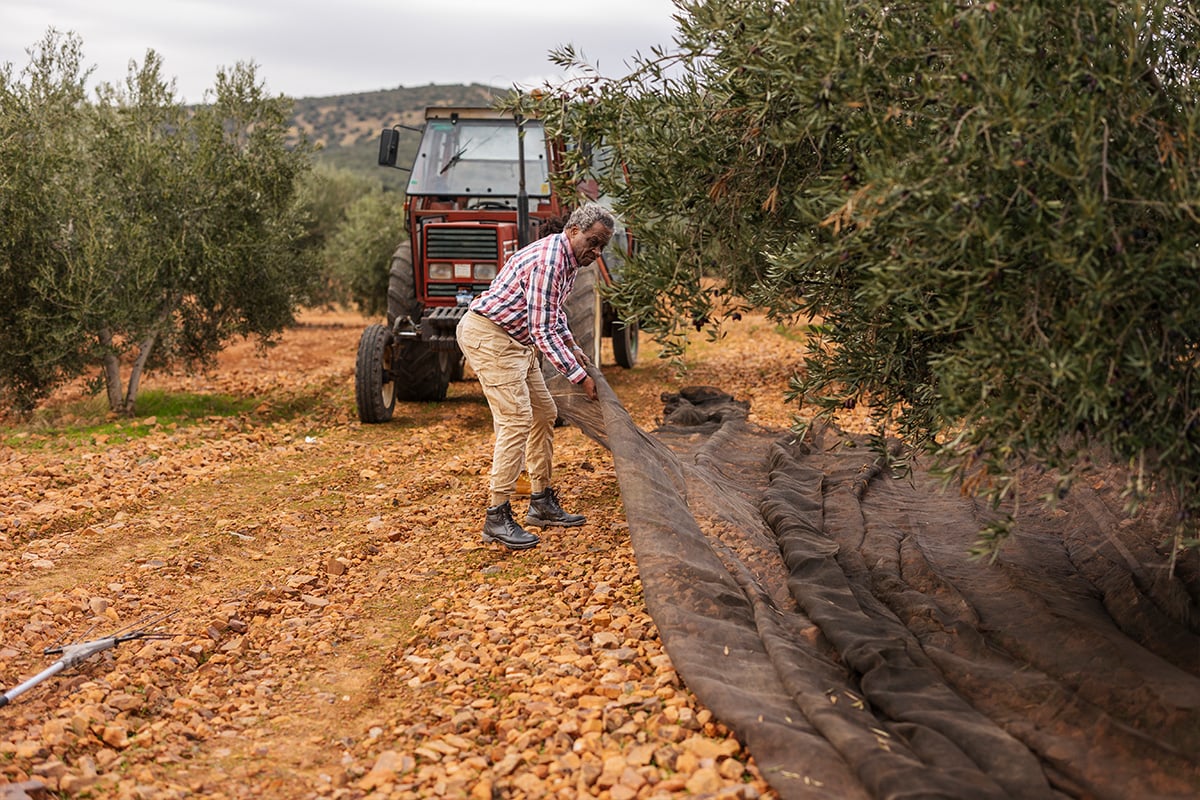
Nets are placed under trees before an olive harvest starts.
How Should an Olive Orchard Be Prepared Before Harvest?
Match harvest timing to fruit maturity
Determine the harvest date according to the intended end use, cultivar, fruit maturity, and orchard conditions. For oil olives, maturity affects both oil accumulation and oil characteristics. For table olives, the required maturity depends on the intended processing method and market specification. The objective is therefore not simply to harvest as late as possible. It is to identify the appropriate harvest window for the production objective.
Prepare the tree for efficient shaking
Remove suckers and maintain a suitable canopy structure before harvest. Excessive vegetative growth around the trunk and poorly structured canopies can interfere with machinery and reduce efficient vibration transfer through the tree. Canopy management should form part of the orchard’s longer-term pruning strategy rather than relying on major pruning immediately before harvest.
Manage irrigation according to soil and orchard conditions
Where appropriate for the production system, irrigation management before harvest can help provide firmer orchard conditions for machinery and may reduce susceptibility to trunk damage during shaking. The original field recommendation for this program is to stop irrigation approximately 7–14 days before harvest. This interval should not be treated as universal. Soil texture, climate, tree water status, irrigation system, and local agronomic recommendations should determine the final irrigation schedule. Heavy soils, for example, can remain wet for longer and may restrict machinery access after irrigation or rainfall.
Plan any pre-harvest treatment around the actual harvest date
Where locally registered and agronomically recommended, fruit-loosening treatments may be incorporated into a mechanical harvesting program. The purpose of these treatments is to reduce fruit removal force so that mature olives detach more readily during shaking. Timing is important. If treatment is applied and harvesting is then delayed by rainfall or unsuitable soil conditions, the orchard may move beyond the intended treatment-to-harvest window.
Why Does Fruit Removal Force Matter?
Fruit removal force describes the force required to detach an olive from its pedicel. As fruit approaches harvest maturity, natural physiological changes occur in the abscission zone. Fruit-loosening treatments such as ethephon can further promote this process by releasing ethylene in plant tissues.
Reducing fruit removal force can improve the ability of mechanical shaking to detach olives. The response, however, depends on factors including cultivar, maturity, treatment concentration, environmental conditions, and application timing. Higher treatment rates do not automatically produce better results. Excessive fruit loosening can contribute to pre-harvest fruit drop or leaf drop, making correct timing and concentration important.
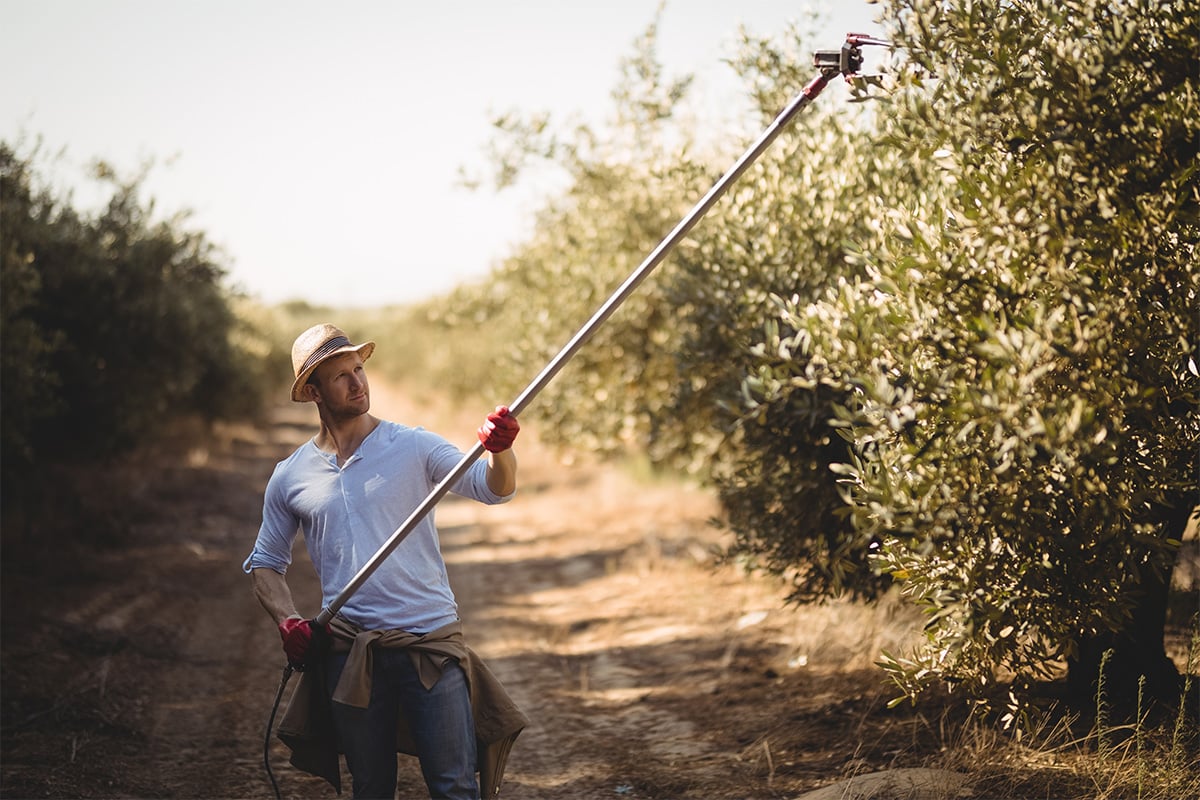
Olive harvester is a handheld device that shake or vibrate branches to detach olives.
Pre-Harvest Fruit-Loosening Program for Olives
Important: The following program reflects a specific agronomic recommendation that was successfully tested in trials held in Israel. Ethephon is a regulated plant growth regulator and its use vary by country.
Where this program is registered and recommended, the treatment is scheduled approximately 8 days before the planned mechanical harvest. The program combines:
Ethephon
Used as the fruit-loosening component of the treatment.
NutriVant Starter 11-36-24
A fully soluble foliar fertilizer containing nitrogen, phosphorus, potassium, and micronutrients and incorporating FertiVant technology to support foliar nutrient uptake.
Under the supplied agronomic program, NutriVant Starter is applied at 2.5% together with the locally approved ethephon treatment. The supplied field recommendation uses ethephon concentrations between 0.1% and 0.25%, depending on harvest timing, with the higher concentration used for October applications and the lower concentration for December applications. These concentrations must only be used where they comply with the locally registered product label and agronomic recommendation.
Why Include NutriVant Starter in the Pre-Harvest Program?
Pre-harvest nutrition should support the physiological stage of the crop rather than attempt to compensate for deficiencies that should have been corrected earlier in the season. NutriVant Starter 11-36-24 provides a phosphorus- and potassium-rich foliar formulation together with nitrogen and micronutrients. Its FertiVant technology is designed to improve foliar spray retention, penetration, and nutrient uptake.
During the late fruit-development period, adequate potassium nutrition is particularly relevant because potassium is involved in carbohydrate transport, osmotic regulation, and several metabolic processes associated with fruit development. The objective of including foliar nutrition in the program is therefore to support the crop during the final development and maturation period while the orchard is being prepared for harvest. It should be considered part of the overall nutrition program, not a substitute for balanced seasonal olive nutrition.
Application Conditions Matter
A technically correct treatment can still perform inconsistently when application conditions are unsuitable. For the supplied program:
- Apply approximately 8 days before the planned harvest.
- Use a minimum spray volume of 200 L per 1,000 m² to provide adequate canopy coverage.
- Apply under moderate temperatures and suitable humidity conditions that support foliar absorption.
- Avoid application when rain is forecast.
- Make sure machinery is likely to have access to the orchard during the intended harvest window.
Rainfall is particularly important on heavy soils. Wet soil can prevent mechanical harvesters from entering the orchard for several days, potentially delaying harvesting beyond the intended fruit-loosening period. Application planning should therefore consider both crop physiology and the weather forecast.
A Practical Pre-Harvest Checklist
Before mechanical harvesting begins, check that:
- Fruit maturity matches the production objective.
- The canopy and trunk area allow effective mechanical shaking.
- Irrigation and soil conditions provide suitable machinery access.
- Any locally approved fruit-loosening treatment is correctly timed to the planned harvest.
- Weather conditions allow both treatment application and harvesting within the intended window.
Bringing Orchard Preparation and Nutrition Together
Successful mechanical olive harvesting depends on several connected decisions. Fruit maturity determines when the crop is ready. Canopy management affects how efficiently vibration moves through the tree. Irrigation and soil conditions influence machinery access. Fruit removal force influences how readily olives detach. Pre-harvest nutrition supports the crop during its final stage of development. NutriVant Starter can be incorporated into a locally approved pre-harvest program to provide foliar nutrition during this important stage. The strongest results come from coordinating these practices around a clearly defined harvest date rather than treating each operation separately.
While this use case offers a valuable reference, local validation by qualified agronomic professionals is recommended before implementing the program in other regions, as cultivar response, environmental conditions, and regulatory requirements may vary.

Related Crop


