Whatsapp
 X
 Mail
 Copy link
Unlocking Legume Potential: The Key Role of Sulfur in Nitrogen Fixation
Many growers rely on legumes - soybeans, alfalfa, clover, peas - to naturally enrich their soils with nitrogen. Yet even with proper inoculation, nodulation often occurs without delivering expected yield or protein levels. The missing link is sulfur.
On this page:
Why Legumes Underperform: The Hidden Sulfur Problem
Sulfur is essential for the biochemical machinery inside root nodules. Without it, nitrogenase, the enzyme that converts atmospheric nitrogen (N₂) into ammonia (NH₃), cannot function. Nodules shrink, leghemoglobin drops, and nitrogen fixation slows or stops.
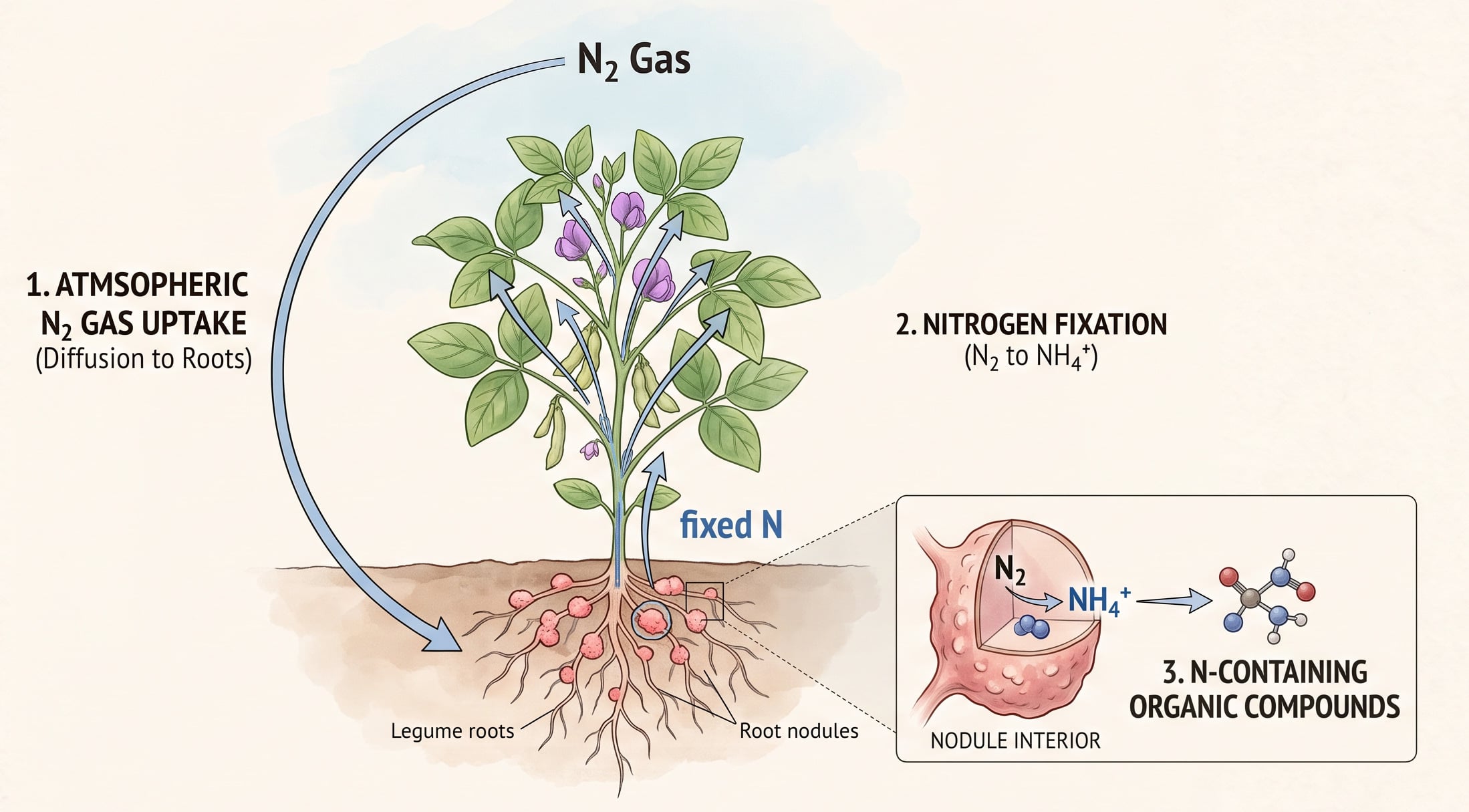
Biological nitrogen fixation takes place in root nodules of leguminous plants.
This article explains why sulfur is indispensable, how to diagnose deficiency, and how to manage sulfur strategically to unlock the full nitrogen‑fixing potential of legumes.
Why Nitrogen Fixation Depends on Sulfur
Nitrogenase: A Sulfur‑Powered Enzyme
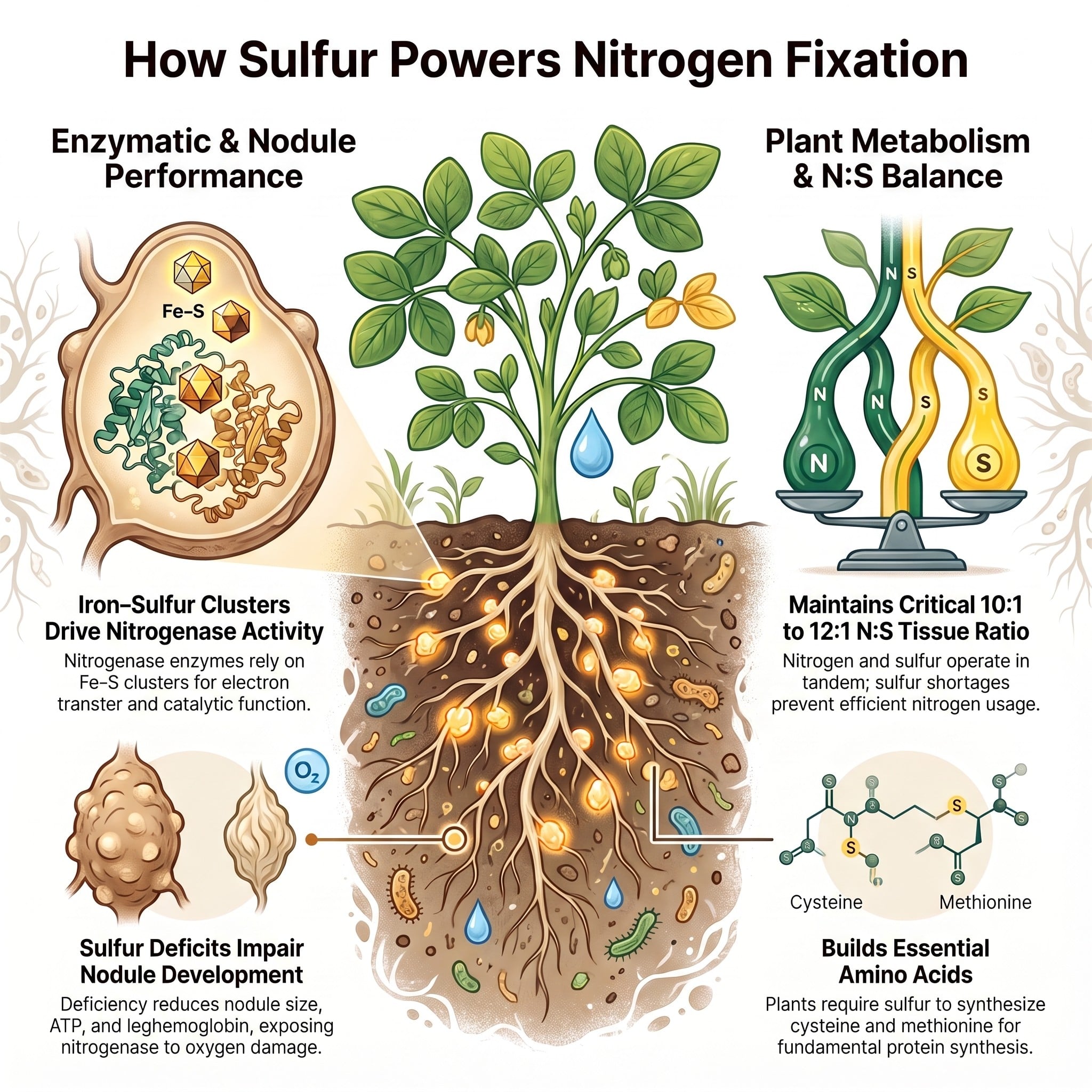
The nitrogenase enzyme is built around iron–sulfur (Fe–S) clusters. These clusters are essential for electron transfer and catalytic activity. Without adequate sulfur, plants cannot synthesize functional nitrogenase, leading to reduced or inhibited symbiotic nitrogen fixation.
Nodule Development & Leghemoglobin
Sulfur deficiency reduces nodule number, size, and metabolic activity. Nodules under sulfur stress show declines in ATP, glucose, ferredoxin, and leghemoglobin – the oxygen‑buffering protein that keeps nitrogenase protected from oxygen damage. Lower leghemoglobin means impaired respiration and reduced nitrogenase activity.
Protein Synthesis & N:S Ratio
Nitrogen and sulfur metabolism are tightly linked. Plants require sulfur to synthesize the amino acids cysteine and methionine, which form the backbone of protein synthesis. Research shows that nitrogen and sulfur operate in a coordinated ratio, typically around 10:1 to 12:1 in plant tissue, meaning sulfur shortages directly limit the plant’s ability to use nitrogen efficiently.
Together, these mechanisms explain why sulfur deficiency causes poor nodulation, reduced nitrogen fixation, and lower yield, even when inoculation and soil nitrogen supply appear adequate.
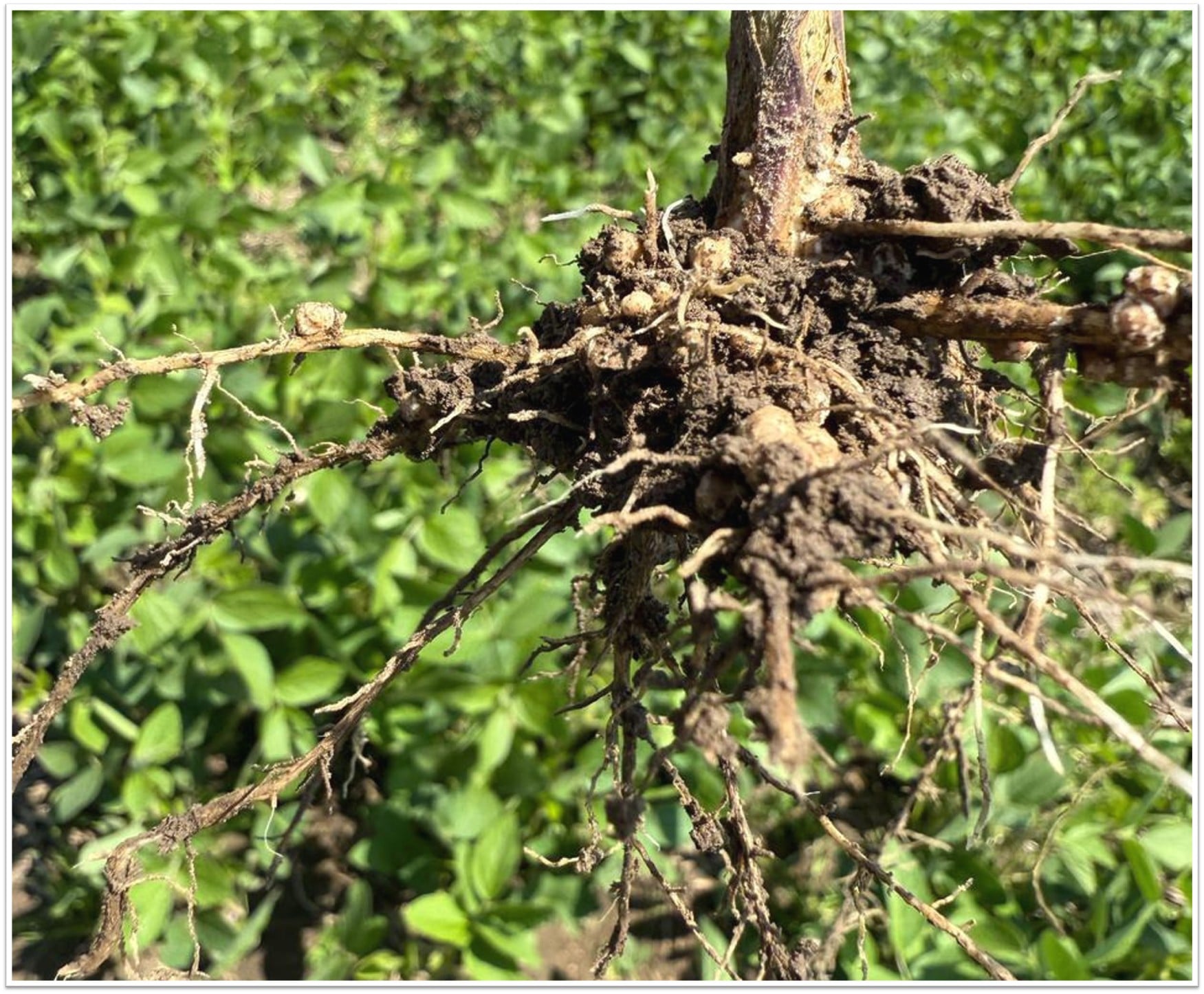
The root system of a soybean plant with visible root nodules where the nitrogen biological fixation takes place.
What Are the Visual Symptoms of S and N Deficiency
Sulfur deficiency often resembles nitrogen deficiency, but the leaf pattern makes the distinction clear. When sulfur is lacking, yellowing begins on the younger leaves because sulfur is immobile within the plant. In contrast, nitrogen deficiency shows up first on older leaves, since nitrogen can be redistributed from mature tissues to new growth. Beyond chlorosis, sulfur‑deficient plants tend to be smaller, more spindly, and slower to develop, often showing delayed maturity.
Below‑Ground Indicators
Below ground, nodules provide additional diagnostic clues. Healthy, actively fixing nodules are pink or red inside due to the presence of leghemoglobin. Nodules formed under sulfur deficiency are typically pale or greenish‑brown, smaller in size, fewer in number, and noticeably less metabolically active.
Tissue Testing Benchmarks
Tissue testing can help confirm the diagnosis. Legumes generally require higher sulfur concentrations than cereals, and leaf sulfur levels below 0.2% are commonly considered deficient. For most legumes, the optimal N:S ratio falls between 10:1 and 12:1, depending on species and growth stage.
Why Sulfur Deficiency Is Increasing Worldwide
Thirty years ago, atmospheric sulfur deposition from industrial emissions supplied significant sulfur to soils. Cleaner air regulations drastically reduced sulfur emissions, improving human health but sharply lowering natural sulfur inputs.
At the same time, modern high‑yielding varieties remove more sulfur from the soil, and high‑analysis fertilizers (urea, DAP, KCl) contain little or no sulfur. Combined with reduced manure use and intensified cropping systems, sulfur depletion has become widespread across legume‑growing regions.
The result: many soils that historically supplied adequate sulfur no longer meet crop demand, making sulfur fertilization essential for optimal nitrogen fixation.
How To Manage Sulfur Fertilization in Practice
Choosing the Right Sulfur Source
Sulfur management begins with choosing the right source. Sulfate‑S (SO₄²⁻) is immediately available to plants, making it the most effective option for correcting in‑season deficiencies and supporting early nodulation. Because it does not rely heavily on microbial activity, sulfate performs reliably even in cool soils. Elemental sulfur (S⁰), on the other hand, releases sulfur slowly as microbes oxidize it over time. This makes it better suited for long‑term sulfur building rather than rapid correction, and its performance depends strongly on soil temperature and moisture.
Timing and Placement for Maximum Efficiency
Application timing also plays a major role in sulfur availability. Pre‑plant applications work well for both sulfate and elemental sulfur, especially when soils are cool and early nodulation requires a dependable sulfur supply. Side‑dress applications are useful when deficiency symptoms appear, particularly when using sulfate sources that can be taken up quickly. Because sulfate is mobile in the soil, sandy fields often benefit from split applications to reduce leaching losses and maintain consistent availability throughout the season. Another way to reduce leaching would be to use slow release sources of sulfate.
Soil Conditions Influencing Sulfur Availability
Soil conditions further influence how much sulfur legumes can access. In acidic soils, sulfate may be retained through adsorption to iron and aluminium oxides. As soil pH increases, sulfate adsorption generally decreases, increasing sulfate mobility. In calcareous soils, interactions with calcium and carbonate minerals may influence sulfate distribution, but sulfate usually remains relatively available in soil solution. Organic matter mineralization can supply sulfur, however this process is too slow to fulfill crop needs. Moisture is also essential, especially for elemental sulfur, since microbial oxidation requires warm, moist conditions to proceed efficiently.
Polysulphate: A Reliable Sulfur Source for Legume Systems
A practical way to support sulfur nutrition in legume systems is through Polysulphate. As a multi‑nutrient fertilizer containing 100% sulfate sulfur, Polysulphate provides immediately available S alongside potassium, magnesium, and calcium. Its sulfate form ensures rapid uptake during early nodulation, while its natural, prolonged release pattern maintains sulfur availability throughout the season. This combination makes Polysulphate an effective option for sustaining nitrogenase activity, supporting healthy nodules, and maintaining the balanced N:S ratios required for efficient biological nitrogen fixation.
What Growers Should Remember About Sulfur and Nitrogen Fixation
- Sulfur is essential for nitrogenase and leghemoglobin – without it, nitrogen fixation collapses.
- Yellowing on young leaves is the key indicator of sulfur deficiency.
- Modern soils are increasingly sulfur‑deficient due to cleaner air and the widespread use of concentrated fertilizers that contain no sulfur.
- Use sulfate for quick correction or in cold weather; elemental sulfur for long‑term supply.
- Maintain balanced N:S ratios (≈10:1–12:1) to support protein synthesis and nitrogen fixation.