


 Whatsapp
  X
X  Mail
Mail  Copy link
 Why Seaweed Extraction Matters
Not all seaweed extracts perform the same. See how extraction method can influence turfgrass rooting and why this matters when choosing a product.
On this page:
Seaweed has been used in turf management for generations, particularly in golf. But the term “seaweed extract” covers products produced from different seaweed species and using different extraction methods.
That distinction matters because research shows that the extraction process can change both the composition of the resulting extract and the response seen in the plant.
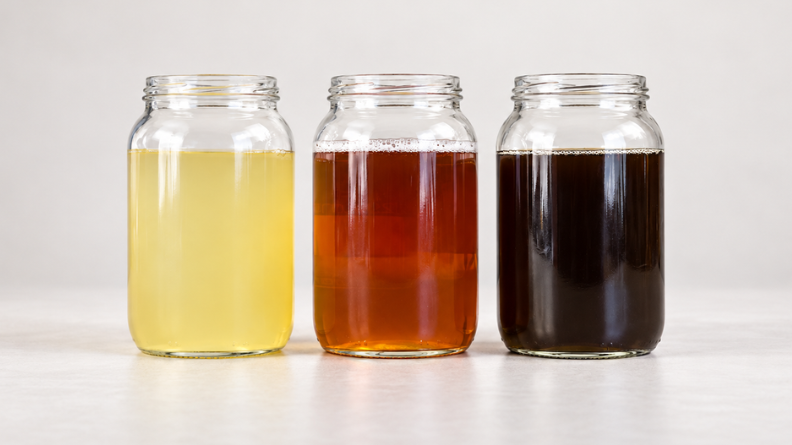
From left to right: cold blend, acid and alkaline extracts produced from the same Ascophyllum nodosum raw material.
Why extraction matters
Ascophyllum nodosum is one of the most extensively researched brown seaweeds used in agriculture, horticulture and turf management. It contains a complex mixture of naturally occurring compounds, including carbohydrates and other bioactive components.
How these compounds are extracted affects the final product.
Research by Owen, Williams and Hiltz compared four extraction methods using the same sample of Ascophyllum nodosum. Read the full research paper.
- alkaline extraction
- hot-water extraction
- acid extraction
- cold-blend extraction
Chemical analysis showed clear differences between the extracts, including differences in pH, carbohydrates and nutrient concentrations.
The important question for turf managers, however, is not simply whether the extracts are chemically different. It is whether those differences influence the plant.
Different extraction methods, different rooting responses
The four extracts were applied at equivalent field rates to perennial ryegrass seedlings and compared with an untreated control.
The alkaline extract produced:
- 608 cm total root length, compared with 420 cm in the untreated control
- 0.158 cm³ total root volume, compared with 0.104 cm³ in the untreated control
It was the only extraction method in the study to significantly increase both total root length and total root volume over the control.
The other extraction methods produced different responses. This reinforces an important point.
Seaweed extracts should not be treated as interchangeable simply because they originate from the same seaweed species.
What this means when choosing a seaweed product
The source seaweed matters, but so does the way it is processed.
SMX is produced from Ascophyllum nodosum using an alkaline extraction process. The comparative turf research provides evidence that this extraction approach can produce a different rooting response from other methods.
Rather than judging a seaweed product simply by whether it is described as cold processed, hot extracted or otherwise, look for evidence of what the finished extract actually does in the plant.
