


 Whatsapp
 X
 Mail
 Copy link
How Ornamental Plants Grow and Build New Biomass
To grow all plants need to convert water, carbon dioxide, light and nutrients into new biomass through photosynthesis, respiration and assimilate transport
On this page:
Plant growth is the foundation of ornamental crop production. Valuable crops grow well balanced, harmonious, vigorous, compact. To manage plant growth effectively, it is important to understand how the physiological processes originate because the determine how and at which rate plants build new tissues and organs.
What Plant Growth Really Means
Plants grow continuously. New roots, leaves, stems, flowers and fruits are formed as the plant continuously builds new biomass. This process requires 4 essential inputs:
- water (H₂O)
- carbon dioxide (CO₂)
- light
- nutrients.
These inputs are essential because they provide the resources required for growth, and yet growth only occurs when the plant converts them into organic compounds: the only way a plant can actually use the water, the carbon dioxide, the light and the nutrients it receives, to form new cells, tissues and organs, resulting in new biomass.
Where Plant Biomass Comes From
Light, water, carbon dioxide and nutrients do not contribute equally to the formation of plant biomass.
Most of a plant’s dry matter consists of carbon (C), hydrogen (H) and oxygen (O). These elements are derived primarily from carbon dioxide (CO₂) in the air and water absorbed through the roots.
Only a relatively small proportion of the plant’s total dry weight derives from mineral nutrients such as nitrogen (N), phosphorus (P), potassium (K), calcium (Ca), magnesium (Mg), sulphur (S) and trace elements. This does not make them less important as they play critical roles in:
- enzyme activity
- energy transfer
- cell structure formation
- countless physiological processes that enable growth to occur.
Photosynthesis: Converting Light into Plant Biomass
Photosynthesis is the process that forms the basis of virtually all growth and development within the plant. Air and water cannot be directly used to produce new biomass. Photosynthesis converts carbon dioxide from the air and water from the root environment into energy-rich organic compounds.
Photosynthesis (assimilation) takes place primarily in the leaves where chloroplasts capture sunlight and use its energy to drive a series of biochemical reactions that convert carbon dioxide (CO₂) and water (H₂O) into glucose, a simple sugar compound.
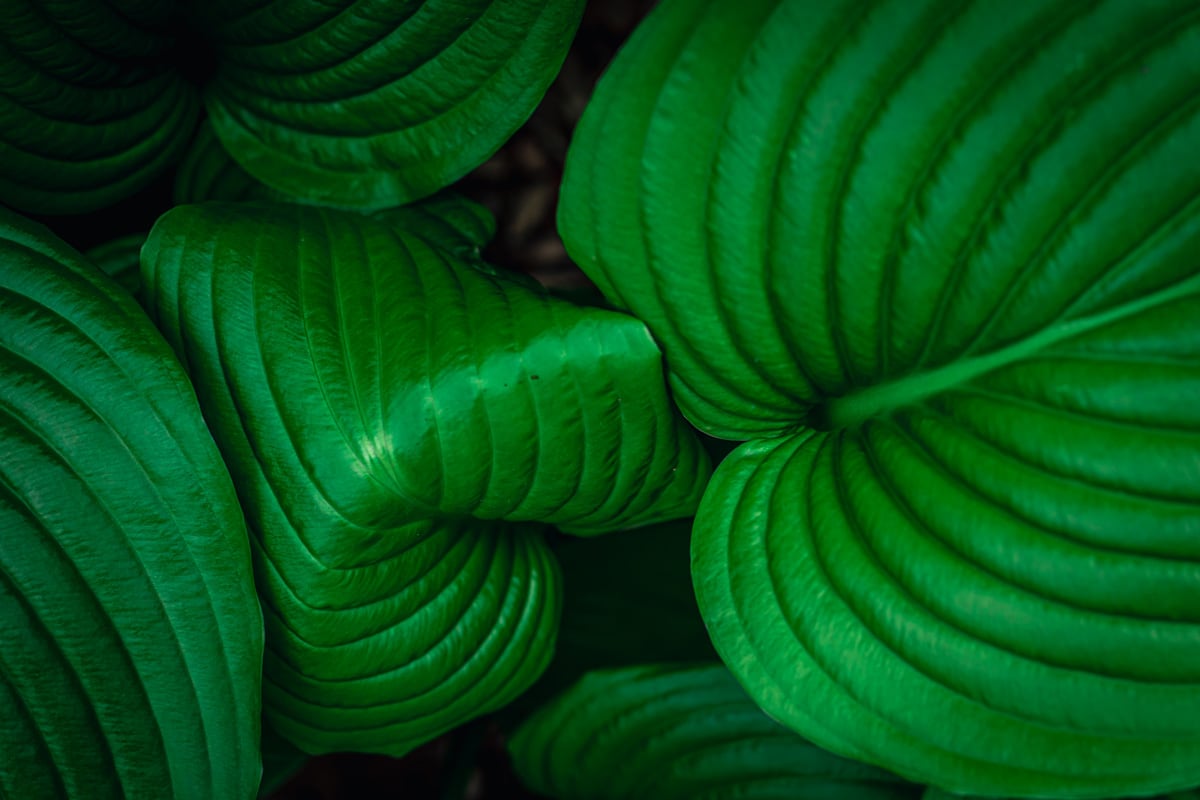
Photosynthesis mostly takes place in plant’s leaves.
In simplified form, photosynthesis can be represented by the following equation:
6 CO₂ + 6 H₂O + light energy → C₆H₁₂O₆ + 6 O₂
Although this equation appears relatively simple, it forms the basis of virtually all life on Earth. The sugars produced contain the energy and building blocks required for the formation of new plant cells and biomass.
The sugars/glucose formed during photosynthesis have several functions:
- energy for plant metabolism
- cellulose for cell walls
- amino acids for proteins
- various storage compounds such as starches and oils.
Ultimately, nearly all new biomass produced by a plant can be traced back to the sugars generated during photosynthesis.
Respiration: Using Sugars to Produce Usable Energy
Although photosynthesis supplies the building blocks for new biomass, not all produced sugars are converted into growth. In fact, plants require energy also to maintain existing cells, absorb and transport water (H₂O) and nutrients and produce new tissues and organs.
To support these needs, part of the sugars produced are broken down again through respiration.
During respiration, sugars are broken down in the presence of oxygen gas (O₂) producing carbon dioxide (CO₂), water (H₂O) and usable energy. This energy released during respiration is used for virtually all life processes within the plant:
- cell division
- cell expansion
- nutrient uptake
- water transport
- maintenance of existing tissues
- synthesis of new plant structures
Without respiration, a plant could produce sugars but would be unable to use them for growth and development.
Plant Growth: a Balance between Photosynthesis and Respiration
The amount of biomass a plant ultimately produces is determined by the balance between photosynthesis and respiration. In other words, between sugar production and sugar consumption.
In fact,
- during photosynthesis, plants generate sugars.
- during respiration, part of those sugars is consumed to provide energy for maintenance and growth processes.
When sugar production exceeds sugar consumption, the excess carbohydrates become available for the formation of new biomass and plant growth increases. Conversely, when a large proportion of the produced sugars is used for maintenance and respiration, fewer resources remain available for new growth.
Assimilate Transport: Moving Sugars to Growing Plant Parts
Photosynthesis occurs primarily in mature leaves, but growth takes place throughout the entire plant.
To support growth in different organs, the sugars produced in the leaves must be transported to the locations where they are needed. During transport, these photosynthetic products are generally referred to as assimilates.
Assimilates move through the phloem, the plant’s internal transport system responsible for distributing sugars and other organic compounds.
Via the phloem, assimilates are transported from the leaves to actively growing and storage tissues, including:
- root systems
- shoot tips
- developing leaves
- flowers
- fruits
- bulbs
- tubers
- rhizomes
- seeds
At these destinations, assimilates can either be used immediately for growth or converted into storage compounds for later use.
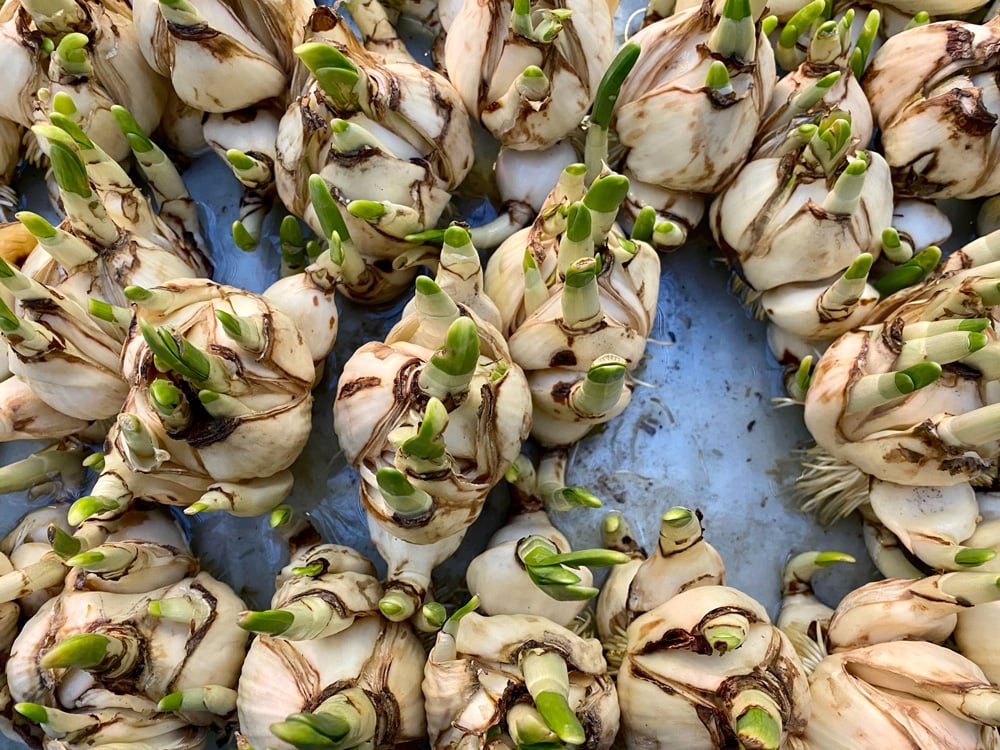
Bulbs are plant’s organs where assimilates are stored to support new growth.
Sources and Destination of Assimilates
Not all parts of the plant produce the same amount of assimilates. Mature leaves generally produce more sugars than they require themselves and therefore act as sources of assimilates. In contrast, rapidly growing plant parts such as young leaves, root tips, flowers and fruits often consume more assimilates than they produce and therefore act as destinations for these building blocks.
Growth as Interaction of Photosynthesis, Respiration and Assimilates Transport
Growth is the result of a continuous interaction between three physiological processes.
- Photosynthesis provides the sugars that serve as the building blocks for new biomass.
- Respiration supplies the energy required to convert these building blocks into new cells, tissues and organs.
- Assimilate transport distributes sugars throughout the plant, making them available wherever growth and development occur
The ultimate growth of an ornamental crop depends on the balance between assimilate production, assimilate consumption during respiration and the assimilates distribution.
Any factor that
- limits photosynthesis,
- increases respiratory demand or
- restricts assimilate transport
can reduce biomass production and plant growth. Understanding these processes provides the foundation for managing crop development, plant quality and production performance.
Conclusion
Understanding plant physiology and processes is one of the many skillps a professional ornamental plant grower has to master in daily life. ICL is proud to share its knowledge through its set of web-articles or thanks to the taylored advice of our technical consultants. Regional support is available: visit your country’s website to find who’s the closest ICL’s expert to you or fill in the form available by clicking on the banner at the bottom of this page.


Our knowledge
Tips & tricks, disease prevention, crop and market related information
Explore our knowledge