


 Whatsapp
 X
 Mail
 Copy link
The Role of Beneficial Microbes in Ornamental Horticulture

On this page:
In this evolving era where plant resilience is increasingly becoming the goal of ornamental plant production, the management of the root microbiome is getting growing attention.
Key Takeaways for Growers when Using Microbes
This article starts with the most relevant takeaways that have direct impact on professional plant growers’ everyday work. Understanding how these microorganisms interact with roots is an important step to build more resilient crops. In a nutshell: beneficial fungi and bacteria help improve nutrient availability, support root development, improve plant’s access to water and nutrients, strenghten natural defenses and enhance a plant’s ability to cope with both biotic and abiotic stress.
- The root zone functions as a complex ecosystem where beneficial microbes can influence plant health and performance.
- Arbuscular mycorrhizal fungi expand the effective root system and improve access to water and nutrients.
- Beneficial microorganisms can help suppress soil-borne pathogens through competition and antagonistic activity.
- Certain microbes activate natural plant defense mechanisms through Induced Systemic Resistance (ISR).
- Exopolysaccharides and ACC deaminase-producing bacteria can help plants better tolerate heat, drought, and salinity stress.
- Microbial activity improves nutrient availability and supports consistent crop development.
- Early application improves the likelihood of successful microbial establishment.
- Microbial products perform best when combined with good irrigation, nutrition, and root-zone management practices.
- A healthy microbial community can contribute to improved crop uniformity, root development, and long-term resilience.
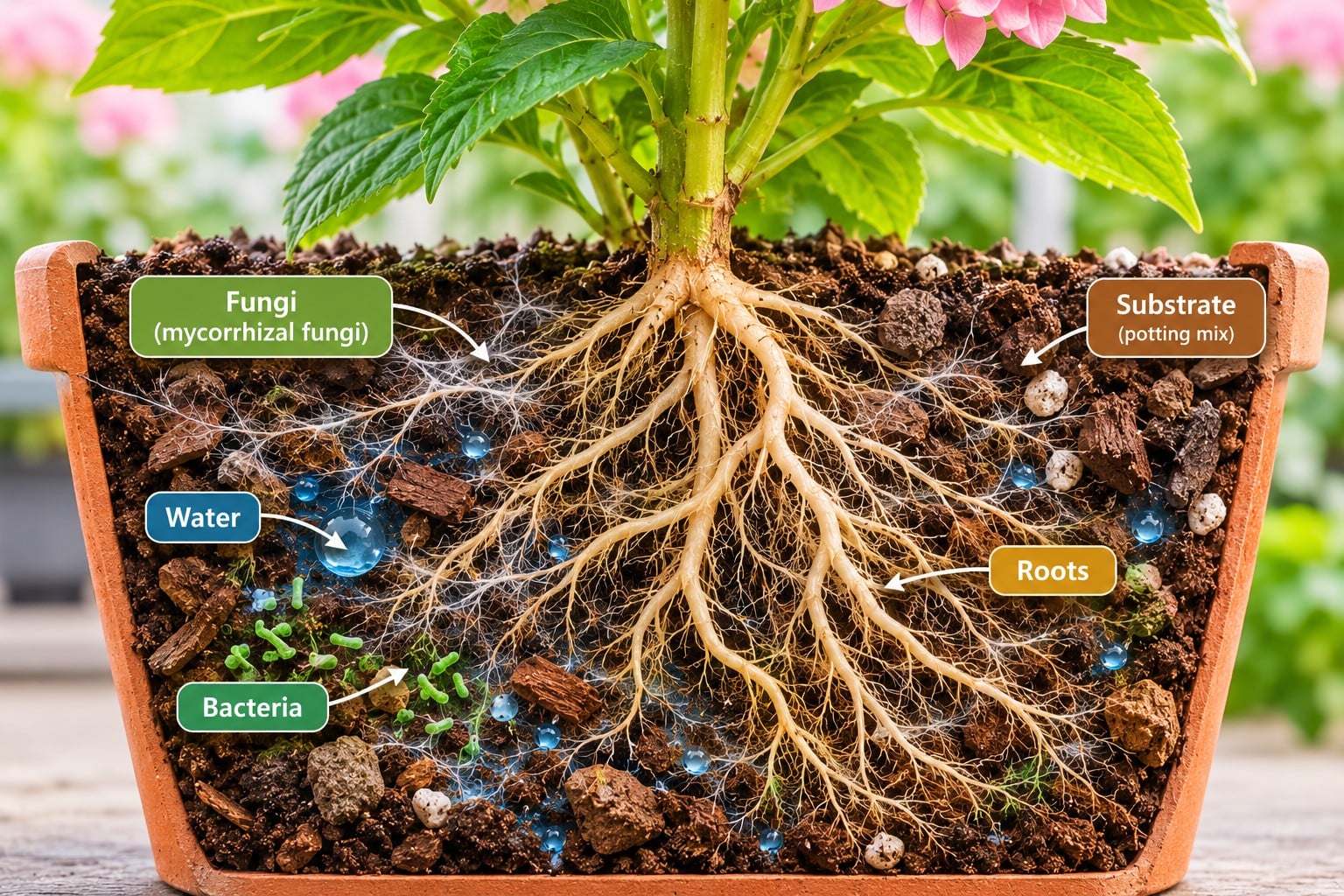
AI illustration of interactions taking place in rhizosphere.
Why the Root Microbiome Matters when Growing Ornamental Plants
When growers think about crop resilience the factors that get the most attention are
- irrigation management
- nutrition
- climate control
- genetics.
This is correct; however, an equally important component exists below the substrate surface: the microbial community surrounding plant roots. The root zone is far more than an anchor point and nutrient reservoir. It is a highly active ecosystem where plants and microorganisms interact continuously. Knowing how beneficial bacteria and fungi work allows growers to take more informed decisions about crop management strategies aimed at improving plant resilience.
The Invisible Plant Defense System
The area surrounding plant roots is the rhizosphere and contains a diverse population of microorganisms, some of which establish beneficial relationships with plants, resulting in better access to water and nutrients or defense against pathogens and, in general, better withstand difficult growing conditions. These beneficial microbes do not replace sound cultural practices. Under the right conditions, though, they can become an important component of an integrated crop management strategy.
How to Promote the Presence of Beneficial Bacteria
However, introducing beneficial microorganisms into a growing system is only the first step. For these microbial populations to deliver consistent benefits, they must be able to survive, colonize the root environment, and establish themselves within often complex and dynamic growing conditions. Understanding the factors that influence microbial establishment is therefore essential for growers looking to maximize the value of biological inputs.
From substrate characteristics and irrigation practices to environmental conditions and crop management, several practical considerations can determine whether beneficial microbes thrive or struggle. In our article How to Support Beneficial Soil Microbes in Ornamental Production we eplore the steps to get the most from what beneficial microbes can provide.
Five Ways Beneficial Microbes Support Plant Resilience
Expanding the Effective Root System
Arbuscular mycorrhizal fungi (AMF) form a symbiotic relationship with plant roots. Their extensive network of microscopic filaments, known as hyphae, extends beyond the root zone, increasing the plant’s ability to access water, phosphorus, and other nutrients that may otherwise be difficult to reach.
Supporting Protection Against Root Diseases
Beneficial microorganisms such as Trichoderma species and Bacillus strains colonize the rhizosphere and compete with harmful pathogens for space and resources. Some also produce compounds that help suppress the development of soil-borne diseases.
Activating Natural Plant Defenses
Certain plant-growth-promoting rhizobacteria (PGPR) and beneficial fungi can trigger Induced Systemic Resistance (ISR), a natural process that primes the plant’s defense system and enables a faster response when exposed to pests or diseases.
Buffering Abiotic Stress
Some beneficial microorganisms produce exopolysaccharides (EPS), which help improve substrate structure and water retention, while others produce ACC deaminase, an enzyme that can moderate plant stress responses. Together, these mechanisms help plants better cope with heat, drought, and salinity.
Improving Nutrient Availability
Microorganisms play an important role in nutrient cycling within the rhizosphere. Through the breakdown of organic matter and nutrient mobilization processes, they can increase the availability of phosphorus and essential micronutrients that support plant growth.
Agronomic Impact and Practical Benefits for Growers
Collectively, these microbial activities contribute to healthier plants, by
- stronger root development
- improved nutrient-use efficiency
- better tolerance to drought, heat, and other stress factors
- reduced pressure from soil-borne pathogens
- more uniform crop growth and development
- greater production consistency throughout the growing cycle
Microbial technologies can become a valuable component of an integrated crop management strategy when combined with sound irrigation, nutrition, substrate, and environmental management practices.
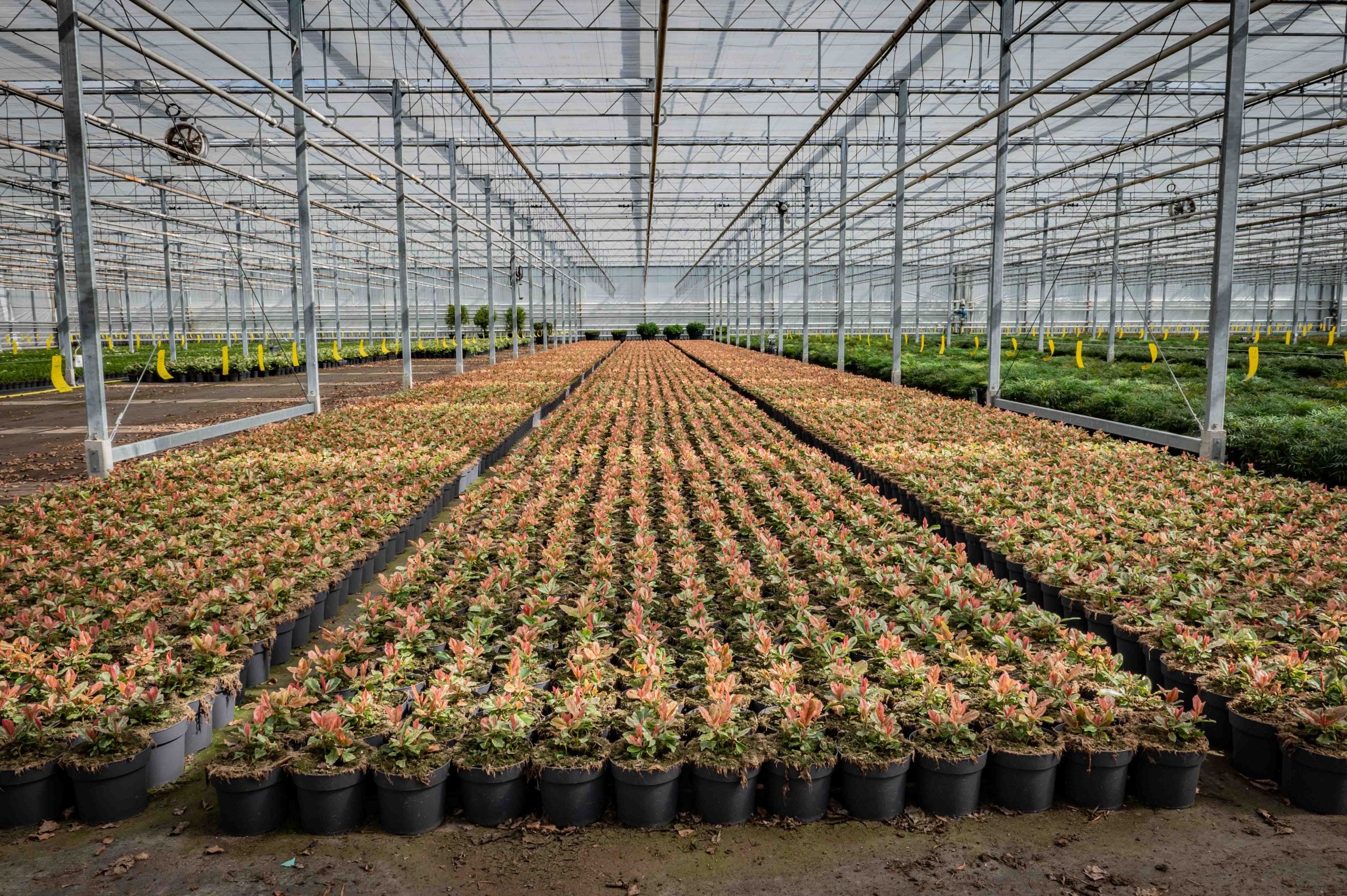
Healthy uniform plants are the key to succesful ornamental production.
Conclusion
Mastering the main steps to grow resilient plants can become a soft skill a grower needs to increase profitability. At ICL we share our knowledge with you through a full set of articles on this subject or with the support of our technical consultants. Regional support is available: visit your country’s website to find who’s the closest ICL’s expert to you or fill in the form available by clicking on the banner at the bottom of this page.


Our knowledge
Tips & tricks, disease prevention, crop and market related information
Explore our knowledge