
The ICL Dead Sea Works facility is one of the cornerstones of ICL’s global operations, employing approximately 1,500 people and producing approximately 3.7 million tons of ICL Potash annually. Located in the southern basin of the Dead Sea in Israel’s Jordan Rift Valley (Bik'at Hayarden), one of the most mineral-rich areas in the world, the site plays a critical role in global crop nutrition.
The facility benefits from year-round sunshine, average winter temperatures of 25 °C and summer highs of 37 °C, low annual rainfall of just 50 mm, and consistently low humidity. These climate conditions make the Dead Sea Works an ideal location for using solar evaporation to extract minerals, particularly potassium in the form of potash, from the Dead Sea’s mineral-rich waters.
Although the unique properties of the Dead Sea were recognized as early as the 18th century, commercial fertilizer production did not begin until the early 20th century. Since then, the site has expanded significantly, laying the foundation for its continued growth into a world-leading producer of potash and one of the central pillars of ICL’s global operations.
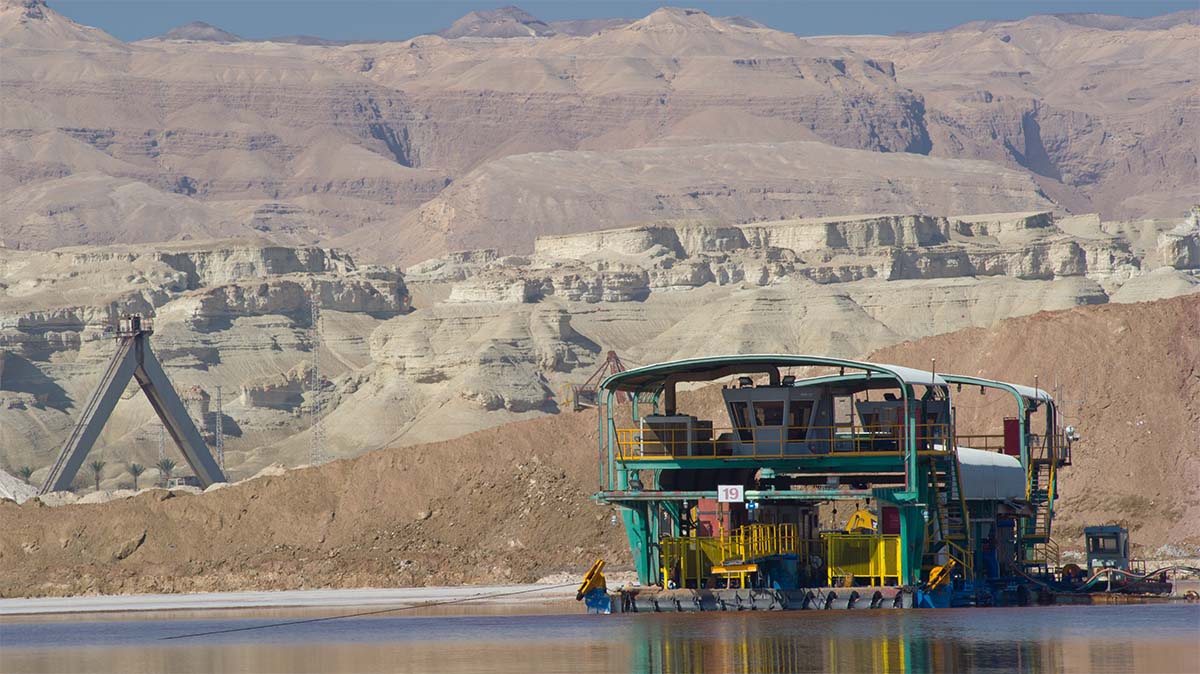
Today, Dead Sea Works is one of the world’s largest solar evaporation facilities and a major global supplier of potash, with most of its production serving agricultural markets. The extraction process begins in vast solar ponds, where the sun’s natural energy gradually evaporates the water and concentrates the brine. From this, ICL produces high-purity potassium chloride (KCl), ICL Potash, a vital plant nutrient used in crop production worldwide. As one of the world’s largest users of solar energy in mineral extraction, Dead Sea Works significantly reduces carbon emissions while investing in innovative water-saving technologies, recycling by-products, and working closely with environmental authorities to help protect the region’s unique and sensitive ecosystem.
In 2024, potash received official recognition as a natural product, meaning that ICL Potash is now approved for use as an input for organic farming under the European Union regulation EU 2018/848. This development opens up new opportunities for sustainable agriculture by enabling organic producers to use a ICL Potash as a high-quality, naturally derived potassium source.
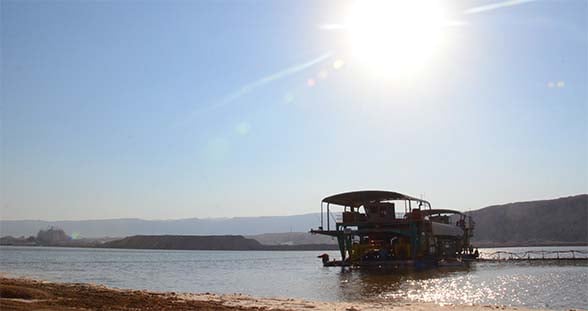
The core activity at Dead Sea Works is the production of ICL Potash. Using a system of evaporation ponds and advanced precipitation, crystallization and separation technologies, the facility produces high-quality, concentrated potassium chloride (KCl), most of which is exported for use in global agriculture.
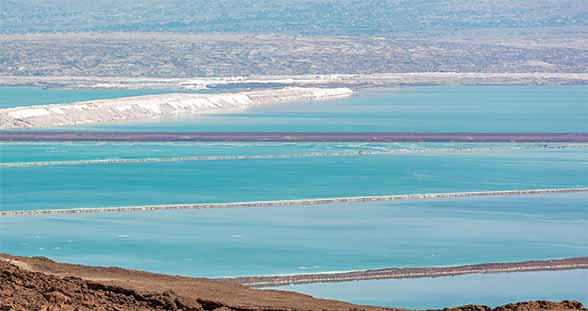
Spanning more than 150 square kilometers, the evaporation pond system harnesses solar energy to precipitate and concentrate valuable minerals for further processing. This energy-efficient process underpins the site’s commitment to sustainable production on a large scale.
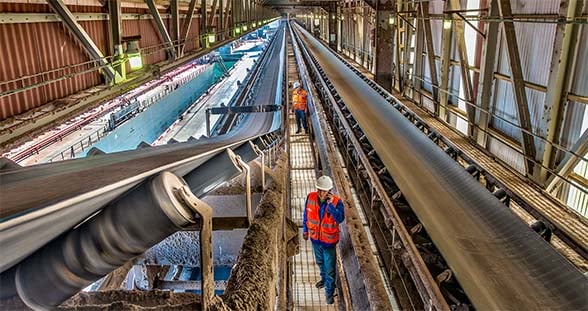
Dead Sea Works operates under strict environmental regulations, with substantial investment in water recycling, dust suppression, and habitat preservation. The site has replaced truck transport with a long-distance conveyor belt system and uses cogeneration technology to maximize energy efficiency.

Following a report from the Expert Group for Technical Advice on Organic Production (EGTOP), ICL Potash is now certified for use in organic agriculture. This development enables farmers to nourish their fields sustainably with high-quality, high-potassium-content fertilizers.


 Whatsapp
  Facebook
  X
X  Linkedin
  Mail
Mail  Copy link