

 Whatsapp
  X
X  Mail
Mail  Copy link
 Our portfolio
Sustainable and innovative solutions to increase your crop yield
Explore our products


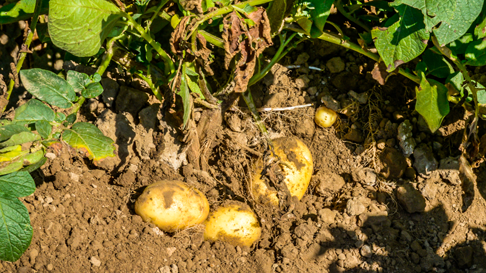
Roots and tubers are underground plant structures that store nutrients and energy. While both serve as staple foods globally, they differ botanically: root crops develop from the primary root (e.g., carrot, beet), whereas tuber crops form from modified stems or stolons (e.g., potato, yam).
Root crops originate from the plant’s true root system, while tuber crops are swollen stem tissues. This distinction affects how they grow, store nutrients, and respond to soil conditions.
Root and tuber crops encompass a diverse group of plants grown primarily for their underground storage organs. These include widely cultivated staples such as cassava (Manihot esculenta), potato (Solanum tuberosum), sweet potato (Ipomoea batatas), yam (Dioscorea spp.), and taro (Colocasia esculenta), as well as edible aroids like Xanthosoma sagittifolium. Each crop has distinct agronomic traits and nutritional profiles, but all share a common role in supplying energy-rich carbohydrates and supporting food systems across a variety of climates and farming practices.
Root and tuber crops are second only to cereals in global carbohydrate production. Cassava and potatoes alone account for over 80% of total root and tuber output in many regions, underscoring their central role in feeding growing populations. These crops are highly efficient at converting solar energy into edible biomass, offering high yields per hectare and resilience under challenging conditions such as drought or poor soils.
Root and tuber crops play a vital role in global food security, particularly in regions vulnerable to climate variability and economic instability. Their ability to thrive in marginal environments and under low-input conditions makes them indispensable for subsistence farming and emergency food systems. Their long shelf life and storability, especially in the form of dried chips or flours (e.g. cassava), further enhance their value in food reserves and nutrition programs.
In addition to their agronomic value, root and tuber crops contribute to crop rotation systems, improving soil structure and reducing pest pressure. Their underground storage organs allow them to withstand short-term climatic stress, making them reliable even in unpredictable growing seasons.
Root and tuber crops vary widely in morphology, growth cycles, and nutritional profiles. Cassava is known for its drought tolerance and high starch content, while sweet potato offers rapid growth and nutritional diversity. Yams are culturally significant and nutritionally rich, though labor-intensive. Potatoes, originally a temperate crop, have adapted to a wide range of altitudes and climates, and are now cultivated globally.
These crops are typically grown in well-drained soils and are propagated from cuttings, tubers, or seeds. Their high moisture content and bulkiness pose post-harvest challenges, but their resilience in the field makes them ideal for both smallholder and commercial production.
Effective crop management is key to unlocking the full potential of root and tuber crops. Balanced nutrition—especially potassium and phosphorus—is essential for tuber development, starch accumulation, and overall plant health. ICL has designed special nutrition recommendation programmes using the whole range of its products to support the needs of root crops, enhancing yield, quality, and resilience. It has supported many field trials on potatoes, confirming the possitive effects of its products. The unique 4-in-1 natural fertilizer Polysulphate has been successfully used as a base fertilizer in potato production in many different countries as well as ICL’s water-soluble products for fertigated crops. Positive results were also reported for the controlled-release fertilizers Agroblen, Agromaster, Agrocote, often in combination with Agroleaf foliar products which can be effectively used as a remedy in case of deficiencies. Biostimulants from ICL’s Bioz and Beoz range help reduce adverse environmental impact while sustainably maintaining productivity.
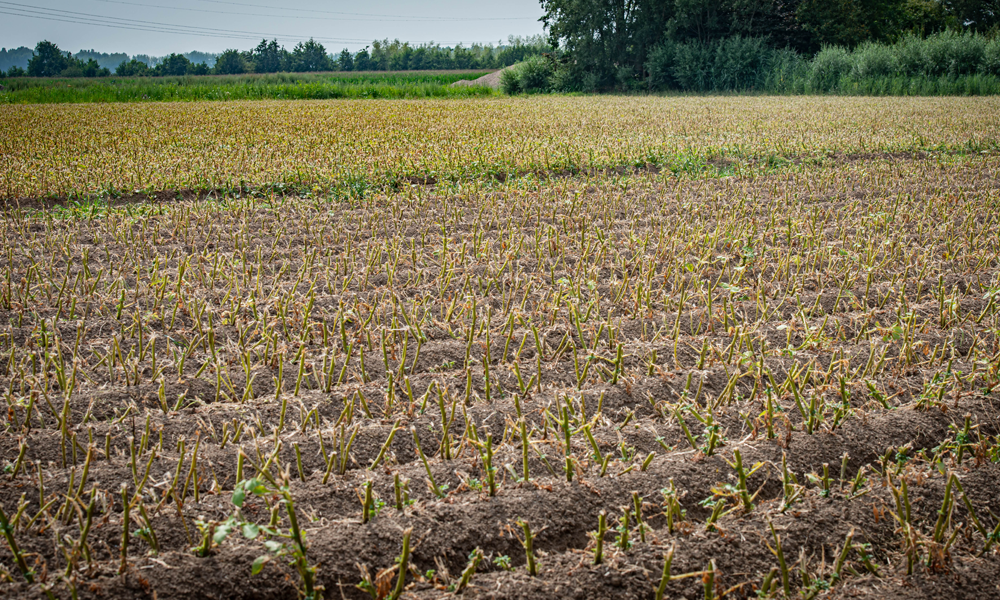
Defoliate potato plants before harvest.
Integrated pest and disease management is also critical. Root and tuber crops are vulnerable to nematodes, fungal rots, and viral infections. Timely harvesting and proper post-harvest handling help reduce spoilage and maintain market quality. Due to their high moisture content, root and tuber crops are perishable and require efficient storage and transport systems to minimize losses.
Root and tuber crops are deeply embedded in traditional farming systems and cultural diets. They support food sovereignty, reduce dependence on imported cereals, and offer opportunities for value-added processing—from cassava flour and sweet potato chips to starch and animal feed.
As consumer demand grows for sustainably produced, nutrient-rich foods, these crops are well-positioned to meet market expectations. Their versatility in both fresh and processed forms makes them valuable across food, feed, and industrial sectors.

