


 Whatsapp
  X
X  Mail
Mail  Copy link
Unlock the potential of your crops with Bioz®
Brand details Bioz<sup>®</sup>Growing Almond crop nutrition advice
Everything you need to know about Almond fertilization, best practice, field trials, and more.
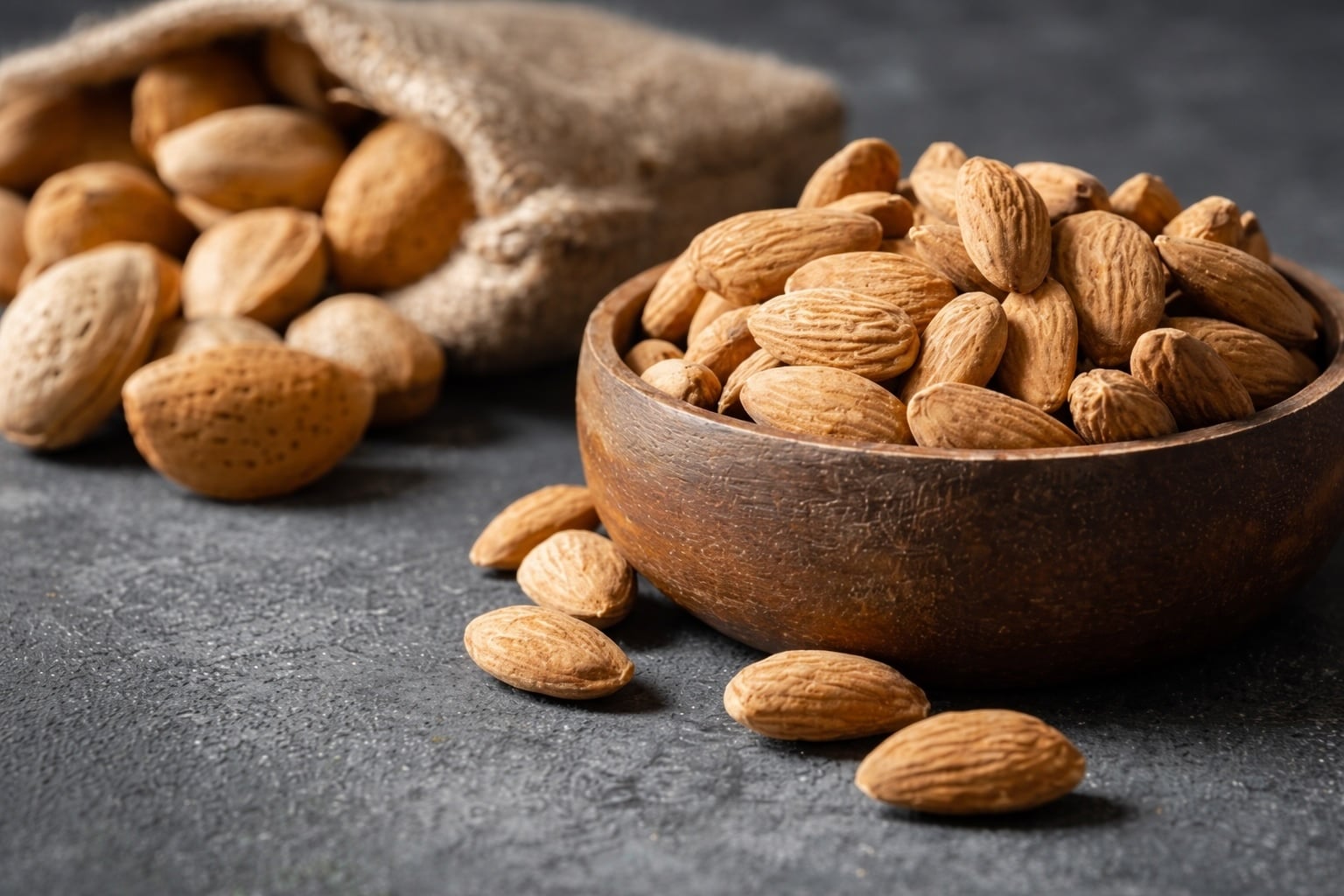
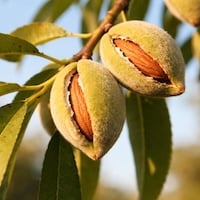
Almond crop nutrition management is the practice of balancing soil conditions, water supply, and essential nutrients to support tree growth, flowering, and kernel development. By aligning fertilization with phenological stages and leaf analysis targets, growers can improve yield stability, kernel quality, and long-term orchard productivity
Introduction
Almond (Prunus dulcis) is a perennial deciduous tree crop of major global economic importance, cultivated primarily in Mediterranean, semi-arid, and temperate climates. Originating in Central and Western Asia, almond was domesticated through early selection for sweet kernels and later disseminated throughout the Mediterranean Basin. Modern commercial almond production is dominated by irrigated orchard systems where precise water and nutrient management largely determine yield stability, kernel quality, and the severity of alternate bearing.
Global almond production reached approximately 4.1 million metric tons (in-shell basis) in 2023, harvested from roughly 2.2 million hectares (FAOSTAT). The United States accounts for more than 55% of global output, followed by Spain and Australia. Over the last decade, production growth has been driven primarily by yield intensification through fertigation, cultivar improvement, and improved orchard design rather than expansion of cultivated area.
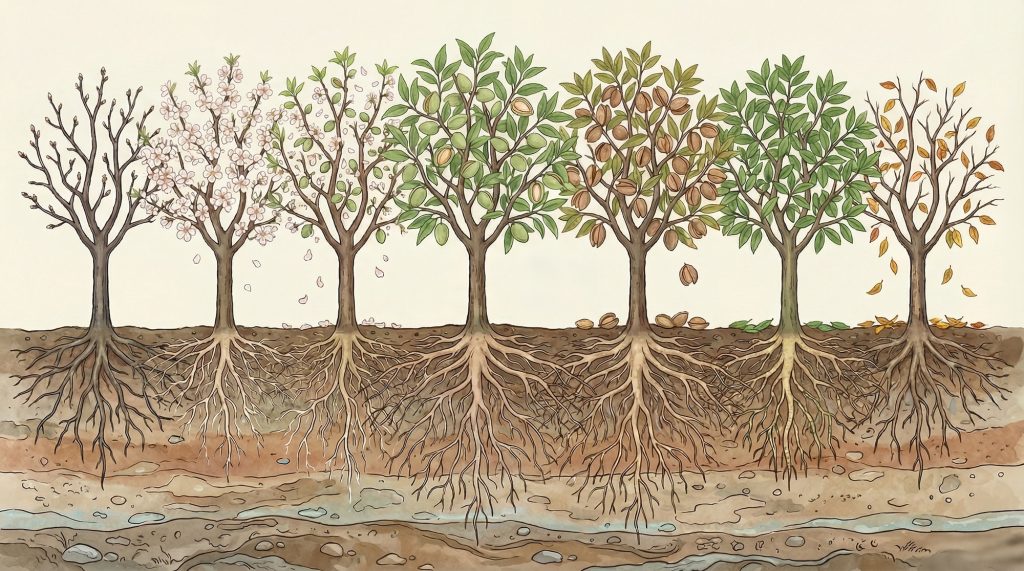
Almond Growing Stages
Plant Growth Environment
Almond requires deep, well-drained soils to support its extensive root system. Sandy loam to loam textures with effective soil depth exceeding 1.5 m are optimal. Almond is highly sensitive to waterlogging, which rapidly impairs root function and nutrient uptake.
| Parameter | Target / Threshold | Agronomic Implication |
|---|---|---|
| Soil pH | 6.5–7.8 | Zn and Fe availability decline above this range |
| Organic matter | 1.5–3.0% | Improves buffering and Ca availability |
| Soil salinity (ECe) | <1.5 dS·m⁻¹ | Yield reduction above threshold |
| Irrigation salinity (ECw) | <1.0 dS·m⁻¹ | Critical under fertigation |
| SAR | <6 | Higher values reduce infiltration |
| Bicarbonate (HCO₃⁻) | <2.5 meq·L⁻¹ | Ca/Mg precipitation in root zone |
Understanding Almond Physiology is Essentials for Nutrition Management
Almond productivity is governed by source–sink relationships. Leaves act as carbon sources, while kernels, shoots, and storage tissues act as sinks. Excess nitrogen promotes vegetative sinks at the expense of kernel development and reserve accumulation.
Alternate bearing arises when high crop loads deplete carbohydrate, nitrogen, potassium, and boron reserves. Adequate post-harvest nutrition is essential to restore reserves and stabilize yield across years.
Nutrient Roles, Deficiency and Excess Symptoms
| Nutrient | Primary Role | Deficiency Expression | Excess Risk | Key Interactions |
|---|---|---|---|---|
| N | Canopy growth, yield formation | Pale leaves, weak shoots | Poor kernel fill | High N depresses Ca |
| P₂O₅ | Root growth, energy transfer | Weak roots, poor bloom | Zn deficiency | Ca–P antagonism |
| K₂O | Kernel fill, sugar transport | Leaf scorch, small kernels | Ca/Mg suppression | K–Ca–Mg balance |
| Ca | Cell wall integrity | Hull rot, tissue breakdown | Rare | Transport limited under high VPD |
| Mg | Photosynthesis | Interveinal chlorosis | Rare | Antagonized by K |
| B | Pollination, fruit set | Poor set, dieback | Toxic >100 ppm | Narrow optimum |
| Zn | Hormonal regulation, roots | Rosetting | Foliar scorch | High P reduces Zn |
Water–Nutrition Coupling in Almond Orchards
Many almond nutrient disorders are hydraulically or chemically induced. Salinity, bicarbonate, and high vapor pressure deficit reduce nutrient uptake and transport even when soil supply is adequate.
Under saline conditions, excessive potassium fertilization exacerbates calcium and magnesium deficiency, increasing hull rot risk. Bicarbonate-rich irrigation water precipitates calcium and magnesium unless acidification is applied.
Practical Nutrient Recommendations
The nutrition recommendations presented below are designed to bridge the gap between physiological principles and field implementation. Annual nutrient rates are expressed relative to realistic kernel yield targets, reflecting both nutrient removal in the harvested crop and the additional requirements for vegetative growth and reserve replenishment. The phenological allocation table should be read in conjunction with the annual rates, as it illustrates when nutrients are most effectively supplied rather than prescribing additional quantities.
| Yield level (kernel) | N (kg·ha⁻¹) | P₂O₅ (kg·ha⁻¹) | K₂O (kg·ha⁻¹) | Notes |
|---|---|---|---|---|
| 1.5 t·ha⁻¹ | 120–160 | 30–40 | 140–180 | Rainfed / low vigor |
| 2.5 t·ha⁻¹ | 180–220 | 40–50 | 220–260 | Typical irrigated orchard |
| 3.5 t·ha⁻¹ | 240–300 | 50–60 | 300–350 | High-yield intensive system |
| Stage | N (%) | P₂O₅ (%) | K₂O (%) | Ca / Mg focus | B / Zn focus |
|---|---|---|---|---|---|
| Dormancy | 10 | 10 | 10 | Ca foliar, or dry* | Zn foliar |
| Bloom | 10 | 10 | 5 | Ca foliar | B critical |
| Fruit set | 25 | 20 | 20 | Root Ca balance | — |
| Kernel fill | 35 | 40 | 45 | Mg support | — |
| Post-harvest | 20 | 20 | 20 | Ca recovery, dry* | B reserve |
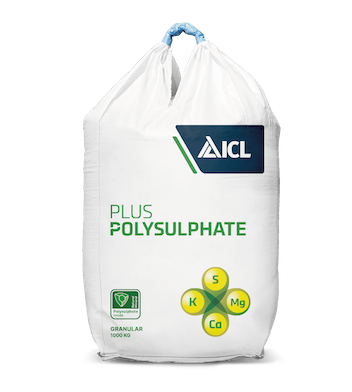
*Polysulphate® dry fertilizer that gradually releases K, Ca, S, Mg
Micronutrient Nutrition
Boron is essential for fruit set but has a narrow safety margin (30–80 ppm sufficiency; toxicity above ~100 ppm). Zinc deficiency is common in calcareous soils and exacerbated by high phosphorus. Iron chlorosis is typically induced by bicarbonate rather than low soil iron content.
| Stage | Timing | Main Nutrients | Indicative Rates | Objective |
|---|---|---|---|---|
| Dormancy | Leaf fall–bud swell | Ca, Zn | Zn 0.3–0.5 kg·ha⁻¹ | Bud quality |
| Bloom | Flowering | B, Ca | B 0.3–0.5 kg·ha⁻¹ | Pollination |
| Fruit set | Post bloom | N, K₂O | 40–60 kg N; 40–60 kg K₂O | Fruit retention |
| Kernel fill | Rapid nut growth | K₂O, MgO, N | 120–180 kg K₂O; 20–40 kg MgO; 60–80 kg N | Kernel fill |
| Post-harvest | After harvest | N, K₂O, B, Ca | 40–60 kg N; 40–60 kg K₂O | Reserve rebuilding |
Estimated Nutrient Removal per Metric Ton of Kernel Yield (Kg/t)
| Nutrient | Removal per ton kernel yield |
|---|---|
| N | 65–75 kg |
| P₂O₅ | 15–18 kg |
| K₂O | 70–85 kg |
| CaO | 30–40 kg |
| MgO | 12–15 kg |
| B | 0.15–0.25 kg |
Leaf Tissue Nutrient Targets (Mid-Summer)
| Nutrient | Target Range | Interpretation |
|---|---|---|
| N | 2.2–2.6% | Excess promotes alternate bearing |
| P | 0.12–0.20% | Low limits early growth |
| K | 1.4–2.0% | Low reduces kernel fill |
| Ca | 1.8–3.0% | Low linked to hull disorders |
| Mg | 0.30–0.60% | Antagonized by K |
| B | 30–80 ppm | Toxic above ~100 ppm |
| Zn | 15–30 ppm | Deficient in calcareous soils |
References
UC Davis Cooperative Extension. Almond Production Manual.
Almond Board of California. Almond Orchard Nutrition Manual.
Almond Board of Australia. Best Management Practices for Almond Nutrition.
FAO. (2023). FAOSTAT Statistical Database.
Volcani Institute. Fertigation and Nutrition of Almond Orchards. Various
Guides & Articles
For more information
Q&A
Here are some frequently asked questions we received from farmers regarding growing almonds..
Boron deficiency in almond often occurs even when soil boron is present because availability depends on soil moisture, pH, and transport rather than total concentration. Dry or alkaline soils reduce boron mobility toward roots, and high VPD (vapor pressure deficit) further limits transport to reproductive tissues. As a result, soil tests alone are often poor predictors of tree boron status, and foliar applications around bloom and post-harvest are commonly required to ensure adequate supply.
Calcium disorders persist in almond because calcium uptake and distribution are constrained by water movement, not by soil supply alone. Calcium is transported in the xylem and depends on continuous transpiration, which is often limited under high VPD or mild water stress. In addition, excess potassium and bicarbonate-rich irrigation water reduce calcium uptake or cause precipitation in the root zone. Effective calcium management therefore requires attention to water status and nutrient balance, not higher calcium rates.
Yes. In low-crop or ‘off’ years, nitrogen rates should typically be reduced by about 25–40% relative to high-bearing years. Crop demand is lower, and excessive nitrogen promotes vegetative growth at the expense of reserve rebuilding. Moderating nitrogen supply helps maintain canopy balance and reduces the risk of intensifying alternate bearing in the following season.
No. Potassium supports osmotic regulation and carbohydrate transport, but it cannot compensate for insufficient water supply during kernel filling. Water stress limits photosynthesis and assimilate movement regardless of potassium availability. Moreover, excessive potassium under water stress may aggravate calcium and magnesium deficiencies. Adequate irrigation is therefore a prerequisite for effective potassium nutrition.
Foliar nutrition is preferable for boron, zinc, and calcium when root uptake or transport is constrained, such as in early spring, under high VPD, or with bicarbonate-rich irrigation water. Foliar applications allow direct delivery to active tissues and are particularly useful for supporting flowering, fruit set, and post-harvest reserve accumulation.
Explore Almond Solutions by Brand
Find the right solutions to improve crop quality and yield

The groundbreaking total range of water-soluble straight fertilizers
Brand details Nova
Agrolution pHLow is your one-stop fruit and vegetable fertilizer solution
Brand details Agrolution pHLow
The four-in-one natural fertilizer
Brand details Polysulphate<sup>®</sup>Unlock the potential of your crops with Bioz®
Brand details Bioz<sup>®</sup>The groundbreaking total range of water-soluble straight fertilizers
Brand details NovaAgrolution pHLow is your one-stop fruit and vegetable fertilizer solution
Brand details Agrolution pHLowThe four-in-one natural fertilizer
Brand details Polysulphate<sup>®</sup>Discover Our Solutions for Growing Almonds
Bioz®

Diamond
See productBioz®
BIOZ® Jet
See productNova

Nova

Agrolution pHLow

Agrolution pHLow

Almond

H2Flo
See productPolysulphate®
Combifert®

Nutrient & Unit Converter
Access calculators to improve nutrient management and boost productivity
