Whatsapp
  X
X  Mail
Mail  Copy link
The groundbreaking total range of water-soluble straight fertilizers
Brand details Nova Growing Cucumber
Crop Nutrition Advice
Everything you need to know about fertilizing cucumbers, best practice, suitable products, field trials, and more.

Under good climatic conditions cucumbers may be grown in open fields
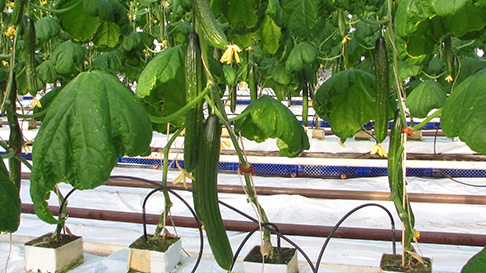
Soilless cucumber cultivation in protected environment
Cucumber (Cucumis sativus L.) is one of the world’s most widely grown vegetable crops, valued for its fresh consumption, processing uses, and high productivity in both open‑field and protected systems. To support growers, ICL has developed a clear, data‑driven approach to cucumber nutrition that helps optimize yield, fruit quality, and plant resilience.
Origin and Agronomic Importance
Cucumber originates from northern India and has been cultivated for more than 3,000 years. Today it is grown globally in open fields, greenhouses, and high‑tech soilless systems. Its rapid growth, continuous fruiting, and sensitivity to environmental conditions make balanced nutrition and precise fertigation essential for stable production.
Cucumbers can adapt to a range of climatic conditions, provided that the appropriate variety or cultivar is selected for the region and purpose (e.g., fresh market types for salads or gherkin types for pickling). They are sensitive indicators of nutrient imbalances, often showing deficiency symptoms clearly. Cucumbers maintain acceptable fruit quality under moderately excessive nutrient supply, however overall plant health can be negatively affected (e.g., excessive vegetative growth or increased disease susceptibility). From an agronomic perspective, cucumbers are a high‑turnover crop with a short cycle, making them economically attractive for growers who need efficient land use and frequent harvests.
Global Cucumber Production
According to the latest official FAOSTAT data, global production of cucumbers and gherkins reached over 91 million tonnes in 2022, confirming the crop’s position as one of the world’s most important vegetables. Production is highly concentrated, with China harvesting around 73 million tonnes, representing approximately 80% of global output. Other significant producers include Turkey, Russia, Mexico, and Uzbekistan, each contributing between 1 and 2 million tonnes. More recent industry estimates suggest continued growth in 2023-2024.
Optimal Growing Conditions for Cucumbers
Temperature Requirements
Cucumbers are a warm‑season crop and grow best at 21–32 °C. Growth is inhibited in temperatures below 15°C, and in temperatures below 12-10°C we see chilling stress and damage. On contrary, temperatures above 35 °C reduce fruit set and increase the risk of misshapen fruits. Stable temperatures are especially important in greenhouse production, where sudden drops can stress the crop and reduce yield.
Light Needs
As a high‑light crop, cucumbers require 6–8 hours of direct sunlight or equivalent greenhouse light intensity. Adequate light supports strong vegetative growth, uniform flowering, and continuous fruiting. In protected cultivation, supplemental lighting may be used during low‑light periods to maintain productivity.
Soil Type and Soil pH
Cucumbers perform best in fertile, well‑drained soils rich in organic matter. The optimal soil pH is 6.0–6.8, although the crop tolerates a wider range of 5.5–7.5 depending on soil texture and organic matter content. Slightly acidic soils improve nutrient availability and support healthy root development.
Irrigation and Moisture Management
Cucumbers have a shallow root system and require consistent soil moisture and nutrient supply. Drip irrigation is the preferred method because it delivers water directly to the root zone, reduces disease pressure, and allows precise fertigation. Irregular watering can lead to bitterness, fruit deformation, and blossom‑end defects.
Salinity Sensitivity
Cucumbers are moderately sensitive to salinity, especially during early growth. Monitoring EC in soil and fertigation solutions is essential to avoid salt stress, which can reduce root activity and limit nutrient uptake.
Trellising and Air Circulation
Many cucumber varieties benefit from trellising, which improves air circulation, reduces foliar diseases, and enhances fruit shape and quality. Vertical systems also make harvesting easier and increase marketable yield.
Soil Preparation and Root Development
Deep soil preparation (35–40 cm) improves rooting, drainage, and nutrient distribution. Healthy root development early in the season is critical for supporting the crop’s rapid vegetative growth and continuous fruiting.
Nutrient Requirements and Uptake in Cucumbers
Cucumbers have a rapid growth habit and a continuous fruiting pattern, which makes their nutrient demand both steady and sensitive to imbalance. Nutrient removal varies widely depending on the cultivation system: high‑yielding greenhouse crops can exceed 400 kg/ha of nitrogen removal, while open‑field crops typically remove 120–150 kg/ha N. Optimal requirements for N, P2O5 and K2O are typically 200, 100 and 300 kg/ha, respectively. Because the crop produces new leaves, flowers, and fruits simultaneously, cucumbers require a consistent nutrient supply throughout the cycle.
To support uniform growth and fruit quality, cucumbers benefit from:
- Strong early root development to sustain rapid vegetative growth
- Balanced N-P-K nutrition adapted to each growth stage
- Adequate magnesium availability, as the crop is particularly sensitive to Mg shortages
- Low‑EC fertigation solutions during early rooting to avoid salt stress
- Fractionated nutrient applications to maintain stable uptake and prevent fluctuations in soil salinity
Role of Nutrients
Nitrogen (N)
Nitrogen drives vegetative growth, leaf expansion, and early fruit set. Adequate N supports canopy development and photosynthetic capacity. Excessive N, however, can delay maturity and increase susceptibility to fungal diseases. Balanced N supply is essential for maintaining fruit shape and uniformity.
Phosphorus (P)
Phosphorus is crucial during early growth, supporting root development, flowering, and energy transfer. While P deficiency is uncommon in well‑managed systems, insufficient P can limit early vigor and reduce the number of productive nodes.
Potassium (K)
Potassium is the key nutrient for fruit quality, influencing firmness, water balance, and resistance to physiological disorders. High K demand continues throughout the fruiting period. Adequate K improves shelf life and reduces the risk of fruit deformation.
Calcium (Ca)
Calcium strengthens cell walls, supports root health, and regulates water movement within the plant. Because Ca is immobile in the phloem, a continuous supply is required. Insufficient Ca can impair shoot growth and reduce fruit quality, especially under rapid vegetative expansion.
Magnesium (Mg)
Magnesium is central to chlorophyll formation and energy transfer. Cucumbers are notoriously sensitive to Mg deficiency, particularly in high‑yielding greenhouse crops. Maintaining adequate Mg levels improves leaf longevity and supports sustained fruit production.
Iron (Fe)
Iron supports chlorophyll formation and energy transfer, helping crops maintain strong photosynthesis under stress or low‑temperature conditions.
Zinc (Zn)
Zinc is essential for enzyme activation and hormone balance, improving growth uniformity, internode development, and early vigor.
Boron (B)
Boron strengthens cell walls and supports flowering, pollination, and fruit set and stability.
Deficiency Symptoms in Cucumbers
Nitrogen deficiency
- Pale green leaves
- Reduced vegetative growth
- Lower yield
- Pointed or comma‑shaped fruits
Phosphorus deficiency
- Slow early growth
- Smaller leaves
- Reduced leaf number
Potassium deficiency
- Brown necrotic margins on leaves
- Reduced fruit firmness and quality
Magnesium deficiency
- Interveinal chlorosis on older leaves
- Brittle leaves
- Necrotic patches in advanced stages
Calcium deficiency
- Shoot tip dieback
- Stunted growth
Cultivation Systems
Open‑Field Cultivation
Open‑field cucumbers are typically grown for fresh market or processing during the warm season. Key practices include:
- Applying all P, one‑third of N, and two‑thirds of K at planting
- Supplying the remaining N and K 20–30 days after emergence
- Using drip irrigation to maintain stable soil moisture and support fertigation
- Supplementing Ca and Mg where soil tests indicate low availability
Fertilization Timing and Spliting
Soil fertilization| Application | Timing | N | P₂O₅ | K₂O |
|---|---|---|---|---|
| 1 | Planting | 40–50 % | 80–100 % | 30–40 % |
| 2 | Start Flowering | 30 % | 0–20 % | 30 % |
| 3 | Start Harvesting | 20–30 % | 0 % | 30–40 % |
| Application | Timing | N | P₂O₅ | K₂O |
|---|---|---|---|---|
| 1 | Planting | 15–20 % | 80–100 % | 15–20 % |
| 2–4 | Vegetative | Each ~10–12 % | 0 % | Each ~10–12 % |
| 5–9 | Generative | Each ~10–12 % | 0 % | Each 12–15 % |
| Application | Timing | N | P₂O₅ | K₂O |
|---|---|---|---|---|
| 1–2 | Start | each 8–10 % | 80-100% | each 8–10 % |
| 3–6 | Vegetative | each 7–8 % | (20 %) | each 7–8 % |
Protected Environment Cultivation (Greenhouses)
Greenhouse cucumbers require precise climate and fertigation management to achieve high yields.
- Suitable for both cold and heated greenhouses
- Soilless systems typically follow Coïc–Lesaint nutrient solutions, designed to deliver a balanced supply of N, P, K, Ca, Mg, and chelated micronutrients while maintaining stable EC and pH in inert substrates.
- Recommended EC: 1.4–1.6 mS/cm during rooting, rising to 1.8–2.2 mS/cm during fruiting
- Basal heating, LED lighting, and CO₂ enrichment improve productivity and fruit quality
- Frequent, low‑volume fertigation maintains stable root‑zone conditions
Harvest and Storage
Harvesting is a critical stage in cucumber production, as it directly affects yield, fruit quality, and market value. Because cucumber fruits grow rapidly, timely and repeated harvesting is essential. Frequent harvesting can cause mechanical stress and minor damage to plant tissues, potentially affecting plant integrity. In this context, the application of biostimulants may help mitigate stress and support plant recovery.
Cucumbers are usually ready for harvest 40–70 days after planting and should be picked while still tender, firm, and green, as overmature fruits lose quality and develop large seeds. Harvest size depends on the intended use, with larger fruits for fresh consumption and smaller ones for pickling. Due to their rapid growth, cucumbers must be harvested frequently (every two to three days in open-field production and more often in greenhouse systems) to maintain quality and promote continuous fruit production.
Harvesting is typically carried out manually by cutting or gently removing the fruits, taking care not to damage the plant. It is best done during cooler periods of the day. After harvest, cucumbers require careful handling because of their high water content and perishability. They should be kept cool and stored at approximately 10–12 °C with high relative humidity, as lower temperatures can lead to chilling injury. Overall, proper timing, frequent harvesting, and careful handling are essential to achieve high yield and maintain fruit quality.
Conclusion
Cucumber is a high‑value crop that responds strongly to careful management. When growers combine good soil preparation, balanced nutrition, consistent irrigation, and appropriate environmental control, the plant’s natural vigor and productivity can be fully expressed. Whether grown in open fields, greenhouses, or soilless systems, cucumbers reward precise, well‑timed agronomy with high yields and excellent fruit quality.
Q&A
Here are some frequently asked questions we received from farmers!
Cucumbers grow best in warm, sunny conditions with steady moisture and a well‑prepared root zone. The plant develops its root system quickly during the first 15–20 days after transplanting, so early irrigation and nutrition are essential. Cucumbers prefer fertile, well‑drained soils with a pH of 5.6–7.5, or 5.6–6.2 in soilless systems. Because the crop is sensitive to salinity, nutrients should be applied in small, frequent doses while monitoring EC. Consistent moisture is key, and drip irrigation is the most effective way to maintain a stable root‑zone environment. Good soil preparation, adequate ventilation, and timely supplies of magnesium, iron, and molybdenum help support healthy growth and high yields.
The cucumber plant has several distinctive physiological traits. Roots grow rapidly during the first 15–20 days after transplanting, a critical phase because the root‑to‑shoot ratio decreases significantly as the plant develops. This decline in relative root mass is one of the factors that can contribute to mid‑cycle yield reduction.
Cucumbers are sensitive to salinity, which can slow growth, reduce fruit size, and cause leaf symptoms such as blistering or burn under severe stress. Good soil preparation is essential to prevent compaction, improve aeration, and support healthy root development.
Fertilization plays a key role in achieving high yields. Spring crops require relatively high nutrient inputs, while autumn crops typically need about 50% less. A basal application of mineral fertilizers is recommended, followed by top‑dressing once the first fruits appear.
Nutrient levels should be monitored throughout the season, and deficiencies corrected promptly, especially if fruits begin to show yellowing, which may indicate a need for magnesium or iron.
Cucumbers grow well alongside garlic, onions, cauliflower, beans, lettuce, peas, and leeks. These combinations help reduce competition and support healthy growth.
They should not be planted near potatoes, tomatoes, pumpkins, or fennel, as these crops can compete for resources or increase the risk of pests and diseases.
Water imbalances and sudden temperature changes: when irrigation is irregular and heat peaks occur, especially in greenhouses, it is common to see cucumbers become curved, thin, or wilted at the tips.
Cucumber mosaic is a viral disease caused by the Cucumber mosaic virus (CMV). It begins with small yellow or light‑green spots on the leaves. As the infection progresses, the leaves become deformed and develop wrinkles and blister‑like areas between the veins.
Explore Cucumber Solutions by Brand
Find the right solutions to improve crop quality and yield

Agrolution pHLow is your one-stop fruit and vegetable fertilizer solution
Brand details Agrolution pHLowThe groundbreaking total range of water-soluble straight fertilizers
Brand details NovaAgrolution pHLow is your one-stop fruit and vegetable fertilizer solution
Brand details Agrolution pHLowRecommended Products
Agrolution pHLow

Nova

Digital Tools
Access calculators to improve nutrient management and boost productivity