Whatsapp
  X
X  Mail
Mail  Copy link
Nutrivant delivers advanced technology for improved, long lasting foliar nutrition.
Brand details Nutrivant<sup>®</sup> Growing Mango
Crop Nutrition Advice
Everything you need to know about mango fertilization, best practice, suitable products, field trials, and more.
Advice for growing Mango (Mangifera indica L.)
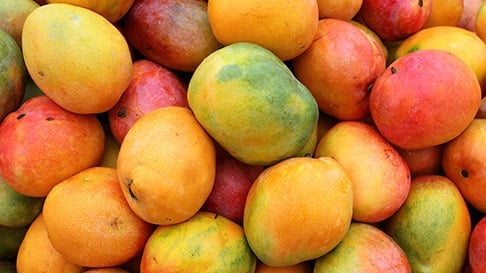
Ripe mango fruit
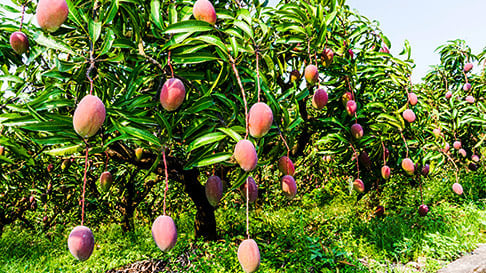
Mango plantation
Introduction
Mango (Mangifera indica L.) is one of the most widely cultivated tropical and subtropical fruit crops, being grown in more than 100 countries worldwide. Major producing regions include South and Southeast Asia, East and West Africa, Central and South America, and parts of Oceania. Mango trees are long‑lived evergreens whose flowering and fruit production are strongly influenced by nutrient management and environmental conditions, particularly temperature and water availability.
Productivity and fruit quality depend on suitable climatic condition, healthy and well-structured soils, effective canopy management, and adequate nutrient availaility throughout the cycle. Consequently, nutrient management has become a critical component of mango production systems, with fertilization programs combining mineral fertilizers, organic amendments, and micronutrient supplementation to optimize yield and fruit quality while promoting long-term soil health.
Growing Conditions
Climate & Temperature
Mango is adapted to tropical and subtropical environments, where temperature is a key determinant of vegetative growth, floral induction, fruit set, and fruit development. Optimal temperatures for growth and fruit development generally range from 24 to 30 °C while mature trees can tolerate short periods of high temperatures. Conversely, mango is highly sensitive to chilling and frost, particularly during flowering and early fruit development stages.
Soil Requirements
Mango can be cultivated in a wide range of soil types, from sandy loams to clay loams, provided that soils are deep, well‑drained, and well-aerated. Adequate drainage is particularly important, as mango trees are highly sensitive to waterlogged conditions that restrict root growth.
Optimal soil pH generally ranges from 5.5 to 7.5. Although mango can tolerated alkaline soils, high pH may reduce the availability of nutrients, such as phosphorus, iron, zinc, manganese, copper, and boron, potentially leading to nutritional deficiencies. . In addition, soil compaction and hardpan layers can restrict root peneration and nutrient diffusion, reducing water and nutrient acquisition, and ultimately limiting tree growth and productivity.
Water & Irrigation
Rainfall patterns, particularly their seasonal distribution, are often more important than total annual precipitation for successful mango production. Adequate soil moisture is required during vegetative growth and fruit development, whereas a distinct dry period before flowering promotes floral induction, especially in tropical environments. Excess moisture during the induction period suppresses flowering, and increases disease pressure. In many production systems, irrigation is strategically reduced before flowering and resumed after fruit set. Localized irrigation systems, particularly drip irrigation, are preferred to improve water use efficiency and maintain favorable moisture conditions. Rainfall during flowering may reduce pollination success while strong winds can increase flower and fruit abscission.
Flowering & Orchard Management
Floral induction in mango is regulated by interactions between environmental conditions, and plant physiological status. Excessive vegetative growth, often caused by high nitrogen availability, can suppress flowering and reduce fruit set. Therefore, appropriate canopy management and nutrient management are essential to maintain a balance between vegetative growth and reproductive development.
Global Production
Globally, mango is cultivated in more than 100 countries, with global production exceeding 60 million tonnes annually (FAO 2025). Most of the world’s production is concentrated in Asia, with India remaining the leading producer, followed by countries such as China, Thailand, Indonesia, Mexico, Pakistan, Brazil, and the Philippines. Production systems vary from traditional low‑input orchards to intensive commercial plantations adopting high‑density planting and fertigation. Across producing regions, common challenges include irregular flowering, alternate bearing, nutrient deficiencies, and maintaining fruit quality under increasingly variable climatic conditions.
Usage & Quality
Mango is consumed fresh or processed into a wide range of products, such as dried fruit, juices, purées, concentrates, and culinary preparations. Fruit quality is determined by a combination of physical, chemical, and sensory attributes, including fruit size, firmness, fiber content, sweetness, acidity, aroma, and overall appearance, with mineral nutrition playing a central role in the developmenet of these characteristics.Nutrient management strategies have been associated with improvements not only in yield but also in quality-related attributes, including total soluble solids, carotenoids concentration, phenolic compounds, and antioxidant capacity. These attributes directly influence nutritional value, consumer acceptance, and postharvest performance.
Mango Growth Stages
Mango development follows a cyclical pattern characterized by alternating vegetative and reproductive phases:
- Vegetative flush – emergence and expansion of new shoots and leaves, supporting canopy development and accumulation of reserves.
- Shoot maturation – vegetative flushes gradually mature and enter a resting phase, a prerequisite for floral induction.
- Floral induction – the transition from vegetative to reproductive growth is regulated by environmental and physiological factors, being associated with water deficit in tropical regions and cool temperatures in subtropical environments.
- Flowering and fruit set– panicles emerge from terminal buds, followed by pollination and fruit set. This phase is highly sensitive to environmental and nutritional conditions.
- Fruit growth and development fruits undergo rapid cell division and expansion, resulting in significant demand for water and nutrients while determining final fruit size and quality
- Fruit maturation and ripening – physiological and biochemical changes occur, including sugar accumulation, color development, aroma formation, and changes in fruit texture.
Nutrient uptake and partitioning vary throughout the production cycle; therefore, an understanding of stage-specific physiological is essential for designing effective fertilization programs.
Nutrient Requirements
Nitrogen (N)
Nitrogen is fundamental for vegetative growth, canopy development, amino acid and protein synthesis, chlorophyll formation, and overall metabolic activity. In mango, adequate N nutrition promotes the production of vegetative flushes that, after reaching maturity, become capable of supporting flowering and fruit production. However, excessive N availability, especially before floral induction, may stimulate excessive vegetative growth, suppress flowering, reduce fruit set, and fruit quality. High N levels have also been associated with poor fruit coloration and increased susceptibility to physiological disorders and postharvest diseases. Therefore, N supply should be synchronized with phenological needs to balance vegetative and reproductive growth.
Phosphorus (P)
Phosphorus plays a central role in energy transfer (ATP), root growth, and reproductive processes. Adequate P availability contributes to inflorescence development, flowering, fruit set, and fruit maturation. In many tropical soils, P availability is frequently limited by fixation processesmaking proper fertilization strategies (including the selection of right source, rate, timing, and placement) particularly important for maintaining adequate P availability to plants.
Potassium (K)
Potassium is strongly associated withfruit development and quality in mango. It plays key roles in photosynthesis, carbohydrate metabolism, enzyme activation, osmotic regulation, and water-use efficiency. Potassium nutrition is closely associated with peel coloration, aroma, fruit size, soluble solids content, and overall fruit quality. Adequate K supply also improves plant tolerance to environmental stresses, whereas deficiencies may reduce fruit quality and productivity. Because mango fruits remove considerable amounts of K per ton of fruit, regular replenishment is required to sustain orchard performance.
Calcium (Ca)
Calcium is required in relatively large quantities by mango trees and is essential for cell division, cell wall stability, and fruit development. Adequate Ca nutrition contributes to fruit firmness, shelf life, and postharvest quality, whereas Ca deficiency has been associated with physiological disorders such as internal breakdown. Because Ca mobility within the plant is limited, maintaining sufficient soil availability during fruit development is particularly important.
Magnesium (Mg)
Magnesium is the central component of the chlorophyll molecule and plays a fundamental role in photosynthesis and carbohydrate production. Although required in smaller amounts than N, K, or Ca, Mg deficiency can reduce vegetative growth, accelerate leaf senescence, and negatively affect productivity. Nutritional imbalances caused by excessive K or Ca fertilization may also reduce Mg uptake.
Sulfur (S)
Sulfur is an essential component of amino acids, proteins, enzymes, and several metabolites involved in plant growth and stress responses. It contributes to N metabolism, protein synthesis, and overall plant development. Although S deficiency is relatively uncommon in mango production systems, adequate S nutrition remains important for supporting metabolic processes.
Micronutrients (Fe, Zn, B, Cu, Mn, Mo, Ni, Cl)
Micronutrients are required in small amounts but have large effects on physiological and biochemical processes. Boron is particularly important for flowering, pollen viability, pollen tube growth, sugar transport, and fruit set, whereas zinc plays critical roles in shoot development, internode elongation, and reproductive growth. Iron is required for chlorophyll synthesis and electron transport; its deficiency is common in high-pH soils. Copper and manganese support enzymatic activation, photosynthesis, and stress-response mechanisms.. Molybdenum is involved in nitrate reduction, nickel is required for urease activity and N metabolism, and chlorine contributes to osmotic regulation and stomatal function.
Nutrient Removal
Nutritional removal intervals for 'Haden' and 'Tommy Atkins' cultivars in Mexico (Mellado-Vázquez et al.,, 2019)| Nutrient | Kg/t fresh fruit |
|---|---|
| Nitrogen | 1.03-1.11 |
| Phosphorus | 0.22-0.24 |
| Potassium | 1.88-2.14 |
| Sulfur | 0.28-0.33 |
| Calcium | 0.21-0.31 |
| Magnesium | 0.14-0.15 |
| Micronutrient | g/t fresh fruit |
|---|---|
| Boron | 1.5-1.6 |
| Copper | 1.0-1.1 |
| Iron | 3.5-3.8 |
| Manganese | 3.2-4.8 |
| Zinc | 2.0-2.8 |
Deficiency Symptoms in Mango
Nitrogen Deficiency
- Chlorosis and pale green coloration of older leaves
- Weak vegetative flushes and reduced canopy development
- Lower flowering intensity, fruit set, and fruit size.
Phosphorus Deficiency
- Reduced root and vegetative growth
- Shorter inflorescences and delayed or weak panicle emergence
- Lower fruit set due to reduced energy availability
Potassium Deficiency
- Marginal leaf chlorosis progressing to scorching in older leaves
- Reduced fruit size, soluble solids content, peel coloration, and aroma
- Increased susceptibility to environmental stress and shorter shelf life
Calcium Deficiency
- Reduced fruit firmness and shelf life
- Increased incidence of physiological disorders, including internal breakdown
- Impaired cell development and fruit quality
Magnesium Deficiency
- Interveinal chlorosis on older leaves
- reduced photosynthetic activity and premature leaf senescence
Sulfur Deficiency
- Chlorosis on young leaves
- Reduced vegetative growth
- Lower protein synthesis and nitrogen-use efficiency
Iron Deficiency
- Interveinal chlorosis of young leaves
- New flushes appear yellow to almost white in severe cases
- Reduced photosynthesis
Zinc Deficiency
- Shortened internodes (“little leaf”)
- Rosette‑like shoot tips and poor shoot elongation
- Flowering disorders and reduced fruit set
Boron Deficiency
- Poor pollen viability and weak fruit set
- Deformed inflorescences and small fruits
Terminal bud death and excessive lateral sprouting in severe cases.Deficiency symptoms associated with other micronutrients, such as Cu, Mn, Mo, Ni, and Cl, are less frequently reported in commercial mango orchards and are therefore less well documented than those associated with B, Zn, and Fe.
Integrated Nutrient Management
Integrated nutrient management combines mineral fertilizers with organic amendments, and other complementary practices to improve nutrient use efficiency and maintain soil fertility. Nutrient management should be guided by regular soil and leaf tissue analyses, which provide valuable information on nutrient availability, plant nutritional status, and potential defficiencies. The integration of mineral and organic nutrient sources can enhance nutrient cycling, improve soil physical, chemical, and biological properties, and contribute to more efficient nutrient uptake. Furthermore, practices that promote soil organic matter accumulation and microbial activity support long-term soil health and orchard productivity. Together, these approaches help sustain yield, fruit quality, and soil fertility throughout the production cycle.
Conclusion
Mango productivity and fruit quality depend on effective nutrient management and a clear understanding of crop phenology. Because nutrient demand changes throughout the production cycle, fertilization programs should be guided by regular soil and leaf tissue analyses and tailored to local soil conditions and production goals.
Integrated nutrient management can improve nutrient use efficiency, support long-term orchard productivity, and enhance fruit quality. Ultimately, a site-specific and science-based approach to nutrient management is essential for sustainable and resilient mango production.
Reference:
FAO Post_Harvest_Compendium_-_Mango.pdf
Mellado-Vázquez, Adriana & Salazar-Garcia, Samuel & Goenaga, Ricardo & Lopez-Jimenez, Alfredo. (2019). Survey of fruit nutrient removal by mango (Mangifera indica L.) cultivars for the export market in various producing regions of Mexico. REVISTA TERRA LATINOAMERICANA. 37. 437. 10.28940/terra.v37i4.528.
Mellado-Vazquez, A. et al. Fruit nutrient composition and removal by ‘Haden’ and ‘Tommy Atkins’ mangos fruits under forced production. Rev. Mex. Cienc. Agríc [online]. 2012, v.3, n.5, pp.925-941.
Related Trials
Guides & Articles
Q&A
Here are some frequently asked questions we received from farmers regarding growing mango.
Floral induction in mango is regulated by interactions between environemntal conditions and plant physiological status. In tropical regions, flowering is commonly associated with shoot maturity and periods of water deficit, whereas in subtropical environments cool temperatures are the primary flowering stimulus. Therefore, if irrigation or rainfall continues during this period, the tree remains vegetative and flowering is significantly reduced.
Micronutrient deficiencies are common in mango orchards because nutrient availability is strongly influenced by soil properties. In alkaline or calcareous soils, micronutrients such as iron (Fe), zinc (Zn), and boron (B) may become less available for plant uptake.
Poor fruit set is usually associated with a combination of factors, including inadequate carbohydrate reserves, nutrient deficiencies, unfavorable environmental conditions during flowering, and excessive vegetative growthHigh humidity, rain, strong winds, or temperature extremes during flowering reduce pollination efficiency and increase early fruit abscission.
Potassium plays important roles in photosynthesis, carbohydrate metabolism, osmotic regulation, and enzyme activation. Adequate K is closely associated with fruit size, peel coloration, aroma, soluble solids content, and overall fruit quality.
“Little leaf”, manisfested as small, narrow leaves and shortened internodes, is a classic sign of zinc deficiency. Because zinc is involved in auxin synthesis and plant growth regulation, deficiency can impair vegetative development, contribute to flowering disorders, and reduce fruit set.
Explore Mango Solutions by Brand
Find the right solutions to improve crop quality and yield

The perfect controlled release solution for the establishment of young plants
Brand details Agroblen<sup>®</sup>
Boost your crop productivity to maximize your performance
Brand details Agroleaf SpecialNutrivant delivers advanced technology for improved, long lasting foliar nutrition.
Brand details Nutrivant<sup>®</sup>The perfect controlled release solution for the establishment of young plants
Brand details Agroblen<sup>®</sup>Boost your crop productivity to maximize your performance
Brand details Agroleaf SpecialRecommended products
Agroleaf Special
Agroblen®

Nutrivant®

Digital Tools
Access calculators to improve nutrient management and boost productivity