Whatsapp
  X
X  Mail
Mail  Copy link

The four-in-one natural fertilizer
Brand details Polysulphate<sup>®</sup> Growing onions
Crop Nutrition Advice
Everything you need to know about onion fertilization, best practice, field trials, and more.
Onion Nutrition & Agronomic Guide
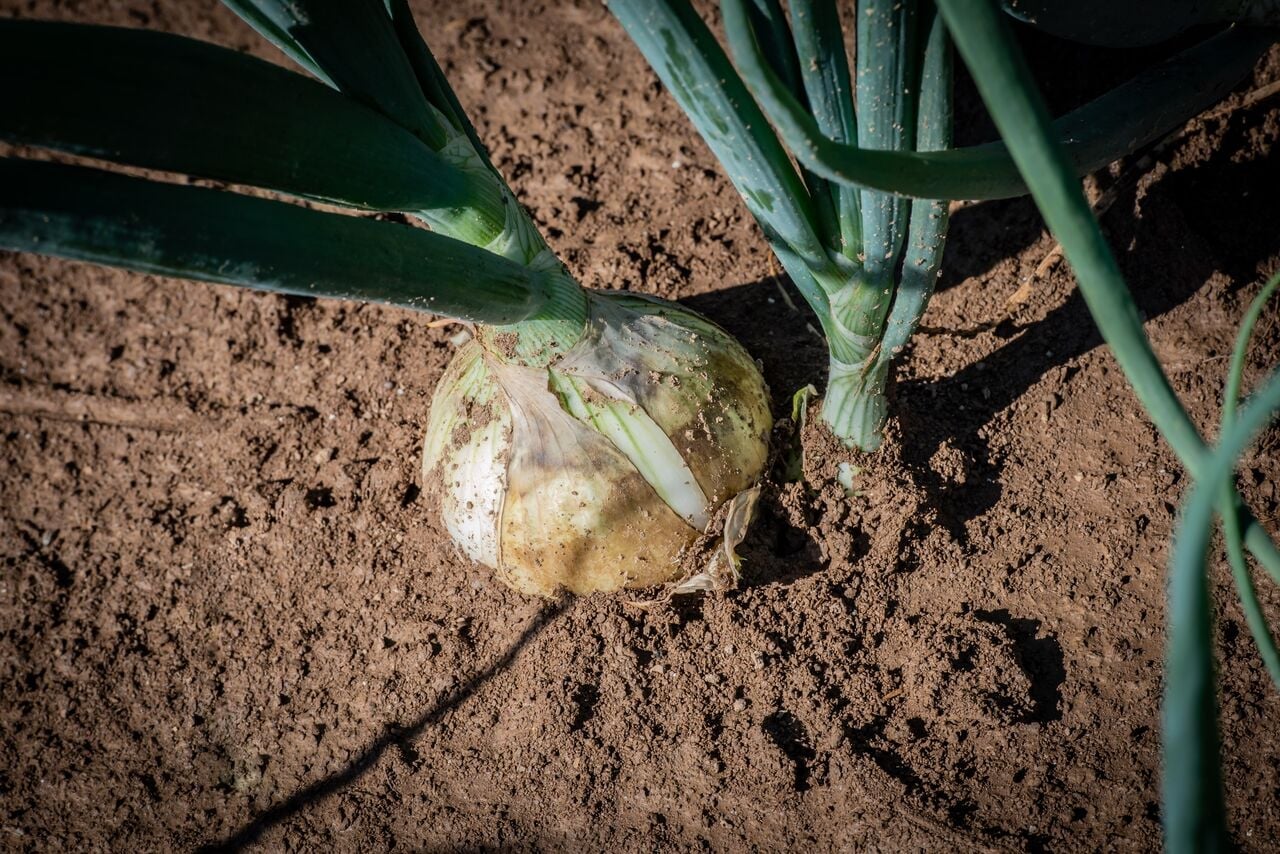
Onion just before harvest
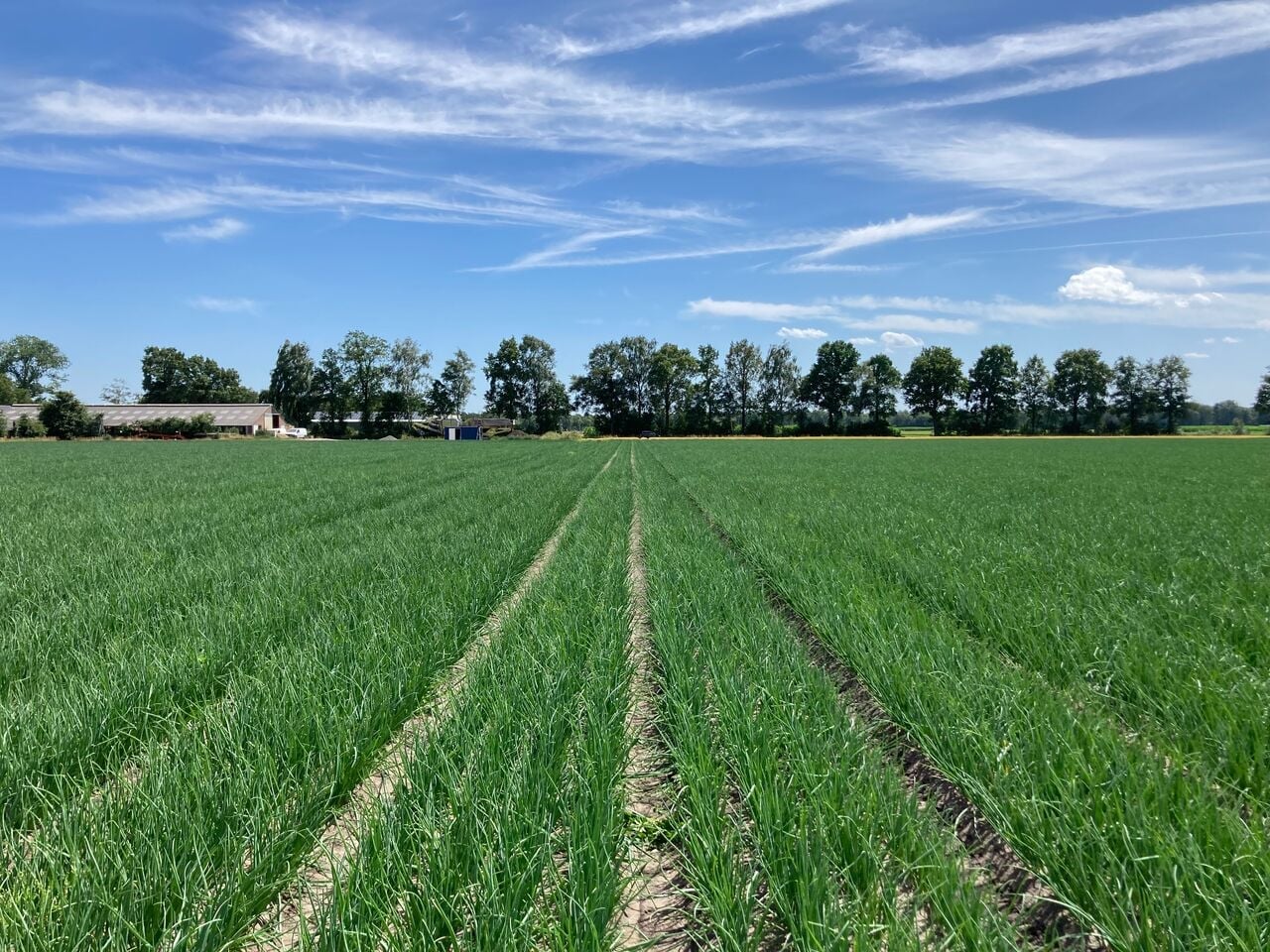
Rows of onions in a field
Introduction
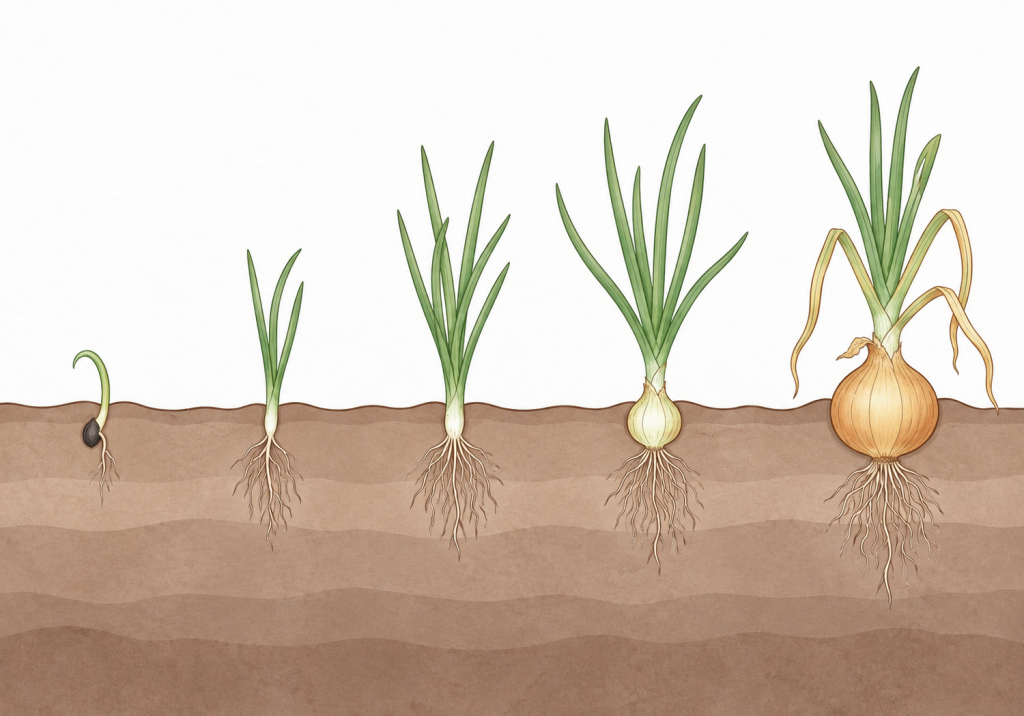
Onion (Allium cepa L.) is one of the oldest domesticated vegetable crops and is believed to have originate in Central and Western Asia before spreading through the Middle East and the Mediterranean. Over time, it became a widely cultivated crop valued for its storage potential, culinary versatility, and suitability for both small‑scale and large commercial production systems. Agronomically, onions are characterized by a shallow and relatively sparse root system and a growth pattern based on sequential leaf formation, making early crop establishment and stable growing conditions essential for achieving uniform bulbs and reliable yields.
Global Production and Use
Global onion production has increased substantially over recent decades, reflecting the crop’s importance as a staple vegetable worldwide. According to FAOSTAT, global onion production has grown more than a sevenfold since the early 1960s, driven by increases in cultivated area, yield improvements, and growing consumer demand. India and China remain the world’s leading produer, together accounting for a significant share of global output, followed by countries such as Egypt, the United States, and Turkey.
Onions are produced for both for fresh consumption and processing, including dehydrated products, powderrs, pickles, sauces, ready-to-eat meals. Their long storage life, ease of transport, and year-round demand make onions a major commodity in regional and international markets, supporting important export industries in countries such as India, Egypt, the Netherlands, and Spain.
Nutritional Value, Production Challenges, Market Requirements
Onions are low in calories and are composed primarily of water, with carbohydrates representing the major macronutrient fraction. They provide dietary fiber, and modest amounts of vitamin C, vitamin B6, and potassium. Onions are also important source of flavonoids (particularly quercetin) and sulfur-containing compounds responsible for their characteristic flavor and aroma, many of which have been associated with health-promoting properties.
From a production perspective, onions cultivation is frequently constrained by salinity, waterlogging, drought, and diseases such as downy mildew (Peronospora destructor), botrytis leaf blight (Botrytis spp.), and various storage rots. The crop‘s shallow and relativelly sparse root system limits its capacity to extract waterand nutrient from deeper soil layers, making it particularly sensitive to fluctuations in soil moisture and nutrient availability. requiring precise water and fertilizer management.
Market requirements demand uniform bulb size and shape, attractive skin color, intact and well-adhered dry scales, firmness, and long storage life. Export markets frequently require specific bulb calibers, well-curedouter skins, and strong neck closure to minimize losses during storage and long-distance transport. Achieving these quality standards depends heavily on appropriate cultivar selection, crop management, and adequate nutrition.
Plant Growth Environment
Optimal onion production depends on a balanced interaction among soil properties, temperature, photoperiod, and water availability. Given their sensitive root systems, environmental stresses frequently have a disproportionate effectt on final bulb yield and postharvest quality.
Soil Properties: Physical Structure and Texture
Onions perform best in well-drained, medium-textured soils, such as sandy loams or silty loams. These soils typically exhibit low bulk density and and minimal mechanical impedance, allowing uniform root growth and bulb expansion. Because onions have low root density, they areparticularly sensitive to soil compaction and waterlogging. These condictions restrict root respiration and increase the risk of soil-borne diseases, such as Pythium and Fusarium spp.
Soil Fertility: pH and Nutrient Availability
The ideal soil pH for onion production ranges between 6.0 and 7.0. Under alkaline conditions, the availability of micronutrients like iron, manganese,zinc anc copper decreases, increasing the risk of deficiencies. Conversely, strongly acidic soils may restrict root growth through aluminum toxicity.. Soil pH also influences microbial activity, nutrient cycling, and P availability, all of which affect onion yield.
Temperature and Photoperiod
Onion growth and bulb development are regulated by the interaction between temperature and photoperiod. Cool to moderate temperatures favor vegetative growth, while bulb initiation is primarily triggered by cultivar-specific day length requirements. Temperature influences the rate of bulb enlargement after initiation, and excessive heat combined with water stress can reduce bulb size and increase the incidence of double (multi-centered) bulbs.
Water Management and Salinity
Because onion roots are concentrated within the upper soil profile, maintaining adequate soil moisture throughout the growing season is essential. .The crop is highly sensitive to water deficits, particularly during bulb initiation and bulb enlargement, when drought stress can significantly reduce bulb size, marketable yield, and bulb quality.
Onion is considered one of the most salt-sensitive vegetable crops. Elevated salinity in irrigation water or within the root zone reduces water uptake through osmotic stress, impairs nutrient acquisition, and restricts bulb development. Common symptoms include leaf tip burn, reduced leaf expansion, chlorosis, stunted growth, and significant yield losses.
Nutrient Roles and Requirements
The shallow and relatively sparse root system of onion limits its ability to access water and nutrients from deeper soil layers. Consequently, adequate nutrient availability within the active root zone is fundamental to support continuous growth and bulb development. Nutrient requirements vary according to cultivar, yield potential, soil conditions, and management practices.
Nitrogen (N)
Nitrogen is the primary driver of vegetative growth, promoting leaf expansion, chlorophyll synthesis, and photosynthetic activity. Because bulb growth depends on the production and subsequent translocation of assimilates from the canopy, adequate N supply during early and mid-season is fundamental. However, excessive N availability late in the cycle prolongs vegetative growth, increases neck thickness, delays bulb maturation, reduces dry matter concentration, and may compromise storability and bulb quality.
Phosphorus (P)
Phosphorus plays a critical role in energy transfer, root development, and early crop establishment. Adequate P nutrition promotes vigorous root growth, which is especially important in onion due to its shallow root system. Deficiency during early growth can restrict root development, reduce nutrient uptake, delay maturity, and limit bulb formation.
Potassium (K)
Potassium is typically the most accumulated macronutrient in onion plants and is strongly associated with bulb growth and quality. It regulates osmotic adjustment, stomatal function, assimilate transport, enzyme activation, and water-use efficiency. Adequate K nutrition improves bulb size, firmness, skin quality, storage life, and tolerance to environmental stresses.
Sulfur (S)
Sulfur is particularly important in onion because it is directly involved in the synthesis of organosulfur compounds responsible for bulb pungency, flavor, and aroma. Adequate S nutrition contributes to bulb quality, market acceptance, and processing characteristics.
Calcium (Ca)
Calcium contributes to cell wall stability, membrane integrity, bulb firmness, and scale quality. Adequate Ca nutrition improves postharvest performance and reduces susceptibility to physiological disorders and storage rots. Because Ca mobility within the plant is limited, a continuous supply throughout the growing season is important.
Magnesium (Mg)
Magnesium is the central atom of the chlorophyll molecule and plays a key role in photosynthesis, enzyme activation, and carbohydrate metabolism. Adequate Mg nutrition supports sustained canopy activity and efficient assimilate production for bulb growth.
Micronutrients (B, Zn, Fe, Mn, Mo)
Micronutrients are required in smaller amounts but perform essential metabolic functions. Boron (B) is involved in cell wall formation and membrane stability; zinc (Zn) participates in enzyme activation and growth regulation; iron (Fe) and manganese (Mn) are essential for photosynthetic metabolism; copper (Cu) is involved in enzyme activity and redox reactions; molybdenum (Mo) and nickel (Ni) are required for N metabolism; and chlorine (Cl) contributes to osmotic regulation, stomatal function, and photosynthetic activity.
Deficiency Symptoms
Nitrogen deficiency
- Pale green to yellow leaves, initially affecting older leaves
- Reduced leaf number and canopy development
- Thin plants and small bulbs.
Phosphorus deficiency
- Slow early growth
- Dark green foliage, beginning with older leaves
- Poor root development.
Potassium deficiency
- Leaf tip burn and marginal chlorosis progressing to necrosis, beginning with older leaves
- Reduced stress tolerance
- Poor bulb developmend and reduced storage quality and shelf life.
Sulfur deficiency
- Uniform chlorosis of younger leaves
- Thin necks
- Reduced pungency and flavor intensity.
Calcium deficiency
- Reduced bulb firmness
- Poor scale integrity and skin quality
- Increased susceptibility to storage disorders and rots
Zinc deficiency
- Stunted plants
- Narrow, shortened leaves
- Reduced canopy development
Boron deficiency
- Reduced root growth
- Reduced bulb development and deformation of bulbs
- Increased susceptibility of physiological disorders
Iron deficiency
- Interveinal chlorosis on young leaves, while veins remain green
- Reduced chlorophyll formation and photosynthetic activity
- More common in alkaline or calcareous soils
Manganese deficiency
- Interveinal chlorosis on young to recently expanded leaves
- Small necrotic specks may develop under severe deficiency
- Most common in high-pH soils with poor Mn availability
Fertilization Methods
Pre‑plant fertilization supplies a substantial portion of the crop’s nutrient requirements before planting, based on soil analysis and yield targets. Because onion roots explore a limited soil volume, placing nutrients within the effective rooting zone improves nutrient availability during crop establishment and early growth. This practice is especially important for nutrients with low mobility in the soil, such as P, which plays a fundamental role in root development and early crop establishment. Topdressing applications are commonly used to supply N and K during vegetative growth and bulb development. Splitting nutrient applications throughout the season improves nutrient-use efficiency, reduces nutrient losses, and synchronizes nutrient availability with crop demand.
In many production systems, N is supplied through multiple topdress applications or via fertigation. Alternatively, controlled-release fertilizers can provide a gradual nutrient supply throughout the growing cycle, helping maintain nutrient availability within the active root zone while reducing nutrient losses and the need for repeated fertilizer applications. Nitrogen fertilization should be reduced or discontinued during the final stages of bulb development to promote neck drying, improve curing, and minimize storage losses associated with delayed maturity and bulb rots.
Fertigation through drip or sprinkler systems enables frequent, low-dose nutrient applications directly within the active root zone. This approach improves nutrient-use efficiency, enhances synchronization between nutrient supply and crop demand, and reduces losses through leaching, particularly in sandy soils and irrigated production systems. Fertigation is especially suited to onion production because of the crop’s shallow root system and relatively limited capacity to explore nutrients beyond the wetted soil volume.
Foliar nutrition is used to rapidly correct micronutrient deficiencies quickly or supplement plant nutrition when root uptake is restricted by adverse soil or enviromental conditions. Foliar applications of nutrients such as B, Zn, Mn, and Fe can effectively alleviate transient deficiencies and help maintain plant metabolic activity However, foliar fertilization should be viewed as a complement to, rather than a replacement for, a well-designed soil fertility program, as the contribution of foliar applications to total nutrient uptake is generally limited.
Conclusion
Successful onion production depends on understanding and managing the crop’s major physiological limitation: a shallow and relatively inefficient root system. Because onions have limited capacity to access water and nutrients from deeper soil layers, yield and bulb quality are highly dependent on maintaining favorable soil conditions throughout the growing season. By aligning nutrient supply with crop demand and minimizing stresses such as drought, salinity, nutrient deficiencies, and soil compaction, growers can maximize bulb yield, improve postharvest performance, and consistently meet market requirements for bulb size, firmness, skin quality, and storage life.
Onion Trials
Guides & Articles
Q&A
Questions we received from the field
Yellowing is not always caused by N deficiency. For example, S defficiency can produce similar symptoms, depending on which leaves are affected (N defficiency: olde leaves, S defficiency: young leaves). Soil and tissue analyses are the most reliable tools for identifying the underlying cause and selecting the appropriate corrective action.
Sulfur contributes to the formation of the S-containing compounds responsible for bulb flavor, pungency, and aroma. Adequate S nutrition also supports bulb quality and market acceptance.
Controlled-release fertilizers can improve nutrient-use efficiency by supplying nutrients (such as N ans K) gradually throughout the growing season. This approach helps maintain nutrient availability within the active root zone, reduces losses through leaching, and may decrease the need for multiple fertilizer applications.
Explore Onions Solutions by Brand
Find the right solutions to improve crop quality and yield
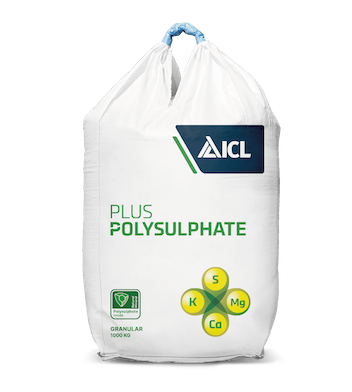
The four-in-one natural fertilizer
Brand details Polysulphate<sup>®</sup>Recommended products
Polysulphate®
Digital tools
Improve your fertilization and increase your yield with our handy calculation tools