


 Whatsapp
  X
X  Mail
Mail  Copy link
Master your crop nutrition in any condition
Brand details Agromaster<sup>®</sup>Growing Pepper crop nutrition advice
Everything you need to know about Pepper fertilization, best practice, field trials, and more.
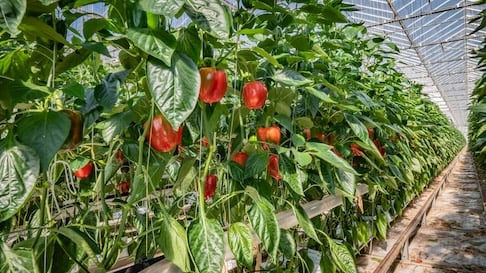
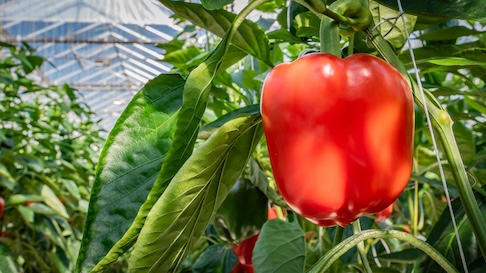
Pepper Overview and Production
Origin and types:
Pepper (Capsicum annuum L.) is native to Central and South America, domesticated over 6,000 years ago. It includes sweet/bell peppers (blocky, thick-walled fruit) and hot/chili types (pungent due to capsaicinoids). The species is highly diverse in fruit size, shape, and color. Commercial cultivation uses both open-field and greenhouse systems.
Global significance & major producing countries:
According to FAOSTAT (2023), global production of green peppers (Capsicum spp.) was ~37.4 million tonnes. China accounts for over half of the total, followed by Mexico, Indonesia, Turkey, and the United States.
| Country | Production (Mt) |
|---|---|
| China | 20.0 |
| Mexico | 3.3 |
| Indonesia | 2.8 |
| Turkey | 2.6 |
| United States | 0.9 |
Area and yield: Harvested area globally exceeds 2 million hectares, with average open-field yields ranging from 10–25 t/ha in low-input systems to 50–80 t/ha under intensive management. Greenhouse production can exceed 120 t/ha annually in high-tech systems.
Uses and markets:
- Fresh consumption (salads, cooking, stuffing)
- Processing (pickled, roasted, dried, powdered)
- Hot peppers for spice, sauces, and extracts
Quality drivers include fruit size, color uniformity, wall thickness, sweetness/pungency, and postharvest shelf life.
Key cultivation challenges:
| Challenge | Key risk factors | Main mitigation |
|---|---|---|
| Blossom end rot | Ca deficiency, irregular watering, high salinity | Maintain even soil moisture; adequate Ca supply; avoid EC spikes |
| Viral diseases | Infected seed, insect vectors (thrips, aphids) | Certified seed; vector control; resistant cultivars |
| Bacterial leaf spot, soft rots | Warm, humid, splash irrigation | Resistant cultivars; drip irrigation; sanitation |
| Powdery mildew | High humidity, poor ventilation in greenhouses | Ventilation; resistant varieties; fungicides |
| Fruit sunscald | High radiation, sudden defoliation | Maintain canopy cover; shading nets |
| Nutrient imbalances | Excess N delaying maturity; low K reducing quality | Balanced fertilisation; tissue testing |
Plant Growth Environment
Soil:
- Well-drained sandy loam to loam soils with high organic matter
- pH optimum 6.0–6.8 (tolerant 5.5–7.5)
- Avoid waterlogging; raised beds improve drainage
- Lime soils if pH<5.8; acidify soils if pH is >7.5 for micronutrient availability
Salinity:
- Yield decline may start at ECe ~1.5–2.0 dS/m; ECw ideally <1.0 dS/m
- Sensitive to Na and Cl; use good-quality irrigation water
Climate:
- Warm-season crop; optimal temperature for growth 20–30°C, fruit set best at 21–27°C
- Below 15°C, growth slows and pollen viability drops; above 32–35°C, flower/fruit drop risk increases
- Requires high light for yield and quality; shading beneficial in extreme heat
Water:
- Medium rooting depth (40–60 cm); requires consistent moisture, especially during flowering and fruiting
- Drip irrigation preferred to reduce foliar diseases and manage EC
Nutrient Roles & Symptoms
Macronutrients:
| Nutrient | Key roles | Deficiency symptoms | Excess / interactions |
|---|---|---|---|
| N | Vegetative growth, leaf area, protein synthesis | Pale leaves, stunting, reduced fruit size | Excess delays maturity, increases vegetative growth, lowers fruit quality |
| P | Root development, flowering, energy transfer | Dark green to purpling leaves, delayed maturity | High P may induce Zn deficiency in high-pH soils |
| K | Osmotic regulation, sugar transport, color | Marginal chlorosis/necrosis, poor color | Excess K can reduce Mg and Ca uptake |
| Ca | Cell wall strength, prevents blossom end rot | Water-soaked spots turning black on fruit blossom end | Low mobility—stress or excess K/Na aggravates deficiency |
| Mg | Chlorophyll formation | Interveinal chlorosis on older leaves | Antagonism from high K or Ca |
| S | Amino acids, enzymes | Uniform chlorosis on new leaves | Excess rare; can acidify media |
Micronutrients:
| Micronutrient | Key roles | Deficiency symptoms | Excess / notes |
|---|---|---|---|
| B | Cell wall integrity, pollen tube growth | Flower drop, malformed fruit | Narrow sufficiency range—avoid over-application |
| Fe | Chlorophyll synthesis | Interveinal chlorosis on youngest leaves | Deficiency common in high-pH soils—use chelates |
| Zn | Enzyme activation, auxin synthesis | Rosetting, small leaves, interveinal chlorosis | Less available at high pH |
| Mn | Photosynthesis enzymes | Interveinal chlorosis with speckling | High Mn possible at low pH |
| Cu | Enzyme cofactor, lignin synthesis | Twisted young leaves, dieback | Excess toxic—low demand |
| Mo | N metabolism | General chlorosis under high nitrate | Deficiency rare except in acidic soils |
Quality impacts: Adequate K improves fruit color and sweetness; sufficient Ca prevents blossom end rot; balanced N promotes uniform maturity; B and Zn support flower retention and fruit set.
Growth Stages & Nutritional Needs
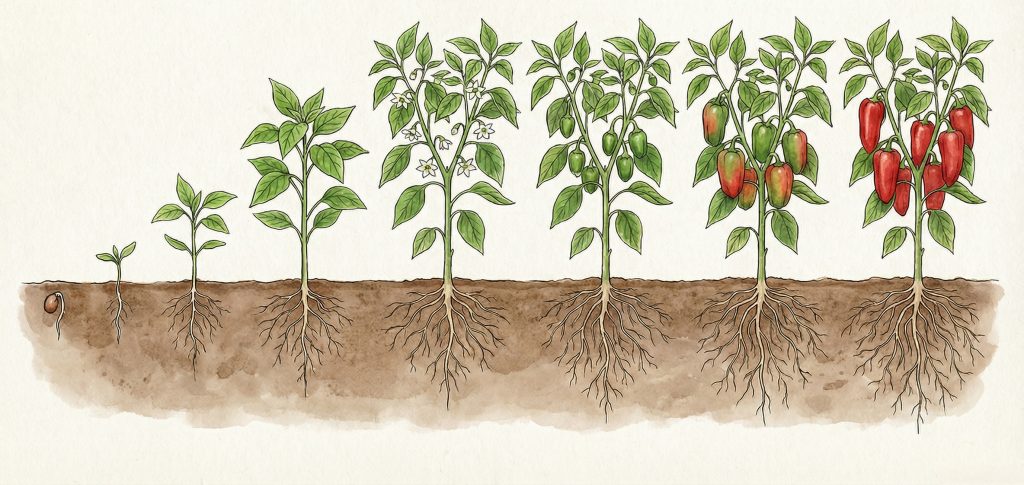
Illustration of pepper plant growth stages, from germination and early leaf development to flowering and fully mature plants bearing ripe red fruits, with root systems shown throughout.
Stages:
- Germination & seedling (0–4 weeks)
- Vegetative growth (4–8 weeks)
- Flowering & fruit set (8–12+ weeks)
- Fruit development & maturation (to harvest)
| Stage | N | P₂O₅ | K₂O | CaO | MgO | SO₃ |
|---|---|---|---|---|---|---|
| (kg/ha) | ||||||
| Seedling establishment | 20–40 | 20–30 | 30–50 | 10–20 | 5–10 | 10–15 |
| Vegetative | 40–60 | 20–30 | 60–80 | 20–30 | 10–15 | 10–20 |
| Flowering & fruit set | 40–50 | 15–25 | 80–100 | 20–30 | 10–15 | 10–20 |
| Fruit maturation | 20–30 | 0–10 | 60–90 | 10–20 | 5–10 | 0–10 |
Application methods:
- Pre-plant: Incorporate P, K, and Ca (as lime or gypsum if needed)
- Fertigation: Split N and K applications; increase K proportion after fruit set
- Foliar: Ca sprays during high BER risk; micronutrient foliar when tissue analysis shows deficiency
Field Trials and Practical Insights
Field experience plays an important role in validating crop nutrition strategies under real growing conditions. In protected pepper production systems, consistent calcium supply is particularly critical due to the crop’s sensitivity to localized calcium deficiency during flowering and fruit development.
The following video presents practical insights from a commercial capsicum (bell pepper) grower in Maharashtra, India, who manages production under a shade-net system. The grower highlights the role of regular calcium and phosphorus nutrition during flowering and fruit set, with applications timed at 15-day intervals to support stem strength, fruit quality, and extended harvest duration. Particular emphasis is placed on calcium availability during periods of high fruit load, when demand exceeds root uptake capacity.
This experience reflects the established agronomic principles discussed above: peppers require a continuous and well-balanced supply of calcium to maintain cell wall strength, reduce blossom end rot risk, and support marketable fruit quality. While growing conditions vary by region, the underlying nutrient management strategies are relevant across both open-field and protected production systems worldwide.
Climate Change Impacts on Crop Nutrition
- Heat stress: Accelerates maturity, increases flower drop—maintain K and Ca to improve stress resilience
- High VPD: Increases transpiration demand—risk of localized Ca deficiency (BER)
- Erratic rainfall: Leaching of N and S—split applications or controlled-release fertilisers
- Elevated CO₂: May increase yield potential but also N dilution—adjust fertilization accordingly
- Extreme weather: Use mulches, shade nets, and protected culture to stabilize conditions
References
- FAOSTAT (2023). Crops and livestock products – Chillies and peppers, green.
- UC Davis Vegetable Research and Information Center – Pepper Production Guidelines.
- Cornell University Cooperative Extension (CCE). Commercial Pepper Production in New York State.
- Wageningen University & Research (WUR). Greenhouse Horticulture Crop Nutrition Guidelines.
- FAO (2021). Irrigation and Drainage Paper 56; Crop water requirements.
- EMBRAPA (Brazil). Capsicum crop production and nutrient management recommendations.
Related Trials
Guides & Articles
For more information
Q&A
Here are some frequently asked questions we received from farmers regarding growing Pepper
Ensure steady moisture supply, adequate Ca in soil and fertigation, avoid excessive K/Na, and manage EC to prevent osmotic stress.
pH 5.5–6.5; EC 2.0–3.0 dS/m depending on growth stage—monitor drain EC to prevent salt accumulation.
From early fruit set onwards to improve color, firmness, and sugar content.
Fe and Zn (high-pH soils), B (flower drop), and occasional Mn in sandy soils.
Explore Pepper Solutions by Brand
Find the right solutions to improve crop quality and yield

The groundbreaking total range of water-soluble straight fertilizers
Brand details Nova
Every drop makes a big impact on your crop quality and yields
Brand details Agrolution LiquidMaster your crop nutrition in any condition
Brand details Agromaster<sup>®</sup>The groundbreaking total range of water-soluble straight fertilizers
Brand details NovaEvery drop makes a big impact on your crop quality and yields
Brand details Agrolution LiquidDiscover Our Solutions for Growing Pepper
Pepper Solutions: Increase Your Harvest
Agromaster®

Agrolution Liquid

Nova

Agromaster®
Digital Tools
Calculators to improve nutrient management and boost productivity


