Whatsapp
  X
X  Mail
Mail  Copy link
 How Can CRFs Reduce Nutrient Losses in Cereals?
Combining controlled-release technology with natural multi-nutrient fertilization to improve cereal yield, quality, and sustainability.
On this page:
Combining Agromaster® controlled-release fertilizers with Polysulphate® provides a more efficient nutrient supply throughout the cereal growth cycle. This approach reduces nutrient losses, improves nutrient uptake, and supports higher yields with a lower environmental impact.
Modern cereal production requires a careful balance between maximizing yield and improving nutrient efficiency. As nutrient losses continue to challenge profitability and sustainability, growers are increasingly adopting integrated fertilization strategies that align nutrient release with crop demand while minimizing environmental impact.
Why is Nutrient Efficiency a Challenge in Cereal Production?
Efficient nutrient management remains a key challenge in cereal production systems worldwide. Nitrogen and phosphorus losses through leaching, volatilization, and fixation reduce nutrient use efficiency, increase production costs, and contribute to environmental impact.
At the same time, regulatory pressure and supply chain expectations are driving the need for more precise and sustainable fertilization strategies. Growers must balance high yield potential with responsible nutrient management.
To address these challenges, fertilizer technologies that deliver nutrients in a controlled and crop-aligned manner are becoming increasingly important.
How Do Agromaster® and Polysulphate® Work Together?
ICL has developed integrated nutrition programs combining Agromaster® controlled-release fertilizers (CRFs) with Polysulphate®, a natural multi-nutrient fertilizer. Together, they provide a complementary nutrient supply throughout the cereal growth cycle.
Controlled Nutrient Release with Agromaster®
Agromaster® fertilizers use E-Max® and eqo.x release technology to control the release of nitrogen and phosphorus. Nutrients are released gradually in line with crop demand, helping to reduce nitrogen losses through leaching and volatilization while also minimizing phosphorus fixation, particularly in high pH soils. This controlled release supports early root development through localized placement near the seed and ensures nutrient availability throughout key growth stages, leading to more consistent crop development and improved nutrient use efficiency.
Sustained Multi-Nutrient Supply with Polysulphate®
Polysulphate® is a naturally occurring mineral fertilizer that supplies four essential nutrients in each granule:
- Sulfur (S): supports protein synthesis and nitrogen use efficiency
- Potassium (K): regulates water balance and improves stress tolerance
- Magnesium (Mg): essential for chlorophyll production and photosynthesis
- Calcium (Ca): supports cell wall strength and nutrient transport
Its gradual dissolution ensures a steady nutrient supply over time, complementing the release pattern of Agromaster®.
As a natural mineral, Polysulphate® is simply mined, crushed, and screened, requiring no chemical processing. This contributes to an exceptionally low carbon footprint, supporting more sustainable production systems.
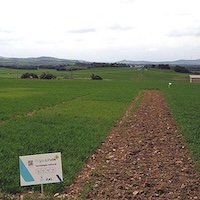
Cereal trials testing integrated nutrition programs combining Agromaster® controlled-release fertilizers (CRFs) with Polysulphate®.
What Results Can Growers Expect from Combining Agromaster® with Polysulphate®?
Field trials conducted across multiple regions demonstrate that combining Agromaster® with Polysulphate® can significantly improve crop performance.
Key observed benefits include:
- Higher nutrient use efficiency due to reduced losses
- Improved crop growth and more uniform development
- Increased yield and grain quality
- Enhanced sulfur availability, supporting nitrogen utilization
- Greater resilience to environmental stress
The synergy between controlled-release nitrogen and phosphorus and the sustained supply of secondary nutrients plays a critical role.
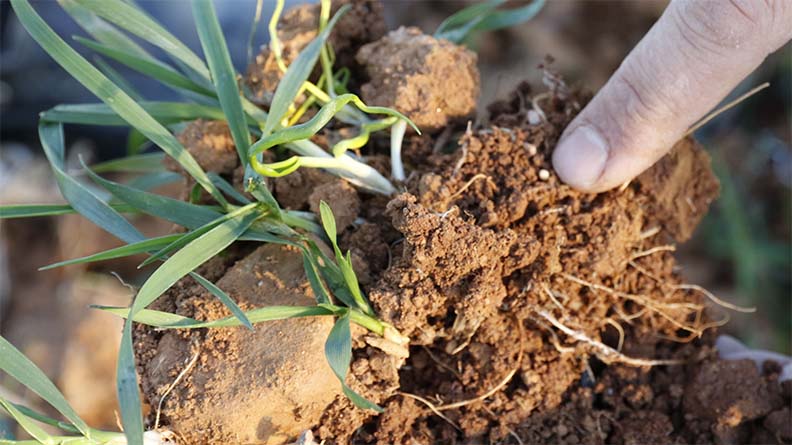
Combining Agromaster® CRF with the natural multi-nutrient Polysulphate® fertilizer offers a practical and proven solution for cereal growers.
What Are the Practical Advantages for Farmers?
Growers using Agromaster® with Polysulphate® report several practical benefits in day-to-day operations. The combination offers flexibility in application, whether banded near the seed or broadcast across the field, and performs consistently across a wide range of soil types and climatic conditions.
In addition, the products are designed for safe and efficient use. A low salt index reduces the risk of crop damage at application, while a neutral pH minimizes adverse soil interactions. Uniform granule size and density support even nutrient distribution, contributing to consistent crop establishment and growth.
Importantly, this approach enables more efficient fertilization strategies, allowing growers to reduce application rates while maintaining or improving overall performance.
Supporting Sustainable Cereal Production
Maximizing cereal yields while reducing environmental impact is a central challenge for modern agriculture. Combining controlled-release fertilizers with natural multi-nutrient sources offers a practical and proven solution.
By improving nutrient synchronization with crop demand and reducing losses, Agromaster® and Polysulphate® help growers achieve both productivity and sustainability goals.