Whatsapp
  X
X  Mail
Mail  Copy link
 Fertilizer Compatibility Chart Highlights Blending Opportunities

On this page:
ICL’s Fertilizer Compatibility Chart helps agronomists and distributors create safe, effective granular blends tailored to regional crop needs. By identifying which fertilizers can be mixed, it simplifies blending decisions, enhances nutrient efficiency, and prevents compatibility issues. This tool supports smarter, more sustainable nutrient management – empowering growers to deliver precise, balanced nutrition for every crop.
Fertilizer blending is the process of combining granular nutrients to create tailored formulations. While ICL offers a wide range of complete and specialty fertilizers, blending gives local blenders the flexibility to meet specific crop and soil requirements efficiently and cost-effectively.
Supporting Local Nutrient Strategies
Blended fertilizers are especially useful in regions with distinct nutrient deficiencies or diverse cropping systems. Local blending allows distributors to formulate products that address the needs of specific crops, soils, and growing conditions using a focused inventory of raw materials.
This approach offers both agronomic precision and logistical efficiency, helping growers support their crops with the right nutrients in the right ratio, at the right time.
Why Fertilizer Compatibility Matters
Not all fertilizer materials are physically or chemically compatible. Some mixtures may be unstable, hygroscopic, reactive, or non-compliant with safety or transport regulations. Proper blending requires careful selection to avoid issues such as caking, nutrient segregation, and even hazardous reactions.
The Role of ICL Products in Blends
Many blenders are familiar with the compatibility profiles of standard fertilizers like urea, MAP, or DAP. However, relying solely on these conventional materials can limit the range of nutrient combinations and performance enhancements blenders can offer to growers.
ICL’s Polysulphate-based products, including Polysulphate, Polysulphate Premium, and ICL PotashpluS are ideal additions to blended fertilizers. Polysulphate provides four essential nutrients (sulfur, potassium, magnesium, and calcium) in a single natural mineral. Another key benefit of Polysulphate is the prolonged nutrient release pattern that aligns with crop uptake to increase efficiency and reduce nutrient losses.
Incorporating these products into blends expands the agronomic benefits of the final product, while maintaining physical stability.
Compatibility of Granular Fertilizers for Blending
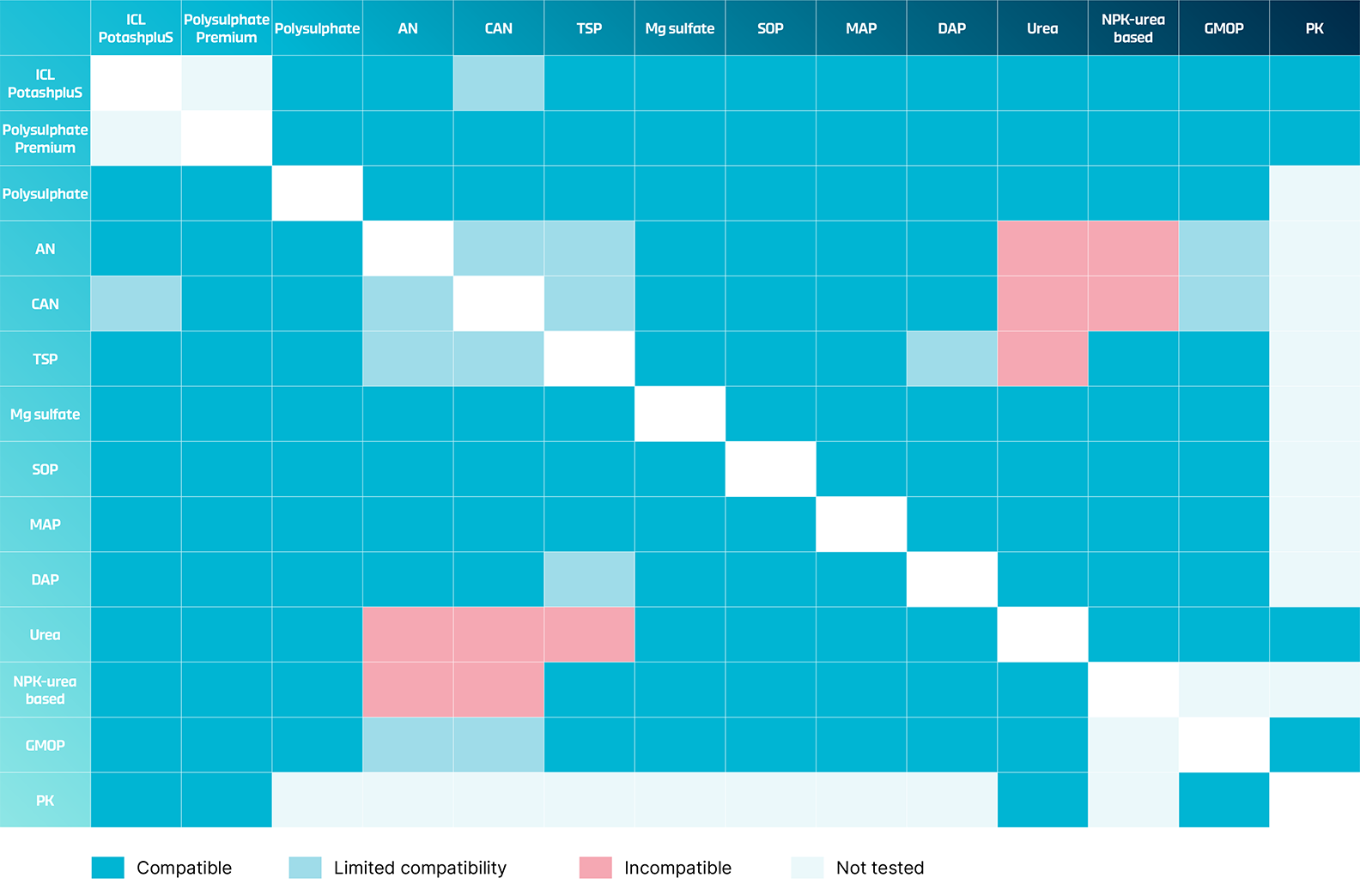
Using the Compatibility Chart
ICL’s Fertilizer Compatibility Chart provides clear guidance on which materials can be safely combined in granular blends. Each pairing is assigned to one of four categories:
- Compatible
- Limited compatibility (blending may be possible with precautions)
- Incompatible (should not be blended)
- Not tested (data not available)
The compatibility tests were conducted by ICL’s R&D team at Sdom using protocols based on IFDC (International Fertilizer Development Center) methods, ensuring a consistent and recognized testing standard.
The result of the testing is a tool that supports confident, informed decisions for creating new fertilizer formulations using ICL’s products alongside other common materials like AN, CAN, TSP, SOP, DAP, MAP, GMOP, and more.
Expanding Blending Possibilities
By incorporating Polysulphate-based products into blends, fertilizer suppliers can offer more complete nutrient solutions that are tailored to their growers’ needs while supporting crop performance, soil fertility, and sustainable nutrient management.
Download the Fertilizer Compatibility Chart to explore new opportunities in fertilizer blending and build tailored solutions for your region’s crops.