Whatsapp
  X
X  Mail
Mail  Copy link
 ICL’s TSP and SSP: Reliable Phosphate Fertilizers for Agronomic and Market Stability

On this page:
Why Phosphorus Matters in Modern Crop Nutrition
Within this segment, Triple Super Phosphate (TSP) and Single Super Phosphate (SSP) play a central role in delivering efficient and reliable crop nutrition. ICL’s portfolio stands out due to its high-quality phosphorus content, combined with strong agronomic performance and production integration.
This article explains why ICL’s TSP and SSP fertilizers provide a competitive advantage, especially in a market where sulfur prices are rising, by focusing on nutrient concentration, product positioning, and evolving cost dynamics.
Understanding TSP and SSP Fertilizers
One of the most important differentiators in phosphate fertilizers is the concentration of available phosphorus. Higher P concentration allows growers to apply smaller quantities while achieving the same or improved agronomic results.
What Is TSP (Triple Superphosphate)?
- 44 – 46% P₂O₅
- High‑analysis, chloride‑free
- Suitable for soils needing concentrated P inputs
What Is SSP (Single Superphosphate)?
- 16 – 20% P₂O₅ + sulfur + calcium
- Ideal for sulfur‑deficient soils
ICL’s own products align with these high standards, with GTSP at ~46% P₂O₅ and SSP grades at 18–20% P₂O₅, meaning that ICL’s phosphate fertilizers offer the highest concentrations of available phosphate in the market. TSP provides more than double the phosphorus per unit compared with SSP, and significantly more compared with lower-grade phosphate sources in the market.
Agronomic Advantages of TSP and SSP
Phosphorus plays a fundamental role in plant development, including:
- Root establishment
- Energy transfer (ATP processes)
- Photosynthesis and DNA formation
ICL’s TSP and SSP fertilizers are designed to deliver readily available phosphorus, enabling:
- Strong early crop establishment
- Improved flowering and fruiting
- Consistent yield performance
In competitive markets, this high nutrient density positions ICL strongly against lower-grade or less consistent alternatives. Both products offer high solubility and availability, ensuring crops can absorb nutrients efficiently across different soil conditions.
- Higher P concentration improves logistics efficiency (less product per hectare).
- It supports precision agriculture programs where accurate nutrient delivery is critical.
- It reduces handling and application costs per unit of nutrient.
Why choose SSP
While TSP offers maximum phosphorus concentration, SSP provides a dual nutrient solution by combining phosphorus with sulfur.
- SSP contains 11–12% sulfur, which is essential for protein synthesis and crop quality.
This is particularly valuable in:
- Sulfur-deficient soils
- Oilseed and legume crops with high sulfur demand
- Regions where soil nutrient depletion has increased micronutrient sulfur requirements
In these conditions, SSP delivers two essential nutrients in one application, improving nutrient efficiency and simplifying fertilization programs.
Rising Sulfur Prices
Global sulfur markets have experienced strong volatility, with significant price increases in recent years:
- Sulfur prices rose sharply in 2025, in some cases by over 100% due to supply constraints and demand growth.
- Sulfur is a key input in the production of phosphate fertilizers, especially through sulfuric acid.
Impact on the fertilizer market
- Higher sulfur prices increase production costs for many phosphate fertilizers.
- Margins for producers without integrated supply chains come under pressure.
- Fertilizer pricing becomes more volatile.
Why this benefits ICL’s SSP positioning
Despite being linked to sulfur, SSP gains relevance in this environment for two reasons:
- Built-in sulfur value
SSP includes sulfur as part of its composition, meaning growers receive an additional nutrient that would otherwise need to be purchased separately. - Cost efficiency for farmers
As sulfur becomes more expensive, fertilizers that already contain sulfur become more attractive compared with products that require separate sulfur application.
In practice, this turns rising sulfur prices into a market advantage for SSP, especially in regions with sulfur-deficient soils.
ICL’s Commitment to High‑Quality Phosphate Fertilizers
ICL benefits from backward integration, including phosphate rock mining and production at its Rotem site in Israel.
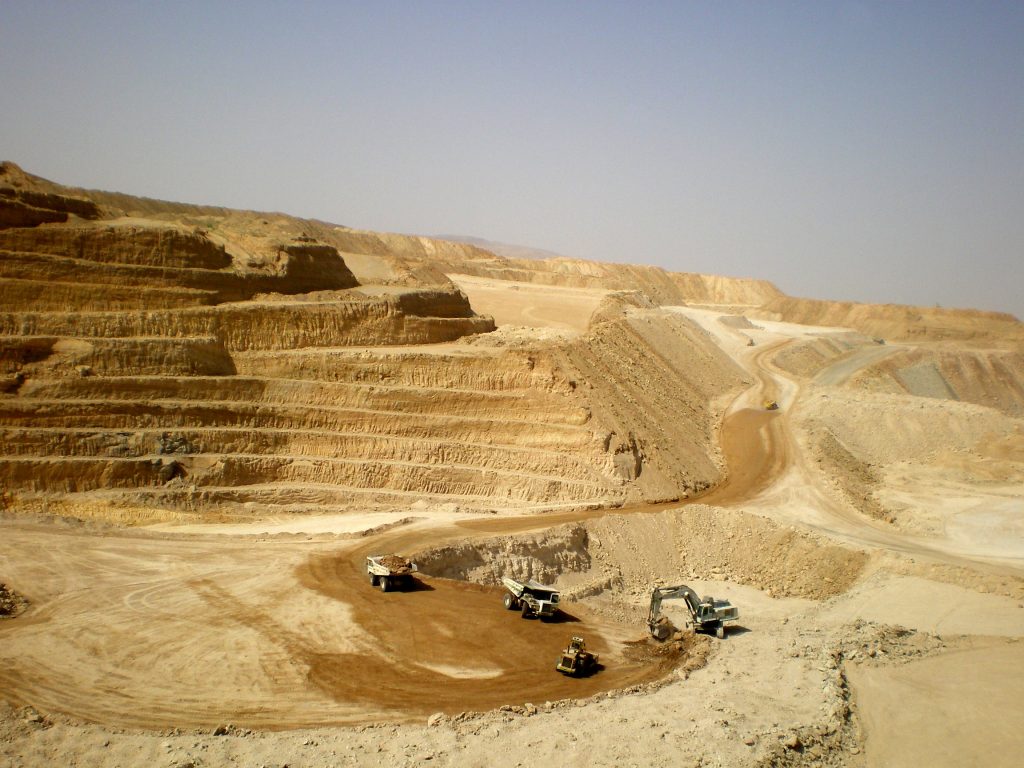
Rotem phosphate rock mine in Israel.
This provides several advantages:
- Greater control over raw material quality
- Improved cost stability compared with non-integrated competitors
- Lower supply chain risk
As a result, ICL can maintain consistent product quality and availability, which is critical in a volatile fertilizer market.
How ICL’s TSP and SSP Compare to Other Phosphate Fertilizers
Compared with many alternatives in the market, ICL’s TSP and SSP portfolio offers:
- Higher nutrient efficiency
- TSP delivers one of the highest phosphorus concentrations available.
- SSP combines phosphorus with sulfur for balanced nutrition.
- Flexible application strategy
- TSP: ideal for high-demand crops and precision fertilization
- SSP: ideal for sulfur-deficient soils and multi-nutrient supply
- Strong cost-performance ratio
- Lower cost per unit of P in high-analysis products
- Reduced need for additional sulfur inputs when using SSP
Conclusion
ICL’s TSP and SSP fertilizers provide a clear strategic advantage based on two complementary strengths:
- High phosphorus concentration, especially in TSP, delivering efficient and concentrated nutrition
- Integrated sulfur value in SSP, which becomes increasingly important as sulfur prices rise
In a market shaped by input cost volatility and the need for efficient nutrient use, this combination positions ICL strongly.
TSP supports growers requiring maximum phosphorus efficiency, while SSP offers a balanced and cost-effective solution for soils needing both phosphorus and sulfur.
Together, they form a portfolio that is both agronomically effective and economically relevant in today’s global fertilizer landscape.