


 Whatsapp
  X
X  Mail
Mail  Copy link
 Soybean Trial Success in China with ICL’s BIOZ® Topaz and BIOZ® Nephrite

On this page:
Field trials in China demonstrated how ICL’s BIOZ® Topaz and BIOZ® Nephrite biostimulants enhance soybean growth by boosting nitrogen fixation, root development, and stress resilience. The treatments delivered stronger plants, improved yield quality, and higher productivity – proving the value of advanced biostimulant technology in supporting sustainable soybean cultivation and long-term soil health.
Soybean‘s symbiotic relationship with Bradyrhizobium bacteria is a natural process that reduces the need for synthetic nitrogen fertilizers, making soybean a sustainable crop choice. In a recent field trial near Dayangshu village in Inner Mongolia, China, ICL’s biostimulants BIOZ® Topaz and BIOZ® Nephrite demonstrated remarkable results in enhancing soybean growth and yield.
How Do Soybeans Fix Nitrogen Naturally?
Soybean plants form root nodules that house Bradyrhizobium bacteria. These bacteria convert atmospheric nitrogen (N₂) into ammonia (NH₃), which the plant uses to synthesize amino acids and proteins, critical components for growth and development. In return, the plant provides the bacteria with the energy source in the form of carbohydrates and organic acids, creating a mutually beneficial relationship.
This biological nitrogen fixation (BNF) is especially crucial in nitrogen-deficient soils and is a hallmark of leguminous crops from the Fabaceae family.
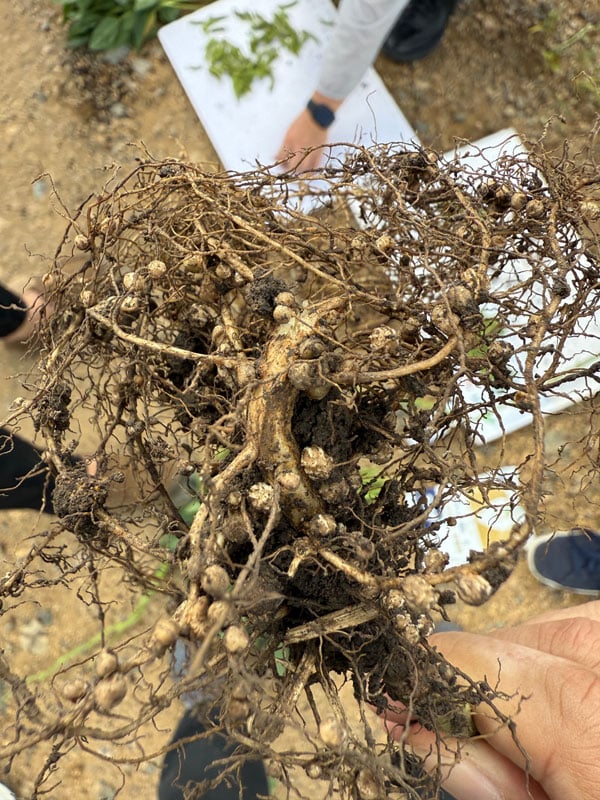
A soybean plant with root nodules hosting Bradyrhizobium
How Do ICL’s BIOZ® Biostimulants Support Soybean Growth?
BIOZ® Topaz: Enhancing Nodulation
BIOZ® Topaz is designed to stimulate root development and increase the number of nodules, thereby improving the efficiency of nitrogen fixation. In trials previously conducted in Brazil (1), it has shown a 33% increase in nodulation and a significant impact on the overall yield.
BIOZ® Nephrite: Boosting Photosynthesis and Metabolism
To maximize the benefits of enhanced nodulation, plants must maintain high metabolic and photosynthetic activity. BIOZ® Nephrite supports these physiological processes, ensuring that the plant can effectively utilize the fixed nitrogen for growth and protein synthesis.
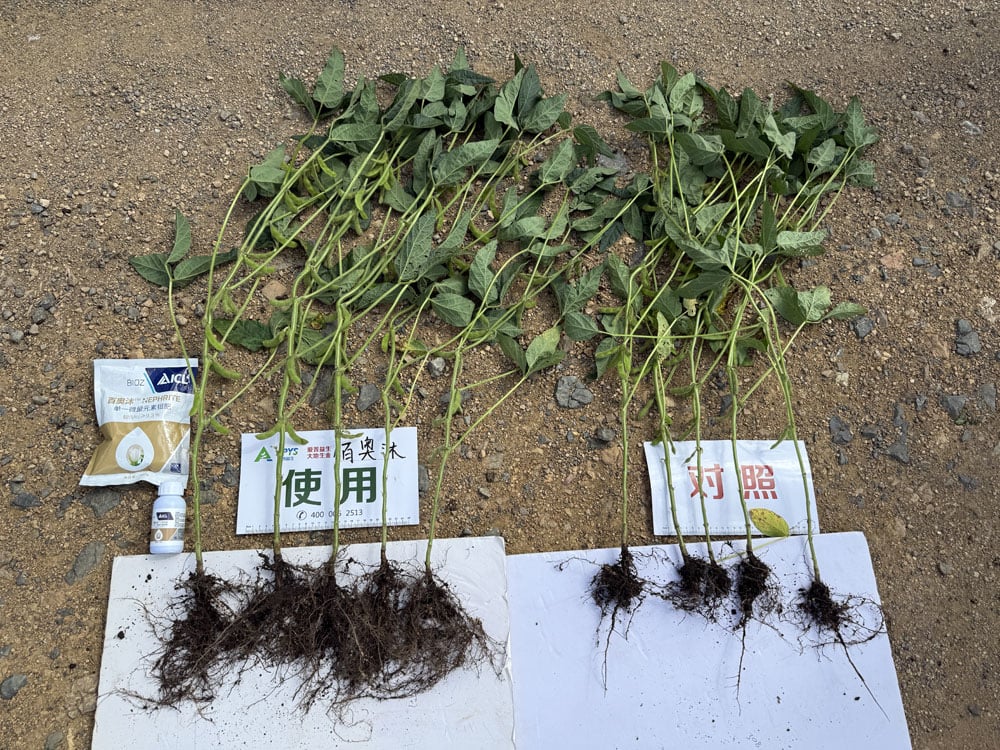
Difference between plants treated with BIOZ® products (left) and the control (right)
What Were the Results of the Soybean Field Trial in China?
The latest trial conducted near Dayangshu village confirmed the synergistic power of combining BIOZ® Topaz and BIOZ® Nephrite. Key outcomes included:
- 18% increase in number of pods per plant compared to control
- Improved plant and root development
- Enhanced nodulation quality and quantity
These results not only validate the effectiveness of the BIOZ® products but also highlight their potential to support sustainable agriculture in China’s diverse growing conditions.
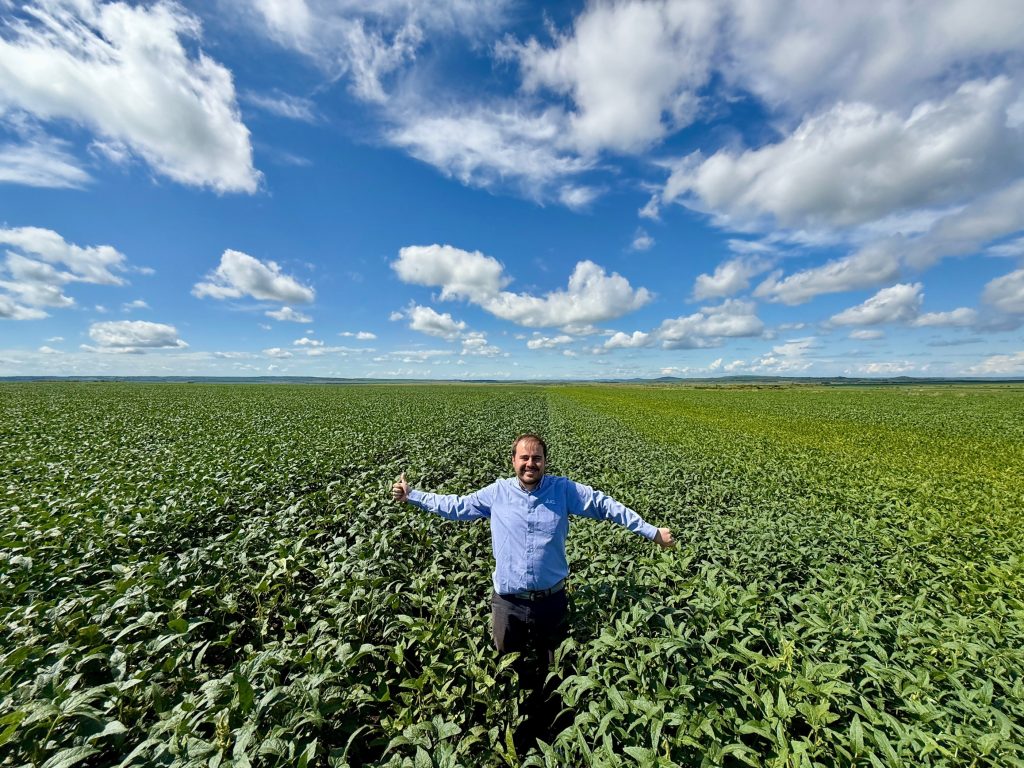
Dr. Eduardo Cancellier showing the difference between the BIOZ® product treated plants (left) and the control (right).
What do Growers Say?
Local Chinese growers expressed strong satisfaction with the trial outcomes. The visible improvements in plant health and yield reinforced the value of integrating biostimulants into soybean cultivation practices.
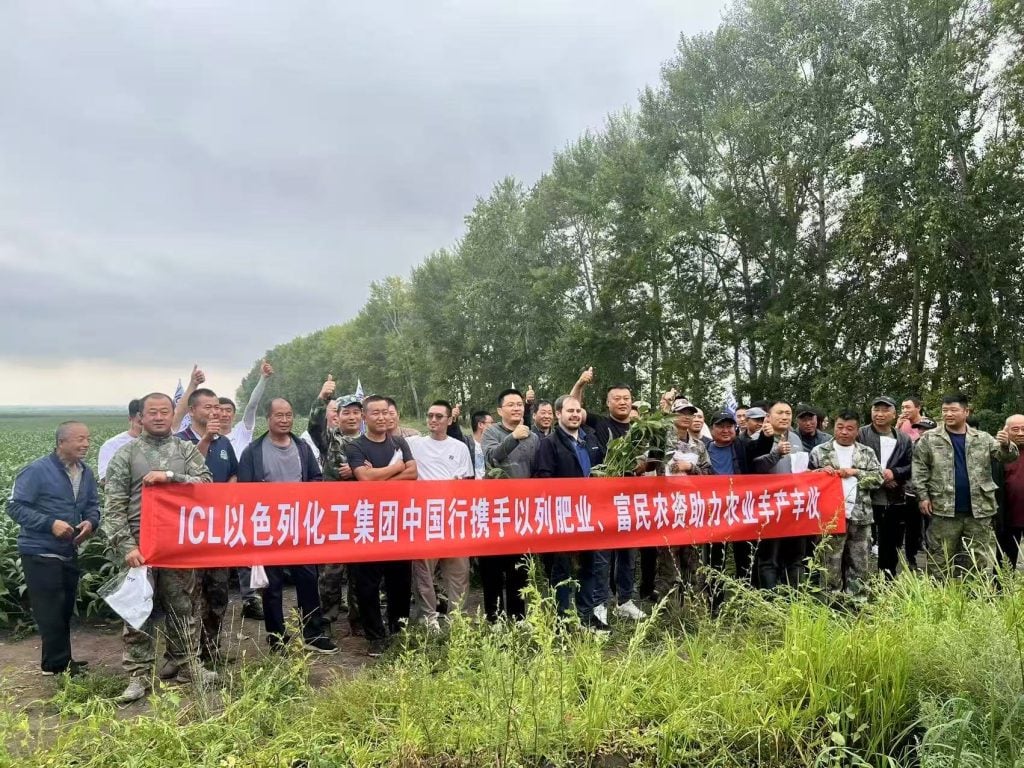
Chinese growers giving positive feedback after visiting the field trial.
Conclusion
The successful trial in Inner Mongolia, China, underscores the potential of ICL’s BIOZ® Topaz and BIOZ® Nephrite to revolutionize soybean farming by enhancing natural nitrogen fixation and boosting crop productivity. As global agriculture moves toward more sustainable practices, such innovations are key to meeting food security goals while preserving environmental health.
Sources:
(1) Martins, K., Bueno, D., Souza, G., & Haim, P. (2025, January–February). Biostimulants in soybean: A Brazilian success story. Fertilizer International, (524), pp. 44-47.


Related Crop


