


 Whatsapp
 X
 Mail
 Copy link
The Role of Polyhalite in Building a More Flexible Fertility Foundation

On this page:
As seen in Top Crop Magazine West
Western Canadian growers face no shortage of fertility decisions. Beyond selecting nutrient rates, they must determine where nutrients are needed, how they should be applied, and which sources best fit their overall fertility strategy.
As nutrient removal rates increase and farming demands continue to evolve, many growers are looking for ways to supply multiple nutrients efficiently while maintaining flexibility in their programs.
Q: Is Western Canada replacing enough of the sulphur removed at harvest?
A: That’s becoming a more important question every year. Sulphur deficiency may affect up to 40% of cropped acres across the Prairies.
Several factors are contributing to that trend. Higher yields, and modern crop genetics are increasing nutrient removal, while reduced atmospheric sulphur deposition means less sulphur is being returned naturally through rainfall.
Crop removal can add up quickly. Canola can remove approximately 10 lb./ac. of sulphur at harvest, while wheat, peas and barley typically remove about 5 to 6 lb./ac. and alfalfa or potato crops can remove substantially more.
Rather than waiting for visible deficiency symptoms, we recommend growers and retailers address whether their fertility plans are adequately replacing the nutrients being removed each season.
Q: If sulphur is the need, does the source matter?
A: Absolutely. The goal is not simply to apply any sulphur. It’s to choose a source that fits the crop, placement strategy and timing of nutrient availability.
ICL’s Polysulphate portfolio is based on polyhalite, a naturally occurring OMRI-approved mineral that supplies sulphur, potassium, calcium and magnesium in sulphate form. Unlike fertilizers that supply only a single nutrient, Polysulphate provides four essential nutrients in one granule.
Nutrients are critical during the seedling stage to support strong establishment and set the crop up for success. As the season progresses, nutrient demand increases rapidly as plants accumulate biomass and enter key growth stages (e.g. canola bolting stage). The nutrients supplied by Polysulphate are released gradually over approximately 50 days, helping provide a sustained supply throughout these critical periods of crop development.
That makes it a different option from both immediately available sulphate products like AMS and elemental sulphur sources that require conversion before crops can access them.
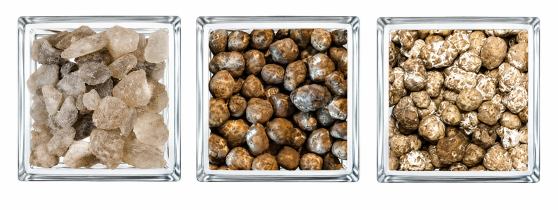
ICL Polysulphate (polyhalite) product samples for illustrative purposes: Polysulphate Granular, Polysulphate Premium, ICL PKpluS
Q: What if growers want to address more than sulphur?
A: That’s where the broader value of Polysulphate comes into the conversation.
While sulphur often starts the discussion, growers may also have requirements for potassium, calcium and magnesium. Polysulphate provides all four nutrients in a single granule, which can simplify program design and nutrient delivery.
Rather than adding separate products to address each nutrient individually, growers can build a four-nutrient foundation that complements the rest of their fertility program.
Importantly, it’s not about replacing soil testing or field-specific nutrient planning. It’s about having an efficient tool when multiple nutrients are part of the crop’s requirement.
Q: How do you supply nutrients while considering seed-zone sensitivity?
A: This is particularly important in canola, where the small seed and emerging seedling can be sensitive to fertilizer salts in the seed row.
Polysulphate is a low-salt, low-chloride source of nutrients. For growers considering seed-row applications, Polysulphate Premium offers rounder, more uniform granules designed for both spreading and air-seeder placement.
The product’s low-salt characteristics provide another option for supplying nutrients in situations where seed safety is an important consideration.
Q: What does field experience show?
A: ICL has evaluated Polysulphate across a range of Western Canadian cropping systems.
Across trials, ICL has observed strong results including yield:
• Canola:
o Manitoba field research trial showed ~ 10% higher canola stand count and positive yield response compared with traditional sulphur sources
o Early vigour, more uniform emergence and stronger stand establishment
• Alfalfa:
o 6.8% increase in total alfalfa yield, including a 25% increase in fourth-cut production
• Oat:
o ~ 32 bu./ac. higher oat yields when Polysulphate was added to a urea + MAP program
As with any fertility practice, results vary according to soil conditions, crop requirements, environment and overall nutrient management. These findings should be considered alongside local agronomic recommendations and soil-test information.
Q: What if phosphorus is also part of the fertility plan?
A: That’s where ICL PKpluS can be a strong fit. PKpluS combines polyhalite with superphosphates to provide phosphorus, potassium, sulphur, calcium and magnesium in one granule. The product is 0-24-6 and also contains 15.4% calcium, 1.8% magnesium and 9.1% sulphur.
Another advantage is that PKpluS, like Polysulphate, contains no nitrogen. This is an effective option when using anhydrous ammonia (NH3). It allows growers to optimize the N:S ratio by focusing on nitrogen separately and zeroing in on sulfur and phosphorus with PKpluS.
Q: Does a five-nutrient fertilizer mean every acre needs all five nutrients?
A: Fertility decisions should be driven by crop demand, soil test results and yield goals.
Soil tests are important, but they’re only part of the equation. What matters most is having nutrients available when the crop needs them. Products like Polysulphate and PKpluS supply multiple nutrients in a gradually available form that better matches crop uptake throughout the season.
Polysulphate provides added value by supplying sulfur, potassium, and calcium alongside magnesium in a balanced plant available nutrient package to optimize efficient uptake.
The goal isn’t just building soil fertility levels, it’s matching nutrient supply to crop demand and helping the crop access nutrients when they’re needed most.
Q: What’s the takeaway for growers?
A: One of the most valuable questions growers can ask today is whether they’re choosing the right fertilizer source.
As crop and farming demands evolve, it’s worth reassessing our strategies. A fertilizer choice that made sense 10 or 20 years ago may not always be the best fit for today’s yields, genetics and placement practices.
Products like Polysulphate and ICL PKpluS give growers additional options for supplying multiple nutrients in a single granule while maintaining flexibility around nitrogen management, application decisions and overall fertility strategy.
Looking to connect with with an agronomist? Visit our experts page to find a rep in your area.


