


 WhatsApp
  Mail
Mail  Copy link
 Harvest Nutrient Replacement: Why Soil Testing Should Start at Harvest
On this page:
Harvest is more than the end of the growing season – it’s the starting point for planning the next one. Every load of grain, oilseed or forage leaving the field also removes valuable nutrients from the soil. Potassium, phosphorus, sulphur, magnesium and other essential nutrients are exported with the crop, reducing the soil’s natural reserves. Without replacing these nutrients, soil fertility will decline over time, impacting crop performance, nutrient use efficiency and long-term soil health. Understanding what has been removed is the first step towards developing an effective nutrient replacement strategy.
Learning from the Norfolk Crop Rotation
The principles behind the traditional Norfolk crop rotation remain as relevant today as they were over 200 years ago. By rotating cereals with root crops and legumes, farmers naturally maintained or improved soil fertility and organic matter and redistributed nutrients through different rooting systems. Leguminous crops helped replenish nitrogen, whilst different rotations supported soil health and diverse microbial populations and reduced pest and disease pressure. Although modern farming has evolved considerably, crop rotation continues to play an important role in maintaining soil health and supporting sustainable crop production.
Soil Testing Provides the Facts
Whilst crop rotation contributes to healthier soils, it cannot accurately predict the nutrients available to the next crop. Modern soil testing allows growers to understand exactly the nutrient reserves within the soil profile after harvest and to identify any nutrient deficiencies before the following season begins. Rather than making fertiliser decisions based on estimates, soil analysis provides reliable data that supports more accurate fertiliser planning, improved nutrient use efficiency and better return on investment. It also gives growers time to budget and purchase fertilisers ahead of peak seasonal demand.
Measuring Nutrient Offtake
Knowing how much nutrient has left the field is just as important as knowing what remains in the soil. The PDA Nutrient Offtake Calculator provides growers with recognised guidance on the quantities of nutrients removed by different crops at different yield levels. By knowing nutrient offtake and soil analysis results, growers can build nutrient replacement programmes that reflect both crop removal and existing soil reserves. This approach helps maintain soil fertility while avoiding unnecessary applications and supporting responsible nutrient management.
Why Nutrient Balance Matters
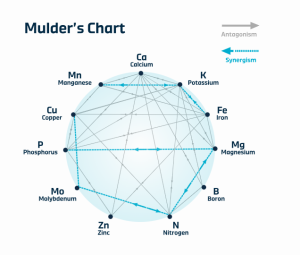
Nutrient management is more than just adding back what has been removed. The performance of plants and the availability of soil nutrients are both significantly affected by the acidity, or pH, of the soil, and soil analysis will indicate the need to correct this. Moreover, nutrients interact with one another within the soil, influencing how readily crops can absorb them. Mulder’s Chart can be a useful reference for understanding these relationships, demonstrating how deficiencies or excesses of one nutrient can affect the availability of others. A balanced nutrition programme helps maximise fertiliser efficiency and supports stronger crop performance throughout the growing season.
Soil Testing: The Foundation of Soil Health
Healthy soils are built on informed decisions. Regular soil testing provides an accurate picture of the nutrient status (Index), soil pH, organic matter and other key indicators of soil health. Sampling after harvest creates an ideal opportunity to establish a baseline before replacement nutrients are applied. By monitoring soil regularly, growers can identify trends over time, address nutrient deficiencies and imbalances before they affect crop performance and so can develop fertiliser programmes tailored to individual fields. In today’s economic climate, applying nutrients based on measured need rather than assumption has never been more important.
Replacing Harvested Nutrients with Confidence
Harvest normally removes significant quantities of potassium from soil reserves, particularly from cereal, oilseed rape and root crop rotations and in grass and maize silage. Magnesium and phosphorus also require replenishment depending on soil reserves, crop type and yield. Replacing these nutrients accurately is essential to maintaining productive, resilient soils.
ICL Growing Solutions offers a range of fertilisers to help restore and maintain nutrient balance following harvest:
- Polysulphate™ is a naturally occurring multi-nutrient fertiliser supplying sulphur, potassium, magnesium and calcium in a gradual-release form, helping improve nutrient availability throughout the growing season. Like nitrogen, sulphur is not well retained in the soil and is not normally measured by soil analysis. However it is a fundamental constituent of all proteins and is an essential nutrient input to ensure the efficient use of nitrogen, particularly for protein synthesis.
- PotashpluS™ combines potassium and sulphur, making it an excellent choice where both nutrients require replacement.
- Muriate of Potash (MOP) provides an efficient source of potassium for replacement and where soil analysis identifies a requirement for extra potash.
- For the phosphorus which is required, ICL’s phosphate fertilisers can be incorporated into a balanced nutrition programme based on soil test results.
Combining soil testing, nutrient offtake calculations and balanced fertiliser programmes gives growers the confidence to replace exactly what harvest has removed, to maintain soil fertility. By investing in soil health today, growers can build stronger, more resilient crops and maximise the productivity of every hectare in the seasons ahead.



Related crops


