WhatsApp
  Mail
Mail  Copy link
 A primary driver of plant growth and colour, Nitrogen (N) is the mineral required in the highest quantities for normal plant growth. When supply runs short, plants quickly lose vigour and marketability.
Read on to learn what symptoms to look out for when N is in short supply, and why winter/spring is a particularly important time to be vigilant.

Nitrogen Deficiency in Philadelphus
What are the symptoms of Nitrogen deficiency in plants?
- Yellowing of older leaves (chlorosis), starting at tips and margins
- Reduced growth and smaller plants, with shorter internodes
- Delayed flowering and fruiting, impacting crop timing
- Weak, spindly stems, with plants turning pale in severe case.
Why do plant leaves turn yellow?
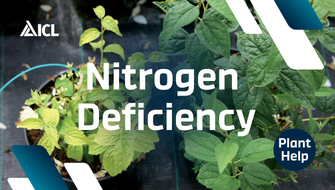
A common symptom of N deficiency is yellowing of older (lower down) leaves – Chlorosis. Generally beginning at the leaf tips and margins, it creates a V-shaped pattern while leaf veins often remain green.
Early intervention preserves quality and avoids lost sales opportunities.

Nitrogen Deficiency in Doronicum
What are the issues with Nitrogen deficiency in winter & spring?
Nitrogen deficiency often develops over winter when controlled-release fertilisers reach the end of their longevity – such as with unplanned, over-wintered stock. In outdoor stock, water-soluble feeds can be easily leached in wet weather, whereas there are limited water-soluble feeding opportunities in indoor crops when grown drier.
This means crops, particularly imported stock where water-solubles are often used, frequently arrive in early spring already short of nitrogen and slow to respond without corrective action.
How to manage Nitrogen deficiency in active growth plants?
- For winter-depleted plants: Early-spring top-dressing delivers rapid green-up and a strong visual lift for retail-ready plants: OsmoTop 2-3M (22-5-10) or Osmocote Topdress FT 4-5M (22-5-6 + 2MgO + TE)
- Water-soluble fertilisers provide immediate correction and consistent performance: Fast-acting Peters Professional Foliar Feed (27-15-12 +TE). Universol Green (23+6+10 +2MgO +TE) water soluble fertiliser – or its hard or soft water versions. Universol HW 211 (23-10-10+2MgO+TE) or Universol SW 312R (18-7-12+6CaO+2MgO).
What is good practice for managing Nitrogen deficient plants?
It is important to start with the right nitrogen level in your growing media, aligned to crop cycle and species. This needs to be adjusted for peat-reduced or peat-free mixes, where nitrogen availability can be more limited. To reduce leaching losses from base fertilisers (particularly calcium nitrate) ICL offers new, slow or controlled-release nitrogen options:
- Osmoform High N (8-10 weeks) security.
- Osmocote N (5-6 month) controlled supply.
To guard against Nitrogen deficiency, or to rectify an issue in your crop, reach out to your ICL Technical Area Sales Manager who will be happy to help.

Nitrogen Deficiency in Guzmania ‘Ostara’
13 Resources found