


 WhatsApp
  Mail
Mail  Copy link
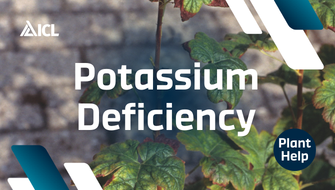
 Potassium (also known as potash) deficiency is a common nutritional disorder in plants.
An essential macronutrients plants need for growth and development, Potassium (K) plays a crucial role in various physiological processes, such as photosynthesis, enzyme activation, and osmoregulation.
What are the symptoms of Potassium Deficiency?
- Leaf margins browning or scorching – common symptom where leaf edges turn brown and appear burnt
- Leaf yellowing – or chlorosis often starts at leaf margins and progresses inward. Usually appears between veins, giving leaves mottled appearance.
- Leaf curling – or rolling upwards along edges.
- Leaf drop – in severe cases, leaves may drop prematurely.
- Stunted growth – including shorter stems and smaller overall size.
- Poor fruit development – leading to undersized fruit, uneven ripening and even cracking or splitting.
- Weak stems – more prone to lodging (falling over) or breaking.
- Reduced pest and disease resistance – and more susceptible to environmental stressors, such as drought, cold and salinity.

Potassium Deficiency in Caryopteris
How do you prevent & manage Potassium Deficiency?
- The ratio of Nitrogen to Potassium is important for each growth stage.
- For early balanced growth use a ratio of 1:1, such as Universol Blue water soluble fertiliser.
- As the crop approaches the flowering stage, switch to a ratio favouring Potassium. Universol Orange, with a ratio of 2:3, raises potassium levels and improves flowering; while Universol Violet, with a ratio of 1:3, contains even higher potassium levels giving compact growth and flowering.
- Prevention is always better than cure. The ICL technical area sales manager team use the software programme AngelaWeb 3.0 to ensure crop nutrition plans deliver the optimum balance of all the nutrients required to the plant, throughout the production, avoiding costly deficiency issues and loss of sales.

Potassium Deficiency in Primula
Did you know?
- Growing media mixes containing coir can have high potassium levels, which can negatively impact magnesium uptake.
- Properly timed and measured irrigation can help prevent nutrient leaching, which can lead to K deficiency.
In field-grown ornamental crops:
- Ensure the soil pH is within the optimal range for potassium uptake, typically around 6.0 to 7.0. Adjust the pH if necessary.
- Incorporating organic matter into the soil, such as compost or well-rotted manure, can help improve K availability in the soil.

Potassium Deficiency in Kentia
4 Products found
Viewing 0 of 0
13 Resources found

Our knowledge
Tips & tricks, disease prevention, crop and market related information
Explore our knowledge