


 Whatsapp
  Facebook
  Mail
Mail  Copy link
 Bowling Green Digest – Autumn Edition 2025

On this page:
The closure of the green at the end of the season doesn’t really signal a period of well-earned rest, it actually marks the start of work for next season. Far from being a time to relax, autumn is when we get a chance to make progress. This is the moment when we press reset on the surface and set the foundations for even better performance next year. This is the time when we can try to right all the wrongs.
We should try to close the green as early as possible, and ideally before the end of September. This is not about being a spoil sport, it’s about starting work on our renovations and repair while the grass is still growing. The reality is that the turf growth potential can “fall off a cliff” in October and so we need to get cracking if we want to make the most of any remaining growth. By closing early, we give the surface a fighting chance to recover before things start to shut down for the winter.
Some clubs do stay open later in the year, especially those with floodlights and play in winter leagues. If that’s the case, that’s fine, but go into it with eyes open. Continued use can severely limit what renovation work can realistically be done, so you’ll need to adopt more of a “patch and preserve” approach rather than a full reset.
Renovate Like You Mean It
Your end-of-season renovations need to be targeted to the specific needs of the green. Every green is different, and so your programme should be shaped by the problems you’re trying to solve, not just by what you tend to do each year.
Ask yourself:
- Is the surface too soft due to thatch build-up?
- Is the thatch causing disease and dry patch?
- Is soil compaction an issue?
- Do we need to improve grass cover?
- Are the surface levels uneven, especially on flat greens?
Whatever the issues, the renovation programme needs to be built around them. Identify what needs to be done and select the treatments that will best deliver those goals. And be in no doubt that if you don’t go at it fully committed, with a clear purpose and proper planning, then the impact will be diluted, you won’t make progress.
The renovation focus
The primary focus of our end of season renovation schedule is usually reducing or managing the level of organic matter (or thatch) in the upper soil profile. This is because for bowling greens, excessive thatch causes significant problems. Subsurface thatch acts like a sponge to soften the playing surface and compromises green speed. It also greatly increases the likelihood of damaging conditions such as disease and dry patch occurring, ultimately compromising surface smoothness. Thatch also impedes water movement, restricts root development, and creates ideal conditions for moss and pest infestations. Essentially, thatch is the root of all evil, which is why we need to focus on it.
Put simply, thatch is a layer of dead and living fibrous organic material that builds up between the turf canopy and the soil surface. It accumulates naturally and so will always need attention, but too much fertiliser and irrigation will accelerate the build. We can pick away at shallow thatch with in-season scarification and verticutting but, in doing so, we also need to be careful with this because too much of either may result in a deterioration of the quality of the grass cover. In general, we only get one chance each year (at the end of the season) to try to deal with accumulated thatch in a meaningful way. At this time we look towards hollow coring, deep scarification, aeration and the incorporation of top dressing as our way of reducing its influence.
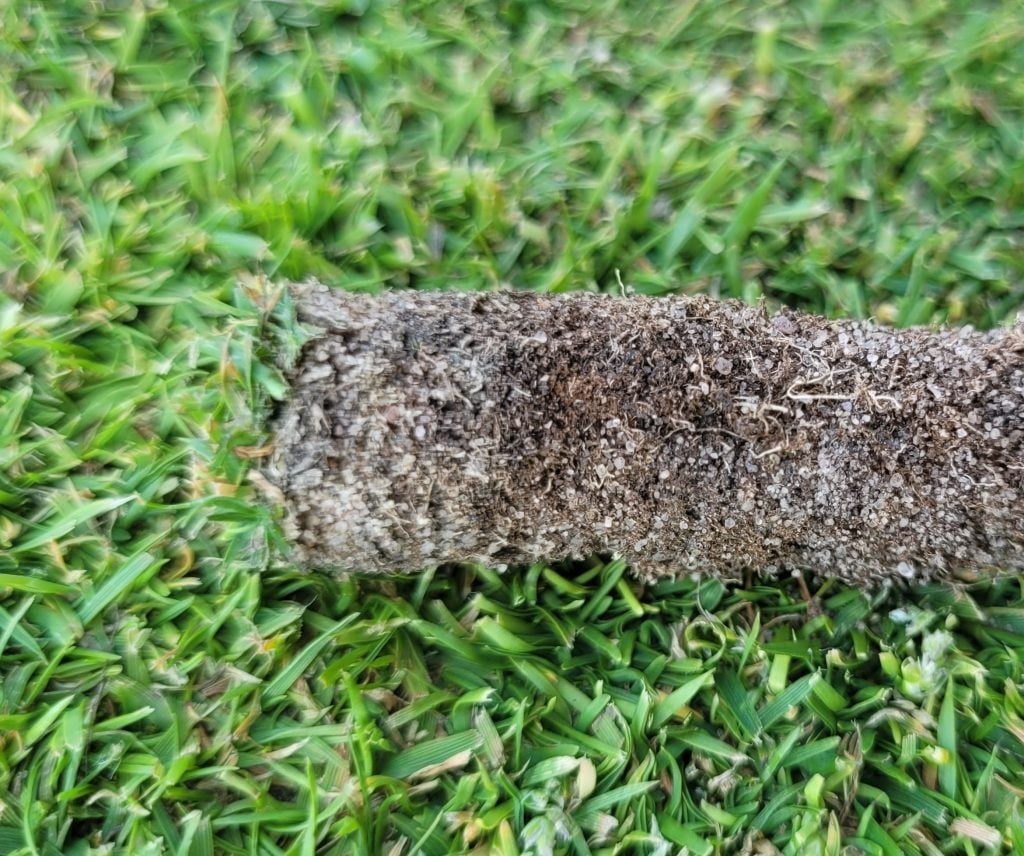
The thatch might not look so bad, but the test results tell a different story.
The best way to determine the level of organic matter (thatch) is by carrying out a Loss on Ignition (LOI) test. This will show the percentage of organic matter at various depths within the soil profile, which is key to targeting your renovation efforts effectively.

The Loss on ignition results show that there is significant work to be done.
As a guide, our target LOI organic matter readings would be:
- <6% in the top 0–20 mm
- <4% below 20 mm
Readings above the target range would indicate that the performance and health of the green is being adversely affected by excessive thatch accumulation. The results from LOI testing help define how much work is needed and where it should be targeted. They also allow you to track progress over time, showing whether your renovation efforts are effective and sufficient.
It’s worth noting that organic matter figures from routine soil nutrient tests are not determined using the same method as the LOI test and can underestimate actual levels — sometimes by as much as half. For a true understanding of what you’re dealing with, a proper LOI test is essential (go to strigroup.com or etl-ltd.com).
Think in Sequences, Not Silos
The end of season renovation work is a coordinated sequence of treatments aiming to bring about improvements in the condition of the green, above and below ground. Scarification, aeration, seeding, topdressing, and fertilising will all have their part to play in achieving an overall improvement. The key is to align them into a coherent programme, so they work together. The clock is ticking with growth falling away and so we need to pull it all together quickly and effectively.
Start with a Feed
A light feed is usually recommended before beginning your renovations. A healthy, actively growing plant will recover faster and stronger from the work ahead. An autumn fertiliser like Greenmaster Prolite Autumn 6-5-10 +Fe is made for the job. Apply it at 30 g/m² a week in advance of the renovation to allow time for the granules to disperse and the turf to respond.
Scarify with Purpose
Scarification is usually the first element of an end of season programme. The goal here is to remove accumulated organic matter from the turf base and also help prepare a bed for subsequent seeding and top dressing. Two passes at slight angles (15o), going 5–10 mm deep, will do a good job, though be warned, you’ll generate a huge volume of debris that will need clearing away before you move on.

Scarification targets the removal of subsurface thatch
If you’ve got access to specialist equipment, you can go further. Some scarifiers can inject dry sand directly into the grooves they cut, which is a brilliant method of removing organic matter and replacing it in one pass. It’s fast, aggressive, and efficient.
Aeration
Following scarification, it’s important to include an aeration operation to address soil compaction and maybe target deeper organic matter accumulation. The choice between solid tine and hollow tine aeration should be based on the level of organic matter removal required and the depth you need to reach. Where significant thatch remains, hollow tining with 12mm tines can extract a significant amount of material from deeper in the rootzone and create space for topdressing to work down into.
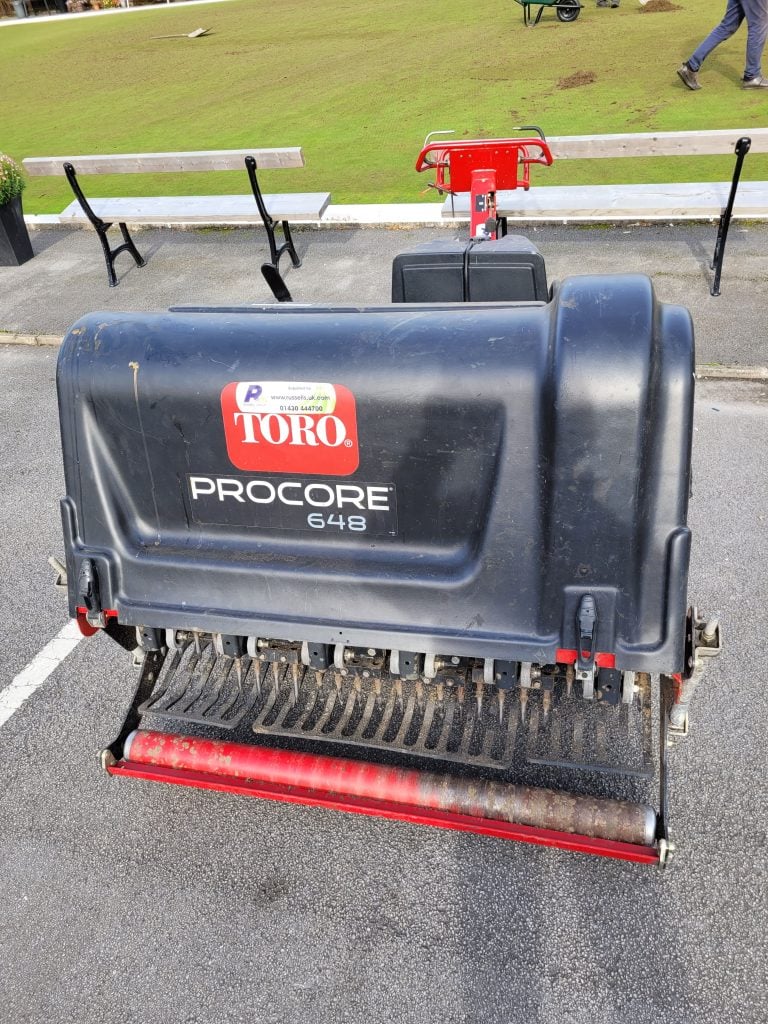
Specialist aeration equipment will be needed for quick and effective treatment
Alternatively, solid tining can be used where organic matter levels are already under control but compaction relief is still needed. Repeated passes with solid tines can be particularly effective in loosening the soil and encouraging deeper rooting. Whichever method is used, this is a key step to improve air movement, water infiltration, and overall rootzone structure ahead of the winter period.
Overseeding
Once aeration is complete, the next step is overseeding to help restore and enhance turf quality and density. Use a high-quality 80/20 fescue/bent mixture such as ProSelect 4, which contains highly rated cultivars for close mowing, disease resistance, and stress tolerance.
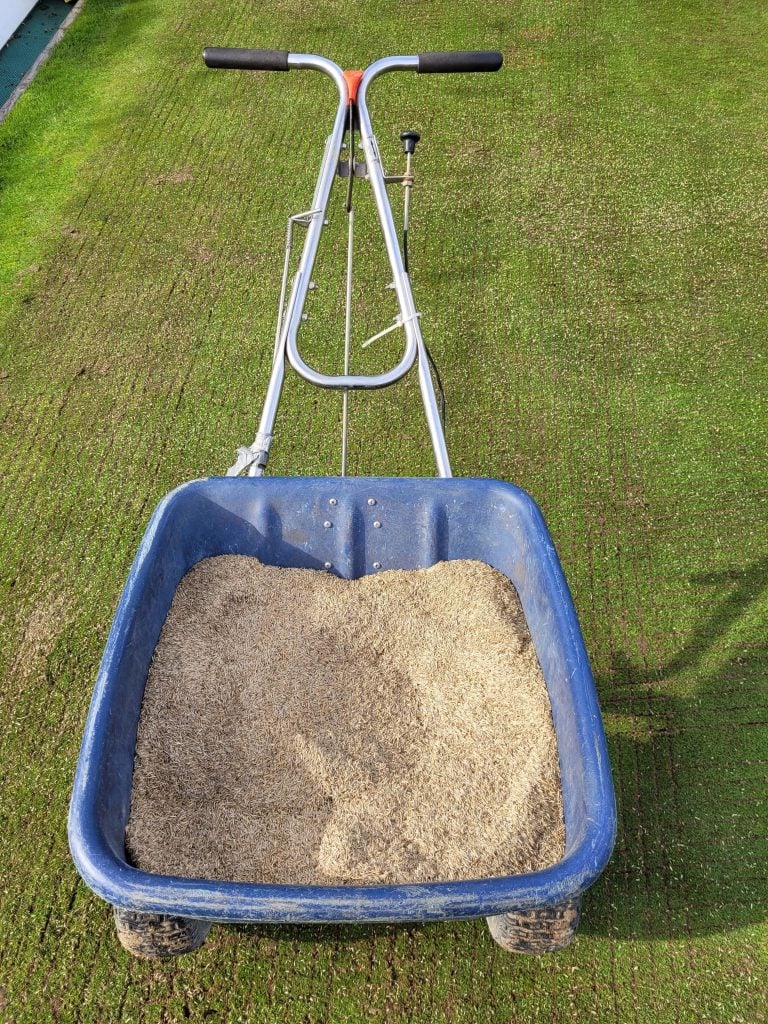
Seed can be broadcast through a fertiliser preader.
Seeding method is important, the aim is to achieve good seed-to-soil contact. Broadcasting seed over scarification grooves and aeration holes is an effective approach, provided this is immediately followed by topdressing and thorough brushing-in to ensure the seed is in contact with the rootzone. Alternatively, specialist overseeding equipment can be used to place the seed directly into the surface, often with greater accuracy and less waste. Either way, prompt seeding after aeration is needed to maximise establishment before soil temperatures drop.
Topdress to achieve the goal
Topdressing is next, and it’s important to get the material right. Use a suitable bowling green topdressing, typically a medium sand-dominated mix with an element of soil. Compatibility with your rootzone is key to avoid layering and future problems.
The quantity of top dressing applied will depend on your renovation objectives:
- For a thatch replacement programme involving deep scarification and intensive hollow tining, you might need 4–5 tonnes per green.
- For a lighter maintenance renovation, 2–3 tonnes might suffice.
After application, expect to brush repeatedly to help the material settle and work its way into the profile. If you’re also trying to improve surface levels, then localised attention to low spots might also be required. Use a long straight edge or lute to level these out properly.

Heavy top dressing will require regular brushing to work it in
In-House or Contractor?
Many clubs choose to use contractors, and with good reason. They’ve got the machinery, manpower, and experience to get the job done to a high standard in a short window. But don’t leave it to the last minute, good contractors get booked up early in the autumn.
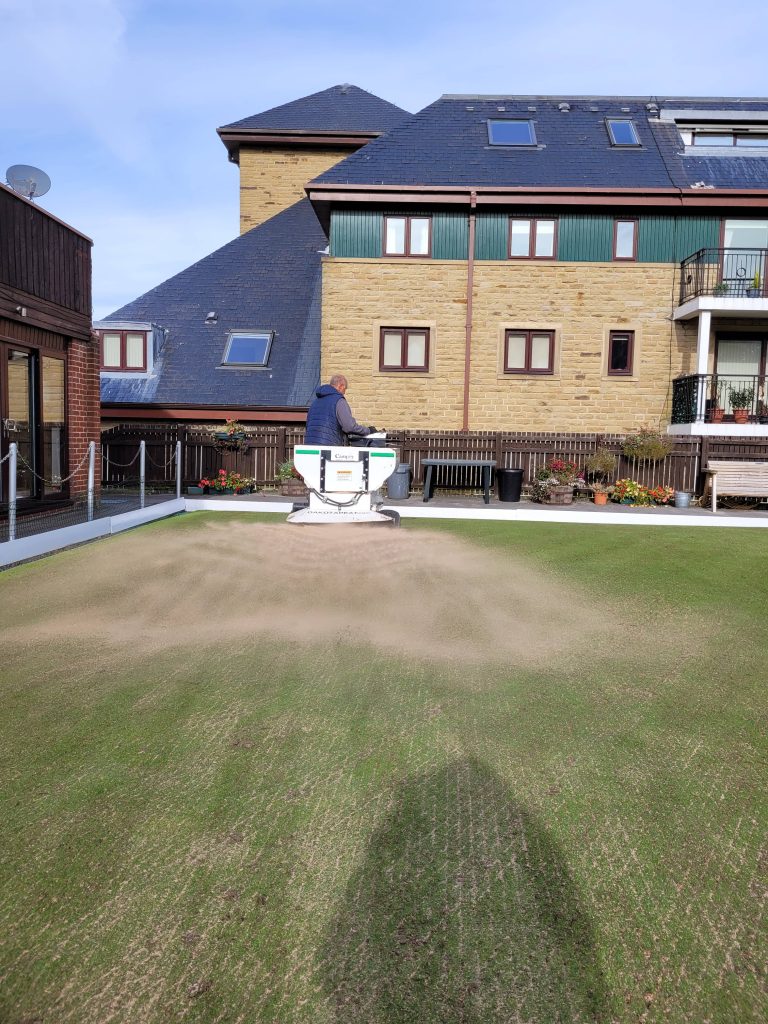
Specialist contractors can make light work of heavy jobs like top dressing
If you’re handling it in-house, you’ll need volunteers. Jobs like core collection, brushing-in dressings, and hand-seeding can’t be done solo. But be realistic, this is labour-intensive work, especially in damp conditions. Don’t ask too much of too few people. Organise well, support your helpers, and keep morale high.
Preserve the Progress
Once the renovation work is complete, we enter a new phase of recovery and preservation. Grass growth slows but hopefully won’t stop immediately, so there’s still time to consolidate the improvements you’ve made. But you also need to start protecting the surface from autumn and winter pressures.
The number one risk at this time of year is to limit the development of Microdochium patch disease (formerly known as fusarium). Microdochium patch can develop quickly in damp autumnal conditions to cause extensive scarring that could last well into next year and taint the start of next season.
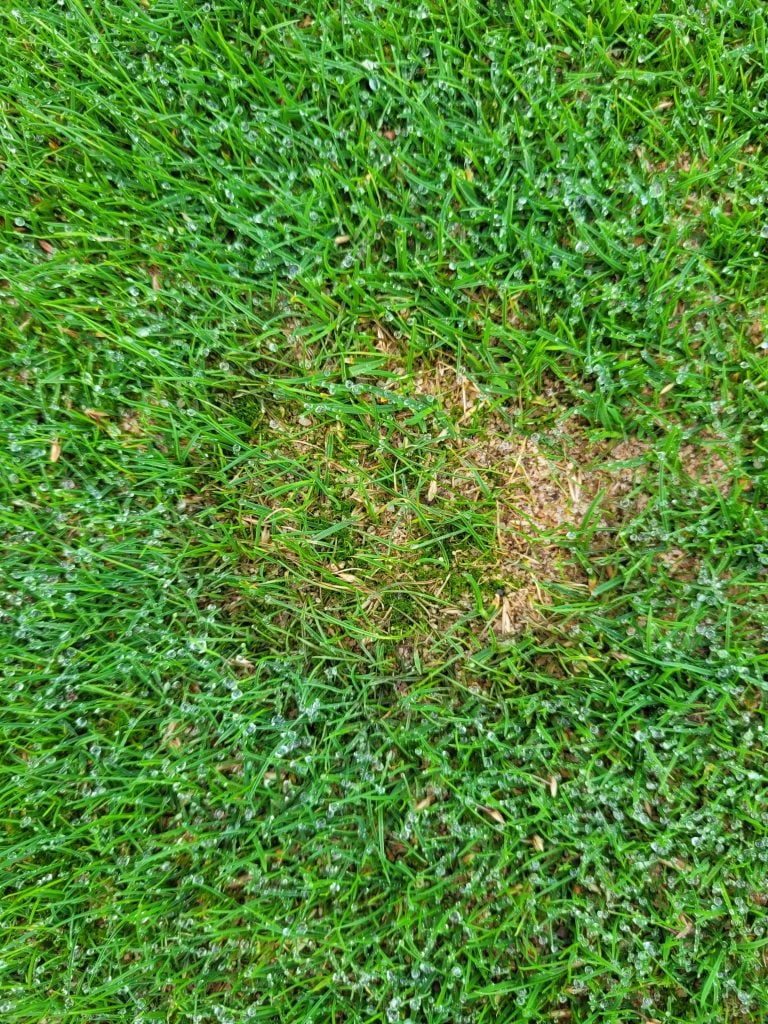
Microdochium patch disease can develop very quickly if you are not vigilant
The best defence is a proactive, integrated approach, starting with cultural practices.
- Switch or brush regularly to remove dew and surface moisture, especially in the mornings. Dew creates the perfect conditions for disease development, so keeping the surface dry is key.
- Maintain plant health and turf quality with appropriate nutrition. An autumn fertiliser like Greenmaster Prolite Invigorator 4-3-8 +4Fe applied in October can help keep the plant strong and resilient. The iron content will also help maintain turf quality at the expense of moss invasion.
In high-pressure situations — especially in shaded or damp settings — a fungicide may still be required. These are approved plant protection products, which must be applied by suitably qualified operatives and stored according to regulations. For detailed guidance and up-to-date product information, visit www.syngentaturf.com.
Watch for Worms and Leatherjackets
Worm casting typically increases in autumn. Switching with a cane helps to scatter fresh casts before mowing, preventing smearing and surface damage.

Regular switching may be required to scatter work casts
Also keep an eye out for cranefly (leatherjacket) activity, particularly adult emergence and egg-laying flights in September and October. If significant numbers are registered and thresholds are reached, an application of Acelepryn may be appropriate. Again, Acelepryn is a registered professional plant protection product, and its use and storage must strictly follow label guidance. Visit syngentaturf.com for information on correct use and timing.
Let in the Light
Finally, don’t forget about your surroundings. This is the perfect time to prune hedges, lift tree canopies, and open up the green to light and airflow. A few hours spent on the surrounds now can pay dividends throughout the winter and into next spring. Reducing shade and enhancing airflow will help create an environment less prone to the development of disease and moss.
This is your chance
Autumn might be the end of the playing season but it marks the start of the greenkeeping calendar. This is your chance to make improvements with the condition and performance of the green next year. Whether you’re closing early or playing on through, the actions you take now will decide what kind of surface you inherit in spring. So close the green early and renovate with a serious intent to bring about improvements and then stay focused on preserving the progress. The best greens are built in the autumn and so now is the time to get stuck in!


Our knowledge
Tips & tricks, disease prevention, scientific results and more
Explore our knowledge hub