Whatsapp
  X
X  Mail
Mail  Copy link
 On-Demand Webinar: How pH-Focused WSF are Redefining Fertilizer Efficiency


On this page:
Beyond Nutrition | How pH-Focused WSF are Redefining Fertilizer Efficiency
Discover how innovations in water-soluble fertilizers (WSF) are reshaping plant nutrition in the U.S. market.
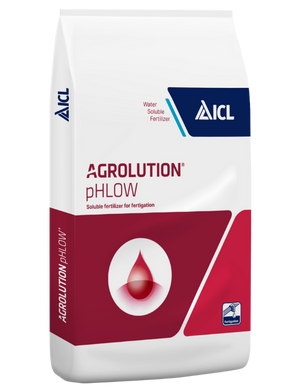
This webinar highlights how managing soil pH in the root zone, and adding enhanced efficiency fertilizers, can unlock nutrients already in the soil for higher nutrient efficiency, supporting growers in producing more with less. Innovations like Agrolution pHLow, Nova PeKacid, and BIOZ are driving both agronomic results and sustainable business outcomes—helping growers achieve higher returns while advancing resource efficiency.
Webinar Recap: How Can We Turn pH Management Into a Precision Tool?
ICL research shows that pH-focused water-soluble fertilizers (WSF) are helping growers achieve more from every acre through smarter, more efficient nutrition strategies.
Key Takeaways
✅ pH-focused WSFs like Nova PeKacid® and Agrolution pHLow® improve nutrient use efficiency by targeting the root zone, not the whole soil.
✅ Field data shows 2–4× higher P efficiency and yield gains with reduced input costs and environmental impact.
✅ Integrating biostimulants or enhanced efficiency fertilizers like BIOZ® Diamond enhances microbial activity and nutrient cycling, compounding efficiency gains.
✅ The future of fertilizer innovation lies in system-based solutions—combining chemistry, biology, and precision management.
“We can’t change the whole soil profile,” explained Falen, “but we can influence pH in the root zone—and that’s where nutrient efficiency happens.”
Acidifying technologies—like Agrolution pHLow® and Nova PeKacid®—are redefining fertilizer efficiency by unlocking nutrients already present in the soil. By targeting pH adjustment in the root zone rather than the entire soil profile, growers can improve nutrient use efficiency (NUE), reduce input costs, and enhance yield and quality across a range of crops.
“We’re redefining water-soluble fertilizers as agronomic tools, not commodities,” said Mann. “It’s about smarter chemistry that delivers measurable results—yield, quality, and efficiency.”
Trial data shared during the session highlighted significant efficiency and yield benefits with Agrolution pHLow and Nova PeKacid:
2–4× higher phosphorus use efficiency and up to 14× more yield per unit of P in potato trials
3.5× less phosphorus applied with equal or higher yield outcomes in Michigan trials
Nearly double the yield and improved fruit firmness in Oregon pear trials
Falen also emphasized the synergy between WSF and microbes, noting that BIOZ® Diamond improved soil enzymatic activity—enhancing nutrient cycling and supporting long-term soil health.
“If we can feed the crop and the soil microbiome at once, we can build a truly sustainable, high-efficiency system,” Falen added.
These insights reinforce ICL’s commitment to integrated, system-based nutrition—helping growers produce more with less through science, sustainability, and precision.