Whatsapp
  X
X  Mail
Mail  Copy link
 On-Demand Webinar: Fertility Lessons for a Profitable Future


On this page:
What Did We Learn in 2025? Fertility Lessons for a Profitable Future
2025 delivered some of the most unpredictable growing conditions in recent memory—from excessive rainfall and disease pressure in the Western Corn Belt to heat stress and nutrient imbalances in the East. This webinar unpacks what worked, what didn’t, and what growers and agronomists can apply heading into 2026. To be eligible for CEUs you must register and watch with Farm Progress. Registration link below.
Drawing from on‑farm trials and university-backed observations, our experts highlight how nutrient timing, balanced fertility programs, and biostimulant synergies helped protect yield potential and improve ROI—even in a challenging year.
Key Takeaways (At‑a‑Glance)
✅ Weather amplified nutrient challenges: Excess moisture, heat swings, and disease pressure exposed weaknesses in single‑shot fertility programs.
✅Timing mattered as much as product choice: Earlier, proactive nutrient and micronutrient applications delivered better outcomes than reactive fixes.
✅Balanced nutrition outperformed single‑nutrient approaches: Synergies between secondary nutrients, micronutrients, and biostimulants improved resilience and ROI. Multi-nutrient sources like Polysulphate® sustained availability under stress.
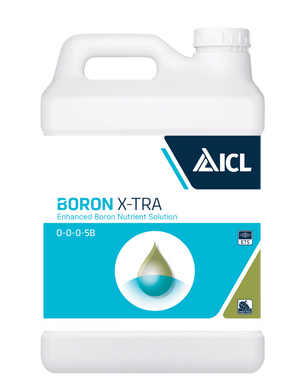
✅Foliar nutrition protected yield under stress: Pairing fungicides with targeted foliar nutrition (Nova PULSE®, Nova FLOW®, and Boron X-TRA®)helped crops finish strong under disease and drought pressure.
✅Soil health and biology played a bigger role than ever: Products like BIOZ Diamond® and Polyulphate® supporting microbial activity and root development improved nutrient uptake and stress tolerance.
“Farming is an outdoor sport—every year is different, and 2025 really tested our ability to adapt in season.” – Zach Minnihan
Extreme Weather, Crop Stress & Early-Season Nutrition
The 2025 season underscored how vulnerable nutrient programs can be to weather volatility. Excessive rainfall and humidity in the Western Corn Belt fueled severe Southern Rust pressure, while parts of the Eastern Corn Belt faced heat stress, cool nights, tassel wrap, and pollination challenges. Across regions, saturated soils and temperature swings disrupted nutrient uptake during critical growth stages.
Early-season nutrition proved foundational. Dry fertility programs built around Polysulphate® helped establish strong root systems despite leaching and saturated conditions. Its low chloride, low salt index supported seed and root safety across placement methods, while the gradual, sulfate-based nutrient release helped sustain availability through prolonged stress—supporting nutrient use efficiency (NUE) when conditions turned unfavorable.
Disease Pressure, Foliar Nutrition & Micronutrient Timing
High disease pressure forced growers to carefully evaluate every in-season pass. Where fungicide applications were paired with targeted foliar nutrition, crops were better able to maintain green leaf tissue, support grain fill, and protect yield potential. Programs featuring Nova PULSE®, Nova FLOW®, and Boron X-TRA® consistently improved plant resilience under both disease and environmental stress.
Micronutrient timing emerged as a critical factor. Boron, zinc, magnesium, and molybdenum applications made ahead of peak reproductive demand outperformed late or reactive treatments, particularly in addressing tassel wrap, pollination issues, and early reproductive stress.
Foliar Synergies, Biostimulants & Return on Investment
Across corn, soybeans, potatoes, tomatoes, and specialty crops, foliar programs that combined nutrients with biostimulants delivered measurable agronomic and economic benefits. Integrating BIOZ Diamond® with Nova PULSE® and Nova FLOW® on soybeans improved pod and fruit set, crop quality, and overall return on investment—even under heat, drought, and disease pressure.
BIOZ Diamond® also enhanced tank-mix performance, helping foliar nutrients and crop protection products work more effectively together. These results reinforced that success was driven not by adding more inputs, but by improving how products functioned as part of a coordinated system.
Soil Biology, System-Based Fertility & Looking Ahead to 2026
A recurring theme throughout the discussion was the growing importance of soil biology in long-term nutrient efficiency and crop resilience. Applications of BIOZ Diamond®, both in-furrow and in-season, improved root mass, soil aggregation, microbial diversity, and nutrient cycling. When paired with Polysulphate®, growers observed improved soil structure, better water infiltration, and stronger nutrient uptake across a range of soil types.
“We’re unlocking nutrients that were already there by improving biology.” – Christi Falen
The strongest outcomes consistently came from integrated fertility systems—combining soil-applied nutrition, biostimulants, and well-timed foliar feeding—rather than one-pass or single-product approaches. Heading into 2026, our agronomists and growers emphasized proactive planning, understanding crop demand curves, and maintaining flexibility to adapt nutrient strategies as conditions evolve.
Perparing for 2026 and Beyond
2025 reinforced a critical lesson: profitable fertility programs aren’t built on one product or one pass. They’re built on timing, balance, and adaptability—using smarter nutrient strategies to protect yield potential when conditions are anything but predictable.
Meet the Experts
Christi Falen | Product Lead – Biostimulants and Specialty Foliar Products
Christi Falen brings over 25 years of experience including roles in university extension, plant nutrition, and crop protection. Christi earned a BS in Natural Resource Management from the University of Alaska, a MS in Soil Science from the University of Idaho and is a Certified Crop Advisor.
Jason Haegele | Marketing & Innovation Manager, NA
Dr. Jason Haegele leads ICL’s agronomy and product innovation efforts. With expertise in plant nutrition, adjuvants, crop protection, and biological products, he holds a Ph.D. in Crop Science and an M.S. in Crop Production and Physiology.
Tony Donoho | Product Lead – Liquid NPK Products
With over 30 years of experience in the agriculture industry, Tony has held roles such as Territory Manager, Primary Nutrients, Director of Sales – Liquid Specialty Products and VP of Sales. Tony has deep passion and extensive experience in row crop systems and fertility programs in the eastern corn belt.
Zach Minnihan | Technical Sales Manager, ICL Growing Solutions
Zach is an ICL Technical Sales Manager dedicated to helping growers increase profitability and productivity sustainably. With a background in Agriculture from Fort Hays State University and hands-on experience from his family farm in west-central Iowa, he tailors crop nutrition solutions to meet each operation’s unique needs and goals.
This webinar was moderated by Mike Pearson – Broadcaster, This Week In Agribusiness, Farm Progress