Whatsapp
  X
X  Mail
Mail  Copy link
 Micronutrients 101: From Boron to Zinc
The ABCs of Early-to-Mid Season Micronutrients: from Boron and Cobalt to Molybdenum and Zinc. Learn about how micronutrients support key plant processes, uptake and efficiency challenges and smart fertilizer recommendations.
On this page:
The ABCs of Micronutrients from Boron to Zinc: Small Quantities, Big Influence
In agriculture, micronutrients are required in small amounts, but their influence on crop performance is significant—especially during early and mid-season growth when metabolic activity and nutrient demand are rapidly increasing. They support root development, enzyme activity, nutrient efficiency, and reproductive readiness.
“If nitrogen is the gas, phosphorus the battery, and potassium the oil, micronutrients are the spark plug that brings it all to life.” — AJ Foster
Even when soil fertility appears adequate, temporary micronutrient deficiencies can occur. These early limitations often reduce nutrient use efficiency and yield potential before visible symptoms appear, making proactive management especially important in large-acreage cropping systems.
While each micronutrient plays a distinct role, boron, zinc, cobalt, and molybdenum are all directly or indirectly tied to nitrogen fixation, assimilation, or utilization—making them critical for maximizing nitrogen use efficiency.
Why Early to Mid-Season Micronutrients Matter
From emergence through vegetative growth and into reproductive transition, crops experience rapid biomass accumulation and increasing nutrient demand. During this window:
- Roots, shoots, and vascular systems are developing
- Enzyme systems are highly active
- Nitrogen metabolism and fixation are accelerating
- Flowers and reproductive structures are being initiated
Micronutrient deficiencies may not show obvious visual symptoms, but they can limit growth, reduce nutrient use efficiency, and compromise reproductive development.
Micronutrient Uptake and pH
Micronutrients are taken up by plants through mass flow, diffusion, or root interception, and the uptake pathway strongly influences the risk of deficiency. Boron and molybdenum move mainly with water flow (mass flow), while manganese depends more on diffusion, making it highly sensitive to root growth and soil contact.
Because micronutrients are required in very small amounts, even small limitations in movement or root access can quickly lead to deficiencies.
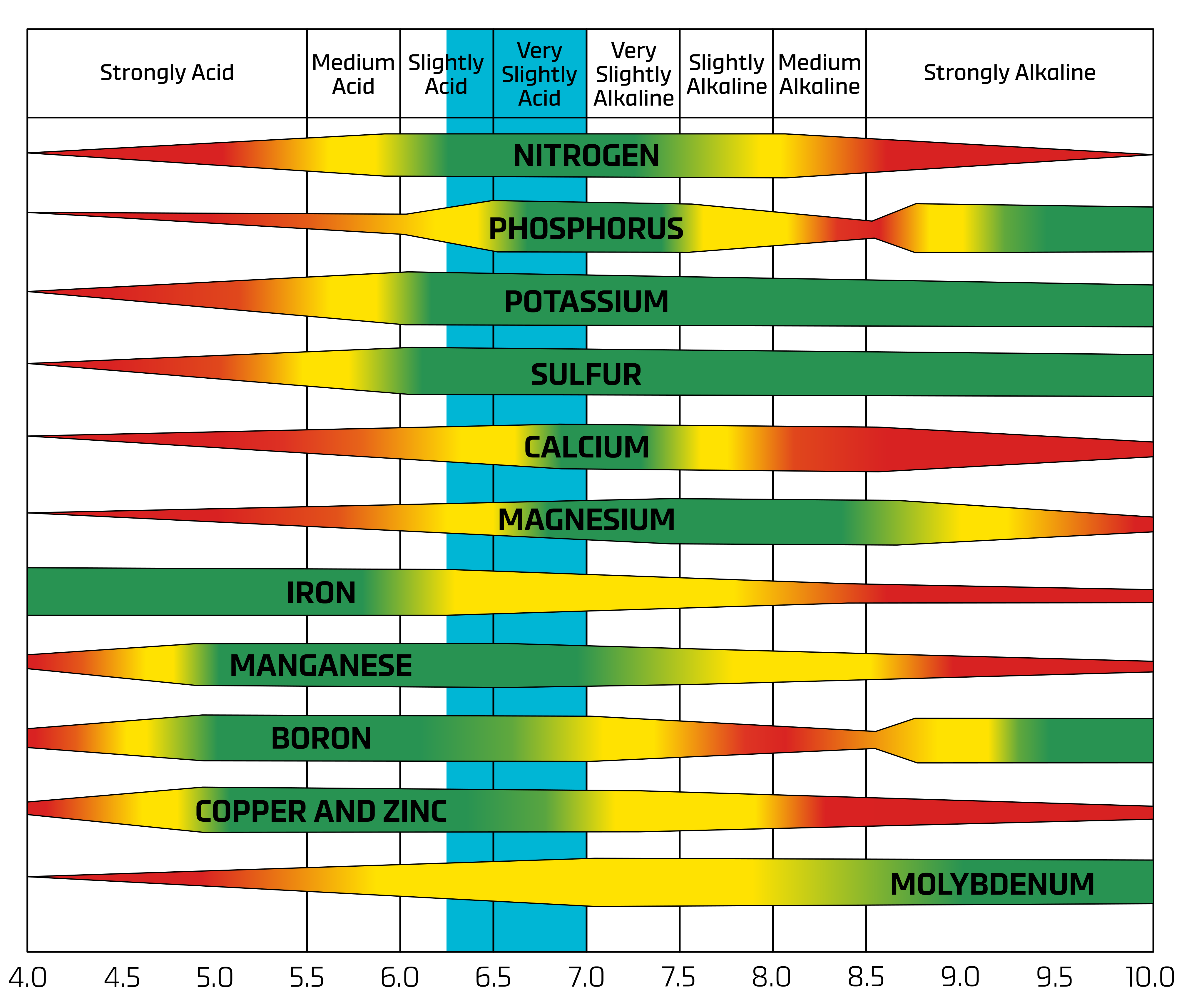
In the soil, availability is strongly influenced by pH.
- Iron (Fe): Availability increases in acidic environments
- Zinc (Zn) and Cobalt (Co): More available under slightly acidic conditions
- Boron (B), Copper (Cu), Manganese, Zinc (Zn): Most available in neutral to slightly acidic conditions
- Molybdenum (Mo): Availability increases in alkaline conditions
This has practical implications for foliar nutrition, where slightly acidic spray solutions are often recommended to optimize micronutrient availability and uptake efficiency.
Common Early–Mid Season Micronutrient Challenges
Micronutrient limitations are often masked by adequate soil test levels or favorable early weather. However, crops can still experience “hidden hunger,” where micronutrient availability does not keep pace with rapid growth despite positive tests.
Common contributing factors include:
- High soil pH limiting nutrient solubility
- Dry soil conditions reducing nutrient movement
- Cool temperatures slowing root uptake and microbial activity
- High yield potential increasing micronutrient demand
These conditions help explain why early season micronutrient deficiencies may impact yield long before visible symptoms develop and why mid-season nutrient applications may be required to support season-long demand.
Mobility – A Key Micronutrient Challenge
Micronutrients are difficult to manage not because crops need a lot but because they are limited by mobility.
They exist in very small amounts in the soil solution, are easily tied up by soil chemistry, and generally not very mobile in the soil. Even when taken up, many cannot move efficiently within the plant to support new growth.
The result is a three-part constraint:
- Limited availability in the soil
- Restricted movement to the root
- Poor redistribution within the plant
Because of this, micronutrient efficiency often depends on mobility and getting nutrients to the root, into the plant, and to the site of demand at the right time.
Key Micronutrients and Their Roles
Boron (B): Supporting Cell Integrity and Reproductive Development
Boron is required in very small amounts and is taken up by plants primarily as boric acid and borate. It plays a central role in:
- Cell wall formation and cell division
- Sugar movement and translocation
- Nitrogen utilization
- Flower formation and pollen viability
Because boron is relatively immobile in plants, consistent early availability is critical. In crops like corn, early boron limitations have been associated with poor tassel development and reduced pollen function, particularly under dry conditions or high pH soils. In soybeans, boron supports nodulation and reproductive success later in the season.
Deficiency Symptoms: Symptoms vary by crop but include stunted root growth, deformed and necrotic leaves, and internal issues (brown heart)
Toxicity: Excess applications or high boron levels in soil or irrigation water can lead to boron toxicity. Key symptoms include chlorosis and necrosis typically on older leaves affected first.
Cobalt (Co): Supporting Nodulation and Nitrogen Fixation
Cobalt regulates oxygen and reduces ethylene production, which supports flower retention and slows senescence. It is required in very small amounts but none the less plays an essential role in:
- Oxygen regulation
- Nodulation & N-fixation in legumes
- Rhizobia activity
In soybeans and other legumes, insufficient cobalt availability has been associated with reduced nodulation and less efficient nitrogen fixation, even when inoculants are used. Early cobalt availability helps support nitrogen supply as crop demand increases.
Deficiency Symptoms: Leaf chlorosis and necrosis, reduced yield, nodulation (number and size), and stunted growth
Iron (Fe): Driving Chlorophyll Formation and Photosynthesis
Iron is essential for:
- Chlorophyll synthesis
- Photosynthetic activity
- Overall energy production in plants
Iron is a key driver of plant green color and energy capture. Without adequate iron, plants cannot efficiently produce chlorophyll or sustain healthy growth.
Deficiency Symptoms: Interveinal chlorosis (yellowing of leaves), reduced growth, and weak plant development
Manganese (Mn): Activating Enzymes and Supporting Photosynthesis
Manganese is required for:
- Enzyme activation
- Photosynthetic electron transport
- Chloroplast function and metabolism
Manganese is closely linked to photosynthesis efficiency and overall plant metabolic activity. It supports energy production and crop performance under active growth conditions.
Deficiency Symptoms: Interveinal chlorosis, poor growth, and reduced crop quality
Molybdenum (Mo): Improving Nitrogen Use Efficiency
Molybdenum is a trace element, highly mobile within the plant and is essential for:
- Nitrate reduction
- Nitrogen assimilation
- Enzyme systems tied to nitrogen metabolism
When molybdenum availability is limited, crops may struggle with nitrogen use efficiency (NUE), even when nitrogen levels appear adequate. This is especially important early in the season when nitrogen demand and protein formation accelerate rapidly.
Deficiency Symptoms: Similar to N-deficiency including stunted growth, leaf discoloration, poor nodule formation in legumes
Zinc (Zn): Enzyme Activation and Early Growth
Important for several metabolic processes, a continuous supply of zinc is required by crops to thrive and produce optimal yields. Zinc plays a key role in:
- Enzyme activation
- Auxin (growth hormone) production
- Internode elongation and leaf expansion
- Nitrogen use efficiency (NUE)
Zinc demand often increases under cool early-season conditions, when reduced microbial activity limits availability. High phosphorus systems can further suppress zinc uptake due to nutrient antagonism, reinforcing the need for balanced fertility programs. Mycorrhizal fungi also play an important role in improving zinc and phosphorus uptake, helping mitigate these interactions.
Deficiency symptoms: Shortened internodes, reduced leaf expansion, and slowed early growth—often limiting overall crop performance and nutrient efficiency.
Soil Testing Yields Best Results
Understanding baseline soil nutrient levels is essential for building an effective nutrient management program. Soil test results, combined with crop demand, soil pH, and irrigation water quality, help guide balanced recommendations.
In-season tissue testing can also help identify emerging deficiencies and correct micronutrient gaps before yield potential is impacted.
How Micronutrients Are Commonly Applied
Micronutrients may be supplied through:
- In furrow or starter applications
- Seed treatments
- Foliar applications during early to mid-season
Foliar micronutrients are often used when soil uptake is limited by environmental conditions or timing to help bypass constraints and increase nutrient absorption. Combining foliar nutrition with a planned crop protection pass can help support growth while also saving time and money.
Micronutrient Fertilizers for Early–Mid Season Support
Which micronutrient fertilizers are recommended?
Because mobility is a key challenge for micronutrient uptake, different nutrient technologies are available to help solve this problem. Chelates (EDTA, EDDHA) and organic complexes (Organic Acids, Amino Acids, Lignosulfonates) are found in many of ICL’s micronutrient fertilizers to improve stability, availability, and uptake.
Synthetic chelates like EDTA and EDDHA are ideal for high pH soils and help prevent tie-up by surrounding the nutrient to keep it available and soluble. Organic complexes loosly bind with micronutrients to improve biological compatibility, leaf and root uptake and stimulate biological activity.
ICL offers a range of enhanced micronutrient solutions developed to support uptake efficiency, especially during early-to-mid season growth:
- X‑TRA (Boron X‑TRA 5%B, Zinc X‑TRA 10% Zn, 4.7%S, Premium X-TRA): Liquid formulations with low pH and Enhanced Translocation System (ETS) to improve uptake and movement within the plant
- Nova PULSE® (0‑6‑4 + 0.5Co, 10Mo, 6Zn): Water-soluble fertilizer designed to support vegetative growth, nodulation, and nitrogen fixation, particularly in legumes
- Nova ELEVATE® (1.2 Co + 26 Mo): A fully soluble foliar micronutrient supporting nitrogen efficiency and key growth transitions
- Nova FLOW® (5-10-20 + 9Mg, 11S, 0.5B): A high purity, fully soluble nutrient solution supporting sugar movement, balanced nutrition, and reproductive development
- Agrolution pHLow (various formulations): A water-soluble, acidifying NPK option with micronutrients for improved nutrient uptake
- Agroblen Total CRF (various formulations): This controlled-release fertilizer (CRF) with resin coated NPK is available with micronutrients for balanced nutrition.
Key Takeaways
A little goes a long way. Balanced nutrition, soil testing, pH, crop demand and nutrient technologies (think chelates and organic complexes) play an essential role in effective micronutrient applications:
- Early–to-mid season micronutrients drive foundational plant processes
- When thinking about nitrogen, remember boron, zinc, cobalt, and molybdenum support growth, nutrient efficiency, nodulation and reproductive readiness
- Micronutrient deficiencies can impact yield and often occur without visible symptoms
- Environmental conditions often limit micronutrient availability
- Improve uptake and efficiency by choosing micronutrient fertilizers that optimize nutrient mobility with chelates or organic complexes
- Proactive management, including early and mid-season applications based on soil and crop needs, helps maximize the return on applied macronutrients
Setting Up Yield Potential Starts Small
Early–to-mid season micronutrient management is not just about reacting to visible deficiencies; it’s about proactively supporting efficient growth and nutrient use when crops are building yield potential.
Ensuring micronutrients are available during this critical window helps crops transition smoothly into reproduction, improve resilience, and maximize the return on applied inputs.
Looking for micronutrient solutions? Connect with one of our experts.
Sources:
Brdar-Jokanović, M. (2020). Boron toxicity and deficiency in agricultural plants. International Journal of Molecular Sciences, 21(4), 1424. https://doi.org/10.3390/ijms21041424
Higgins, G., & Scheufele, S. (2020). Boron deficiency. University of Massachusetts Amherst, Center for Agriculture, Food and the Environment. https://www.umass.edu/agriculture-food-environment/vegetable/fact-sheets/boron-deficiency
Michigan State University Extension. (n.d.). Understanding the MSU soil test report. https://www.canr.msu.edu/news/soil_test_to_get_the_best
Kaiser, D. E., & Rosen, C. J. (2024). Zinc for crop production. University of Minnesota Extension. https://extension.umn.edu/micro-and-secondary-macronutrients/zinc-crop-production
Kaiser, B. N., Gridley, K. L., Ngaire Brady, J., Phillips, T., & Tyerman, S. D. (2005). The role of molybdenum in agricultural plant production. Annals of botany, 96(5), 745–754. https://doi.org/10.1093/aob/mci226
Hu, X., Wei, X., Ling, J., & Chen, J. (2021). Cobalt: An essential micronutrient for plant growth? Frontiers in Plant Science, 12, 768523. https://doi.org/10.3389/fpls.2021.768523
Ontario Ministry of Agriculture, Food and Rural Affairs. (n.d.). Molybdenum. CropIPM. https://cropipm.omafra.gov.on.ca/en-ca/soil-diagnostics/micronutrients/molybdenum
Kafkas, Ş., Kim, J.-H., & Pi, X. (2015). Database citation in supplementary data linked to Europe PubMed Central full text biomedical articles. Journal of Biomedical Semantics, 6, 1. https://doi.org/10.1186/2041-1480-6-1
Xue, Y., Yan, W., Gao, Y., Zhang, H., Jiang, L., Qian, X., Cui, Z., Zhang, C., Liu, S., Wang, H., Li, Z., & Liu, K. (2021). Interaction effects of nitrogen rates and forms combined with and without zinc supply on plant growth and nutrient uptake in maize seedlings. Frontiers in Plant Science, 12, 722752. https://doi.org/10.3389/fpls.2021.722752