Whatsapp
  X
X  Mail
Mail  Copy link
 Potassium 101: Why K is Essential for Crop Yield and Quality
Learn how potassium supports crop yield, quality, water regulation, and nutrient efficiency—and how to optimize K fertility with the right fertilizer strategy.
On this page:
What is potassium and why do crops need it?
Potassium (K) is one of the three primary macronutrients required for crop production, alongside nitrogen (N) and phosphorus (P).
Plants don’t use potassium as a structural building block the way they do with nutrients like nitrogen, phosphorus, calcium, or carbon. Instead, potassium is a functional nutrient. It regulates the systems that control crop performance, like oil in the engine of a car. Potassium is required from early growth through grain fill, fruit sizing, and final quality.
Because potassium influences water movement, nutrient efficiency, enzyme activity, and sugar transport, it is often referred to as the “quality nutrient.”
Adequate potassium not only supports yield, but also improves crop marketability through:
- Better size and uniformity
- Improved color and firmness
- Higher sugar, starch, or oil content
- Longer storage life
What does potassium do in plants?
Potassium plays a central role in regulating plant physiology.
Key agronomic functions
- Water regulation and stress tolerance: Potassium controls stomatal opening and closing, helping plants regulate water loss and maintain turgor pressure. This is critical under heat, drought, and irrigation stress.
- Nutrient use efficiency (NUE): Potassium improves the uptake and internal movement of nutrients like nitrogen and phosphorus, increasing overall fertilizer efficiency.
- Enzyme activation: More than 60 plant enzyme systems depend on potassium to support protein synthesis, photosynthesis, and carbohydrate production.
- Sugar transport and crop quality: Potassium drives movement of sugars from leaves into grain, fruit, roots, and tubers—directly influencing:
- Yield formation
- Starch and sugar accumulation
- Oil content
- Shelf life and storage quality
How does potassium move in soil and how do plants take it up?
Potassium behaves differently than nitrogen in soil, which directly impacts how it should be managed.
Unlike nitrogen, potassium does not move readily with water through the soil profile. Instead, much of it is held on negatively charged soil particles and moves only short distances through the soil to plant roots.
Forms of potassium in soil
- Soil solution (immediately available)
- Exchangeable K (held on cation exchange capacity (CEC) sites)
- Mineral K (slow release over time)
Plants take up potassium as the K⁺ ion, and uptake depends on roots actively reaching that nutrient as well as having enough soil moisture for movement to occur.
What controls potassium availability?
- Soil moisture
- Root growth and density
- Nutrient placement
- Soil texture and CEC
Because potassium moves mainly by diffusion, dry soil conditions can limit uptake even when soil test levels are adequate.
This is one reason gradual release, fertigation, or foliar potassium can improve crop performance during periods of peak demand.
Why soil testing is only part of the picture
Soil testing is a key starting point for potassium management, but it doesn’t tell the full story.
Crops can sometimes show potassium deficiency even when soil test levels are adequate. The nutrient may be present, but roots may not be able to access it fast enough during periods of high demand.
This is especially common in compacted soils, dry conditions, or high-yield systems where crop demand increases rapidly during reproductive growth.
Best Practice: Potassium decisions are most effective when soil test data are combined with tissue testing, crop removal estimates, and in‑season field observations.
Why potassium is critical for yield and crop quality
Potassium supports yield, but its greatest impact is often on crop quality:
- Fruit size and uniformity
- Sugar accumulation
- Color development
- Fiber strength
- Starch content and grain fill
- Storage quality and shelf life
Adequate potassium helps crops maintain firmness, resist bruising, and tolerate transport and storage stress — especially in quality‑sensitive crops such as potatoes, cotton, fruits, vegetables, and tree nuts.
When do crops need potassium most?
Potassium demand occurs all season, but peaks during rapid growth and reproductive stages. High demand periods often include:
- Rapid vegetative growth
- Flowering
- Reproductive stages; Fruit set, grain fill, tuber bulking, boll development
- Late‑season maturation
This is why effective potassium programs build baseline soil fertility early and supplement with fertigation or foliar applications when crop demand peaks.
What are potassium deficiency symptoms
Because potassium is mobile in the plant, symptoms appear first on older leaves.
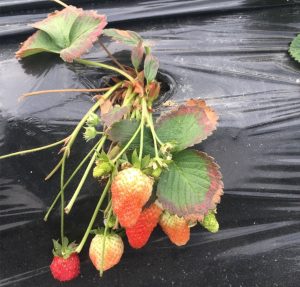
Potassium deficiency symptoms on strawberry leaves
Common signs include:
- Leaf margin yellowing or scorching
- Weak stalks or lodging
- Reduced fruit size and poor grain fill
- Lower sugar or starch content
- Reduced drought tolerance
- Increased disease susceptibility
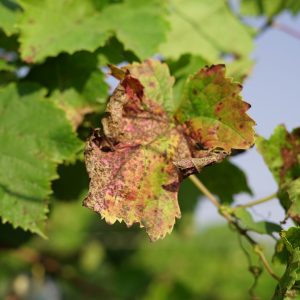
K deficiency symptoms on grape leaves
Deficiency is more likely in high‑yield systems, sandy or low‑CEC soils, and intensively irrigated production where crop removal exceeds soil replacement.
Choosing the right potassium fertilizer source
Not all potassium sources perform the same. Selection depends on crop, system, and timing.
Common fertilizer sources are:
- Monopotassium phosphate (MKP)
- Muriate of Potash (MOP), also know by the chemical name potassium chloride (KCl)
- Sulfate of Potash (SOP)
- Potassium Hydroxide (KOH)
- Potassium nitrate (KNO3)
| Source | Typical Analysis | Primary Use | Key Considerations | ||||||
|---|---|---|---|---|---|---|---|---|---|
| MOP/KCl | 0-0-60 | Broad-acre soil | Cost-effective; chloride may limit use | ||||||
| SOP (K2SO4) | 0-0-50 | Specialty crops | Low chloride; supports quality | ||||||
| Polysulphate | 0-0-14 + Ca + Mg + S | Soil application | Multi-nutrient, low salt, low chloride; gradual release; granular | ||||||
| Nova PeKacid (KOH) | 0-60-20 | Fertigation | Acidifying; improves nutrient availability; WSF | ||||||
| Nova HiPeaK (KOH) | 0-44-44 | Fertigation/foliar | High-demand stages; WSF | ||||||
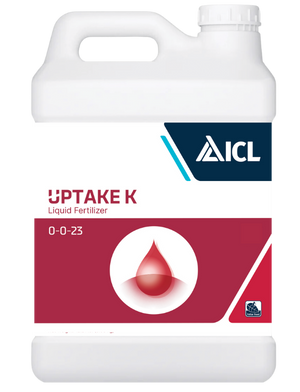
| Uptake K (potassium acetate) | 0-0-23 | Foliar | Rapid in-season correction; liquid | ||||||
| Nova FINISH (KNO3, MKP, SOP) | 8-12-40 + micros | Foliar/fertigation | Late-season, quick dissolve K with EDTA micronutrient package; WSF | ||||||
| Nova FLOW (KNO3 and MKP) | 5-10-20 11S 9Mg 0.5B | Foliar | Late-stage growth boost; highly soluble alternative to magnesium nitrate balanced with K | ||||||
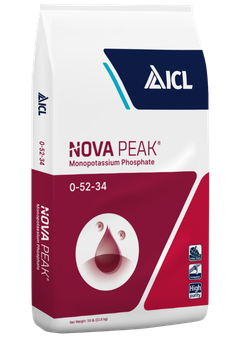
| Nova PeaK MKP | 0-52-34 | Foliar/fertigation | Quick dissolve, premium quality monopotassium phosphate |
Potassium best management practices
Potassium works best when it is part of a balanced fertility strategy rather than applied in isolation.
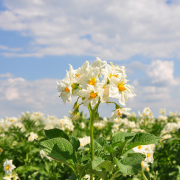
In 2014, a potato field trial in Wisconsin showed an 18% yield increase when foliar K was combined with soil-applied Polysulphate when compared to the grower standard K-program. The difference was nutrient synergy and how the potassium was managed across the season.
Potassium’s role in water regulation, nutrient movement, and carbohydrate transport is closely linked with sulfur, calcium, and magnesium availability. Balanced nutrition supports stronger root growth, improved uptake, and more efficient movement of sugars throughout the plant.
Potassium can be delivered through multiple systems depending on crop demand and production practices:
- Soil-applied potassium builds baseline fertility and supports season-long availability
- Fertigation potassium provides precise in-season delivery during periods of high demand
- Foliar potassium offers rapid support when root uptake is limited or demand exceeds supply
- Biologicals and soil-enhancement products like BIOZ can offer low-use-rate solutions that help improve nutrient efficiency by supporting microbial activity and root performance without significantly increasing fertilizer costs.
Agronomist tip: It’s all about a season-long supply. Polysulphate provides a multi-nutrient option supplying K, S, Ca, and Mg with a low chloride profile and gradual release. It has been shown to reduce MOP rates while supporting yield.
Supplement with mid-season potassium rich foliars, like Nova FLOW, for a well-rounded K program.
Practical K Management – Building a smarter potassium program
A strong potassium strategy aligns supply with crop demand. For many growers, the best potassium program combines multiple delivery systems: a foundational soil-applied, complemented by soluble or foliar products during peak demand periods.
Key considerations
- Soil test levels + yield goals
- Match rate to removal, only what leaves the field should be considered in removal estimation for application; manage K to align with total uptake for the season
- Choose source wisely
- Irrigation system
- Chloride sensitivity; avoid excess chloride
- Nutrient interactions
- Consider foliar K late season to keep plant greener and reduce stress
Things to avoid
- Applying too late – apply K before flowering occur
- Underestimating or overestimating removal
- Using only soil test numbers
- Ignoring source effects
Potassium drives performance beyond yield
Potassium is one of the most influential nutrients in crop production because it affects both productivity and quality. So when potassium is managed strategically, it helps unlock stronger marketable yield potential, profitability, and more resilient cropping systems.
Explore ICL potassium solutions: From natural multi-nutrient fertilizers to precision fertigation and foliar nutrition, ICL offers potassium solutions designed for every crop system and growth stage.
FAQ: Potassium in crop nutrition
What does potassium do for crops?
Potassium regulates water use, nutrient movement, enzyme activity, and sugar transport—impacting both yield and quality.
When should potassium be applied?
Apply preplant for baseline fertility, then supplement during peak demand with mid-season foliars or fertigation (flowering through grain fill or fruit development).
Why do crops show deficiency with good soil test levels?
Dry soil, limited root growth, or high demand can restrict potassium uptake even when soil levels are adequate.