


 Whatsapp
  X
X  Mail
Mail  Copy link
 In the pursuit of higher yields and sustainable agriculture, micronutrients often play an outsized role despite their minimal presence in the soil. One such essential micronutrient is molybdenum (Mo) which is critical for the optimal growth and productivity of agricultural crops. Plants take up Mo as the MoO₄⁻² anion.
Why molybdenum matters
Molybdenum is a key component of several plant enzymes, most notably nitrate reductase and nitrogenase, which are vital for nitrogen metabolism. These enzymes enable plants to convert nitrate into usable forms of nitrogen and, in legumes, facilitate biological nitrogen fixation through symbiotic relationships with Rhizobium bacteria.
Without sufficient molybdenum, plants struggle to utilize nitrogen efficiently, leading to symptoms such as stunted growth, leaf chlorosis, and poor yield quality. This is particularly critical in crops like soybeans, alfalfa, canola, and cauliflower, which have higher molybdenum demands. Legumes are particularly molybdenum-hungry crops, as they need more molybdenum to fix nitrogen to their root nodules.
Soil and crop management
Molybdenum availability is highly pH-dependent. Molybdenum becomes more available as soil pH increases, the opposite of most other micronutrients. Acidic soils (pH < 5.5) often limit molybdenum uptake due to maximal adsorption of Mo anions in the soil by Fe and Al oxides. This makes soil pH management and targeted molybdenum fertilization essential strategies. Applying molybdenum-enriched fertilizers or foliar sprays can correct deficiencies and enhance crop performance, especially in sensitive growth stages.
Deficiency symptoms of molybdenum
Molybdenum deficiency is relatively rare but can be highly detrimental, especially in acidic soils. Molybdenum is a mobile nutrient, so it translocated to the growing parts, leaving the older leaves with deficiency symptoms.
Common symptoms include:
- Interveinal chlorosis (yellowing between leaf veins), especially in older leaves
- Stunted growth and reduced leaf size
- Marginal leaf scorching or cupping
- Poor pod or flower development in legumes
- Whiptail disorder in cauliflower (distorted, narrow leaves)
- Reduced nitrogen fixation in legumes due to impaired nodule function
These symptoms often resemble nitrogen deficiency, making accurate diagnosis essential.
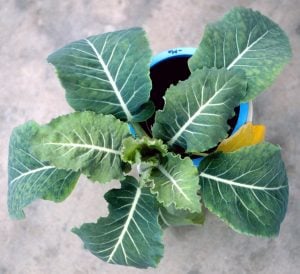
Molybdenum deficiency in cauliflower crop. Photo contributed by Takeshi Shimizu, Encyclopedia Nutrient Disorder Diagnosis (ISBN 13: 978-4540171666; ISBN 10: 4540171666)

Molybdenum deficiency in spinach crop. Photo contributed by Takeshi Shimizu, Encyclopedia Nutrient Disorder Diagnosis (ISBN 13: 978-4540171666; ISBN 10: 4540171666)
Sources of molybdenum for crops
To prevent or correct deficiencies, molybdenum is supplied as inorganic forms (molybdates). They can be incorporated in NPK fertilizers fortified with Mo, in seed treatments for legumes to enhance early nodulation and can be combined with lime in acidic soils to improve availability.
ICL’s commitment to balanced nutrition
At ICL Growing Solutions, we believe that balanced plant nutrition is the foundation of resilient and productive agriculture. Our premium fertilizers—Nova ELEVATE®, Nova PULSE®, and Premium X-TRA—are formulated to deliver key nutrients, including molybdenum, in highly available forms to support efficient nutrient uptake and optimal plant performance.
Nova ELEVATE® is a high-purity, fully soluble potassium nitrate (KNO₃), ideal for post-harvest recovery and early-season development. It promotes strong root activity, enhances sugar translocation, and supports cell wall strength—critical for fruit development and stress resilience.
Nova PULSE® delivers phosphorus and potassium in a highly soluble, chloride-free form, perfect for starter fertilization. It supports early root development, energy transfer, and crop establishment, making it especially valuable when preparing for the next season’s growth.
Premium X-TRA is a versatile, micronutrient-enriched formula that includes molybdenum among other essential elements. It enhances nitrogen metabolism and improves the uptake and efficiency of key nutrients, helping plants build reserves after harvest and gear up for vigorous vegetative growth.
Integrating these products into your post-harvest or pre-season nutrition strategy not only restores plant energy and nutrient balance but also builds a stronger foundation for yield, quality, and long-term sustainability.
Digital Tools
Calculators to improve nutrient management and boost productivity
