Whatsapp
  X
X  Mail
Mail  Copy link
 Exploring the Agronomic Potential of Biochar
Exploring the science, benefits, and revival of biochar in modern agriculture. We look at where biochar came from and where BIOZ® Jet can take us.
On this page:
Biochar has been utilized for thousands of years to improve soil fertility. Though its use has ancient roots, modern agriculture is rediscovering biochar’s potential to enhance soil health, nutrient retention, and crop resilience. Today, innovative products like BIOZ® Jet are harnessing this traditional technique in new ways to meet the demands of sustainable and productive agriculture.
What is Biochar?
Biochar is a stable, carbon-rich material produced by pyrolyzing (heating) organic biomass under limited oxygen conditions. The resulting carbon-rich substance we call biochar, is a porous, charcoal-like substance. Known to significantly improve soil properties when applied as a soil amendment, biochar is produced from various organic materials, including agricultural residues and wood, making it a sustainable solution for enhancing soil health.
According to the USDA, biochar can increase water retention, improve nutrient availability, and support beneficial soil microorganisms. This combination of benefits makes it especially valuable in soils with low fertility or poor structure (USDA Climate Hubs).
A Timeless Agronomic Practice
As with most concepts in agriculture, biochar application is not a novel one. Archaeological evidence points to its use by pre-Columbian civilizations in the Amazon, where nutrient-rich ‘Terra Preta’ soils were cultivated using charcoal waste from ancient hearths . These soils, still fertile after centuries, demonstrate biochar’s long-lasting effects on nutrient availability and water retention. Recent studies from Cornell University have shown similar improvements in modern applications, including enhanced cation exchange capacity and increased microbial activity (Lehmann et al., 2003).
How is Biochar Made?
Biochar is produced through pyrolysis. In simple terms, it is made using a thermochemical process that heats organic materials (like wood or plant waste) at high temperatures without oxygen. This causes the materials to break down and turn into a carbon-rich, porous sponge-like structure that acts as a reservoir for water and nutrients. The quality and performance of biochar depend on the feedstock and pyrolysis conditions. For example, softwood biochar, like that used in BIOZ Jet, is produced through a highly specific process, yielding consistent and highly active compounds beneficial for crop growth.
Why Use Biochar in Modern Agriculture?
The resurgence of biochar in modern agriculture is driven by its potential to address key agronomic challenges. Like a sponge, biochar holds onto nutrients and moisture in the soil, enhancing fertility, supporting microbial life, and locking away carbon—making it a powerful tool for both productivity and sustainability.
- Enhanced Water Retention: Helps soils hold moisture, reducing irrigation needs.
- Improved Nutrient Efficiency: Retains nutrients and reduces leaching.
- Enhanced Microbial Habitat: Supports beneficial soil microorganisms.
- Carbon Sequestration: Stores carbon long-term, contributing to climate change mitigation.
- Stress Tolerance: Enhances plant resilience to environmental stress.
Introducing BIOZ Jet: Advanced Biochar Technology
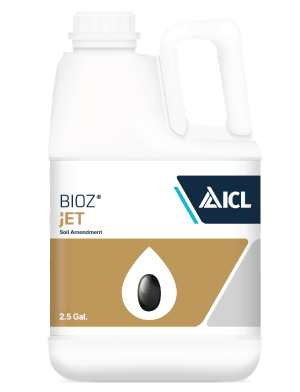
BIOZ Jet is a next-generation liquid biochar extract designed for soil application, developed using softwood biochar through a proprietary pyrolysis process. The product leverages EVOIA’s proprietary FYR® technology to convert sustainable raw biomass into plant-beneficial compounds, creating a powerful amendment that promotes root development, stress tolerance, and crop vigor. In a distribution agreement between EVOIA and ICL, this pioneering and proprietary liquid biochar extract will be available as part of ICL Growing Solutions soil applied portfolio in an easy-to-handle formulation.
Proven Benefits of BIOZ Jet
- Boosts seedling vigor and root development.
- Enhances nutrient uptake.
- Improves abiotic stress response and resilience.
- Sustainable raw biomass
- Highly compatible with various fertilizers and pesticide, fungicide and insecticide programs.
Why is BIOZ Jet Effective?
BIOZ Jet works by introducing biochar-derived compounds that enhance plant metabolic processes, resulting in stronger root systems and improved nutrient uptake. The formulation’s consistency and stability make it a reliable tool for optimizing plant health, even in challenging growing conditions.
Research and Field Trials
BIOZ Jet has been extensively tested to validate its agronomic benefits. Recent field trials have demonstrated increased yields, and improved crop stands in a variety of applications.
- BIOZ Jet (with Agrolution pHLow fertilizer) on corn saw a 5% yield increase and better corn stands in a field trial in Texas in 2024.
- BIOZ Jet (with Agrolution pHLow fertilizer) on potatoes saw an average 8% yield increase in yield and better potato stands across three field trials in Wisconsin, Idaho and Washington in 2024. Buoyed by promising results, ongoing research continues to evaluate yield impacts across different crops and regions.
Reviving Time-Tested Practices for Modern Challenges
While biochar resurgence may seem modern, it harkens back to an ancient practice that transformed poor soils into fertile grounds for generations. By applying advanced technologies to this time-honored concept, BIOZ Jet offers a practical and scientifically backed solution to modern agronomic challenges. The evolution of biochar from ancient tradition to cutting-edge solution marks an exciting chapter in sustainable agriculture, allowing growers to enhance crop resilience, boost yields, and improve soil health while tapping into the legacy of biochar’s enduring agronomic benefits.
Want to know more? Stay ahead of the curve with innovative solutions like BIOZ Jet and contact one of our experts. We are always happy to help.
Citations
Lehmann, J., et al. (2003). Biochar Sequestration in Terrestrial Ecosystems – A Review. Mitigation and Adaptation Strategies for Global Change.; USDA Climate Hubs. (n.d.). Biochar and Soil Health. United States Department of Agriculture.; Jeffery, S., et al. (2011). A quantitative review of the effects of biochar application to soils on crop productivity using meta-analysis. Agriculture, Ecosystems & Environment.; Woolf, D., et al. (2010). Sustainable biochar to mitigate global climate change. Nature Communications.; Glaser, B., et al. (2002). The Terra Preta phenomenon: A model for sustainable agriculture in the humid tropics. Naturwissenschaften.