


 Whatsapp
  X
X  Mail
Mail  Copy link
 How AI Is Strengthening Decision Making for Today’s Agronomists
Explore how AI is changing agronomy, improving efficiency and expanding access to information while keeping growers and agronomists at the center.

On this page:
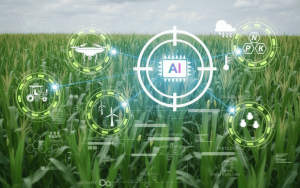
Agriculture is a living laboratory, where every season brings new challenges that require new approaches to solve.
Enter artificial intelligence (AI).
It’s quickly becoming a valuable asset to help diagnose and address issues in agronomy. For instance, I recently used AI to build a software program to manage ICL field trials taking place around the world. The technology enabled me, as an agronomist, to create a computer program in just 20 days – a task that would have been impossible without AI.
With all the excitement surrounding AI, there’s a perception that it transforms everything we do. In agriculture, the reality is that AI improves efficiency and access to information, but good judgment, context and experience remain critical to growing crops.
How AI Benefits Agronomy
As growers and agronomists experiment with AI, we’ve discovered many practical and impactful ways to put it to use.
- Expand expertise. One of the greatest benefits of AI is that it allows us to work in fields outside of our expertise. This is especially useful in agriculture, which requires a broad base of knowledge. Through AI, a grower can access expert information in soil science, fertilizers, weed control, insect control and more.
- Make better decisions. AI excels at summarizing large amounts of data quickly, a trait that enables growers to make better decisions because it is easy to fact-check potential moves. For instance, a farmer considering a midseason foliar application can use AI to access scientific databases and get a detailed explanation of the best course of action. For the most part, AI responses are not tied to a specific brand, allowing for a broader perspective.
- Make better use of time. Farmers excel at getting things done. From planting to harvest, they do whatever it takes to do the job. But there is something few of them enjoy doing and that is administrative tasks like bookkeeping. And that’s something AI is very good at. When growers use AI to automate basic tasks like invoicing and financial reports, it gives them more time to focus on the work they do best.
Limitations of AI
While AI is very good at organizing existing information, it has limitations that underscore why knowledgeable, experienced agronomists will always be an essential part of crop production.
- AI cannot understand local context. AI models often lack information on specific regional conditions. An agronomist who has worked in a region has extensive knowledge of the local soil and climate. They will understand specific challenges growers in the region experience – even when the issues have not been studied or reported by the media – and can diagnose and make recommendations more effectively than AI.
- AI cannot understand nuance. AI is limited to the information that a user provides. A person, however, can read behavior, ask questions and uncover details. For instance, a grower may believe they applied a product as directed. But a little probing may reveal they skipped a step or made adjustments. Those details are critical to determining the best course of action.
- AI cannot NOT give an answer. AI models are programmed to generate responses, to the point that they will sometimes hallucinate or fabricate information. Not everything in agriculture has a straightforward answer. We often use the phrase “it depends” because the optimal plan for a crop depends on soil health, climate, moisture levels, disease pressure, seed varieties and more. It’s important to have an agronomist who can analyze context and understand local conditions to provide insight into each individual situation.
- AI cannot innovate. We have incredible access to information for all types of problems a crop might experience. But new challenges still arise. AI uses past data to analyze, but struggles to grasp new or emerging problems. A grower, for example, might notice a certain weed has developed resistance to herbicide. The grower must innovate to control the weed. They might use a combination of chemicals, a different type of tillage or crop rotation. That type of innovation drives new solutions.
Agriculture has changed significantly in the last 30 years and will continue to evolve – particularly as new technologies like AI come along. It will never replace farmers or agronomists, but it will help us discover and adapt to make more effective use of their expertise.
The future of agriculture is exciting because of the people who will use all the tools they can to solve each challenge. When AI is paired with the experience and judgment of agronomists and growers, it becomes a powerful advantage.
