Whatsapp
  X
X  Mail
Mail  Copy link
 On-Demand Webinar | Fertilizer Source & Managing Salts, ROI & Soil Health
ICL agronomists share data-driven insights on how multi-nutrient, low-salt, and acidifying fertilizers can safeguard seedling emergence, improve nutrient efficiency, and strengthen long-term soil health.

On this page:
Fertilizer Source & Soil Health: Managing Chloride, Microbes & Salts
To Earn CEU Credit Login Required | FREE to ASA, CSSA, SSSA members and Certified Professionals.
How fertilizers behave in the soil matters just as much as how much is applied. As salt accumulation, chloride sensitivity, and nutrient tie-up quietly erode early-season performance, fertility decisions increasingly influence both crop establishment and long-term soil health.
This expert-led recap unpacks how fertilizer source, solubility, and delivery affect seed safety, nutrient efficiency, microbial dynamics, and yield potential — and where lower-salt, diversified fertility strategies are delivering measurable gains in the field.
Visit Science Societies to watch the full webinar on demand for CEU credits.
7 Fertilizer Insights for Managing Chloride, Microbes & Salt
Rethinking fertility for crop and soil health. Key takeaways:
- Fertilizer source and solubility directly affect seedling emergence, nutrient uptake, and salt stress during germination.
- High-chloride and high-salt fertilizers can delay emergence, disrupt water uptake, and reduce early vigor — often without obvious visual symptoms.
- Diversifying potassium sources can maintain or improve yields at lower chloride loads, improving efficiency and soil function.
- Polysulphate® delivers potassium, sulphur, calcium, and magnesium in a low-salt, gradually available form that supports seed safety and season-long nutrition.
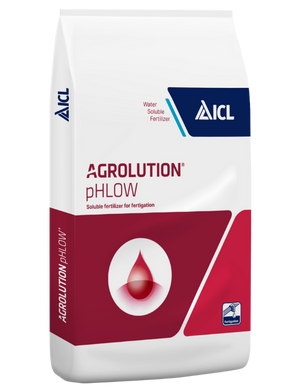
- Acid-forming fertilizers such as Agrolution® pHLow improve nutrient availability in high-pH soils, increasing phosphorus and micronutrient uptake.
- Pairing fertilizer chemistry with biological inputs like BIOZ® can enhance nutrient retention, microbial activity, and overall soil performance.
How do we feed both the crop and the soil—without compromising seed safety or long-term productivity? Across the U.S., growers and agronomists are rethinking fertility strategies as salt accumulation, chloride sensitivity, and microbial disruption quietly chip away at soil function and early-season success. While some farms face visible salinity issues, the hidden impact of repeated use of high-chloride and high-salt fertilizers is a growing challenge nationwide.
We explore how fertilizer source and delivery method influence seedling emergence, salt loading, root health, the rhizosphere microbiome, and nutrient uptake.
1. Fertilizer Source Matters: Beyond the 4R
Dr. AJ Foster reframed the 4R Nutrient Stewardship principles as an interconnected system—not a checklist.
“Rate isn’t independent—it’s a function of source, timing, placement, and even weather.”
A University of Georgia cotton trial demonstrated that Polysulphate® and potassium magnesium sulfate achieved equal or higher yields than MOP, despite lower K₂O rates, showing that source efficiency can outperform rate alone.
Key takeaway: Choosing the right fertilizer source can maintain yields at lower rates—boosting ROI and reducing salt buildup.
2. Managing Salinity and Seed Safety
High-salt fertilizers delay germination and stress seedlings. Visuals from agronomist Mike Dolinski showed roots growing directly alongside Polysulphate granules without burn—proof of its low-salt, seed-safe formulation.
“When a canola root grows along a granule with no toxicity—that’s the difference a low-salt fertilizer makes.”
Insight: Seedling toxicity isn’t just about placement—it’s about the salt concentration surrounding the seed at germination.
3. Solubility, Timing, and Nutrient Availability
Different sources dissolve—and therefore release nutrients—at different rates:
| Fertilizer Source | Relative Solubility | Behavior |
|---|---|---|
| MOP (KCl) | High | Rapid release, higher salt stress |
| Potassium magnesium sulfate | Moderate | Balanced release |
| Polysulphate® | Gradual | Slow, sustained release of K, Ca, Mg, S |
“Solubility is a hidden driver of both timing and plant response.” – AJ Foster
Takeaway: Blending fast- and slow-release sources improves synchronization between nutrient supply and crop demand—reducing losses and enhancing microbial stability.
4. Soil pH: Acidity as the Currency of Nutrient Exchange
High-pH soils lock nutrients in unavailable forms. Acidifying fertilizers like Nova PeKacid® and Agrolution pHLow® deliver hydrogen directly into the root zone, lowering localized pH and unlocking phosphorus and micronutrients.
“Acidity is the currency of soil economics,” Foster noted.
Key takeaway: Acid-forming fertilizers improve nutrient mobility, reduce fixation, and help crops in calcareous or alkaline conditions.
5. Synergies Between Acidic Fertilizers and Organic Acids
Combining acidifying fertilizers with organic-acid-based biostimulants, such as BIOZ Diamond, amplifies nutrient solubility and retention.
“It’s a dual process—acid releases, organic acid retains.” – AJ Foster
Insight: Field trials showed Agrolution pHLow + BIOZ Diamond increased yields and micronutrient uptake compared to APP alone.
6. Diversifying Potassium Sources for Yield and Soil Health
Mixing fast-release (MOP) with slow-release (Polysulphate®) sources improves potassium availability through the season and reduces chloride accumulation.
- Rice and sugarcane trials showed equal or better yields at 25–50 % lower MOP rates.
- Polysulphate’s calcium and magnesium support soil structure and root strength.
“Our potassium problems aren’t always about total supply—it’s availability. Polysulphate keeps releasing.” – Mike Dolinski
Insight: Blends reduce chloride load, extend potassium availability, and contribute secondary nutrients. With Polysulphate, you’re not just adding potassium and sulfur—you’re adding structure back into the soil through calcium and magnesium.
7. Salt, Microbes, and the Living Soil
New studies indicate that low-salt, multi-nutrient fertilizers enhance microbial biodiversity. Long-term Polysulphate use has shown improved microbial diversity compared to untreated fields.
“High salt disrupts the natural conversation between roots and microbes. Low-salt products restore that balance,” said Mike Dolinski.
Takeaway: Fertilizer choice directly affects the rhizosphere—low-chloride, low-salt inputs foster healthier microbial networks that drive nutrient cycling and long-term productivity.
🌱 Featured ICL Solutions
Polysulphate® – Multi-nutrient, low-salt fertilizer delivering sustained K, Ca, Mg, and S.
Nova PeKacid® / Agrolution pHLow® – Acidifying fertilizers that improve nutrient uptake in alkaline soils or high pH irrigation waters.
BIOZ® Diamond – Fulvic-rich, microbial-enhanced nitrogen source for soil activation and synergy with acidic fertilizers.
Ready to put these insights into practice? Explore how Polysulphate®, Nova PeKacid®, and BIOZ® fit into your fertility strategy. 🔗 Contact your local ICL representative.
To Earn CEU Credit – Watch on Demand | Login Required for CEU | Live webinars are FREE to ASA, CSSA, SSSA members and Certified Professionals.