Whatsapp
  X
X  Mail
Mail  Copy link
 What are Organic Fertilizers?
Revealing the truth about Organic Fertilizers, what they are and what they are not!

On this page:
Organic fertilizers come from natural, minimally processed sources and support healthier soils, sustainable farming, and long-term crop productivity. This guide explains what organic fertilizers are (and aren’t), how certification works, and how ICL’s organic-approved products – like Polysulphate – help growers boost yields sustainably and meet organic standards with confidence.
The question “What is an organic fertilizer?” seems straightforward to answer, but as is often the case, the answer may be slightly more complicated than we initially thought.
The Merriam-Webster dictionary defines ‘organic’ as “of, relating to, or derived from living organisms,” which seems clear enough. So, it might seem logical that an organic fertilizer would be a fertilizer that is “of, relating to, or derived from living organisms.” For example, a fertilizer created from animal waste, plant-based fertilizers such as compost, and biosolids.
So, is that it? Have we answered the question? Well, not quite. Animal waste, such as manure, slurry, meat processing waste, and guano, may be used as organic fertilizers, as can plant-based matter, such as compost, or biosolids that are a product of waste-water treatment processes. But there is more to organic fertilizers than this.
What do People Mean When they Say Organic Fertilizer?
Rather than referring just to fertilizers made from organic materials, the phrase organic fertilizer is more commonly used to refer to fertilizers that can be used in organic crop production. This is where the confusion arises. So, let’s take a look at what organic production is and what this means for organic fertilizers.
The Essence of Organic Production
The precise definition of organic production varies between countries and regions, but, for example, the USDA states that:
Organic food is produced using sustainable agricultural production practices. It is produced without using most conventional pesticides, fertilizers made with synthetic ingredients or sewage sludge, bioengineering, or ionizing radiation.
This definition extends the options for organic fertilizers beyond just products from plant or animal origins. The critical aspect of organic production is that it needs to adhere to the Principles of Organic Agriculture – focusing on sustainability and natural processes rather than the material’s organic compound content.
What this means in practice varies from country to country. Different countries have specific criteria that organic producers must adhere to. These criteria detail the exact requirements growers must follow to sell their produce as ‘organic.’ This includes ensuring every input used in the organic production meets the necessary criteria.
Who Handles Organic Certification?
The good news for growers is that there are certification bodies that confirm inputs meet the standards needed for organic production. The certification bodies typically conduct inspections, audits, and lab tests to ensure that farm inputs meet the defined criteria. They may also require ongoing monitoring and re-evaluation of the inputs to maintain their organic certification status.
For example, ICL’s Polysulphate fertilizer is a natural, multi-nutrient mineral fertilizer. Polysulphate is created from the natural mineral polyhalite that is just mined, crushed, and screened, ready for application. As a natural product with no chemical processes, Polysulphate is certified for organic farming in many different countries, including the USA, Canada, Europe, and Japan.
A grower wanting to sell organic produce in the USA can see the certification body OMRI states that “Polysulphate is OMRI Listed and may be used in certified organic production or food processing and handling according to the USDA National Organic Program regulations.” This means that a grower supplying produce to organic markets in the USA can be confident that Polysulphate is an organic fertilizer.
What Organic Fertilizers Does ICL Produce?
At ICL, we are proud of our products with organic certification, empowering farmers to use sustainable practices. Our selection of organic plant nutrition products includes:
Polysulphate Granular and Standard
Polysulphate is our natural, mineral, multi-nutrient fertilizer approved for use in organic fertilizer production in countries around the world. Created from the natural mineral polyhalite, Polysulphate is a 4-in-1 fertilizer that provides four essential plant nutrients – sulfur, potassium, magnesium, and calcium – all in sulfate form.
Polysulphate’s prolonged nutrient release provides season-long nutrient availability, reducing nutrient losses and contributing to improved crop quality and higher yields.
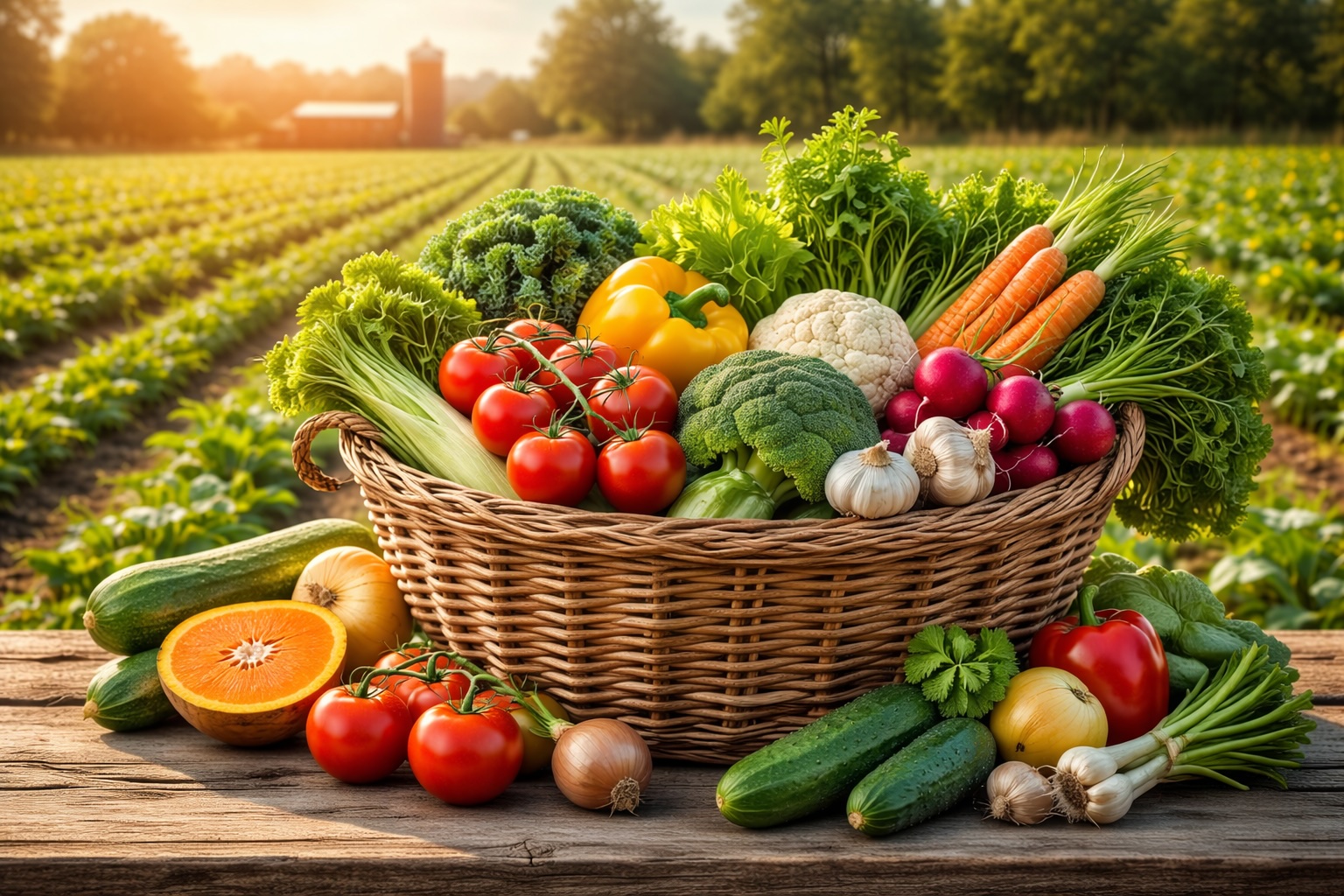
Fresh Organic Harvest
Nutrients for Organic Crops
To achieve the high-quality produce that organic markets require, growers need high-quality, nutrient-rich fertilizers. And these fertilizers must meet the rigorous standards imposed by their target market.
With a range of organic fertilizers that are either based on organic animal and plant matter, as well as high-quality organic fertilizers, including ICL’s Polysulphate, growers can meet their crops’ requirements, while also ensuring, thanks to the certification bodies, that their produce meets the standards that the markets, and ultimately the end users, demand.
ICL is proud of its organic fertilizer collection with the organic certification needed to empower farmers around the world to use sustainable farming practices while achieving the best quality produce.

Related crops