


 Whatsapp
  X
X  Mail
Mail  Copy link
 Complete Guide to Peat Alternatives: How New Substrates Behave
An overview of the main peat substitutes used in professional ornamental plant production: bark, wood fiber, green compost and coconut fiber's technical characteristics
On this page:
The search for alternatives to peat in nursery and ornamental plant production has increased significantly in recent years. When correctly selected and managed, peat alternatives can deliver several agronomic and operational benefits—an approach also supported by professional bodies such as RHP and EPAGMA.
Why Reducing Peat Content in Growing Media?
The shift to new growing media is driven by the concern about peat’s long term availability, a greater attention to sustainability and legislation reasons, as explained in our article on why ornamental horticulture is moving away from peat.
In professional ornamental horticulture, peat can be partially or fully replaced with alternative materials, each offering specific physical and chemical properties.
The Advantages of Peat-free and Peat-reduced Substrates
When properly used, alternative substrates can offer multiple benefits:
- strong root development, supported by an optimal air–substrate ratio
- effective water drainage
- improved re-wetting capacity
- lower bulk density (with the exception of compost)
That said, it is essential to fully understand the characteristics of each peat substitute, as none are completely free from constraints or management considerations, when it comes to plant nutrition. Let’s start with an overview of their characteristics and then let’s dig into the possible challenges.
The Characteristics of Main Peat Substitutes Used in Ornamental Plant Production
The most common peat substitutes currently used in professional ornamental horticulture are:
Wood fiber
The successful use of wood fiber as a peat alternative depends on the specific physical and chemical characteristics of the material being used. Compared with peat, wood fiber-based substrates typically have lower buffering capacity and reduced nutrient retention, two important factors that can influence crop stability. To learn more, read our full article on how to manage wood fiber for consistent crop performance.
Bark
Bark primarily contributes to substrate structure by improving porosity, oxygen diffusion, and mechanical stability. Its effect on water-holding capacity depends largely on particle-size distribution. This article gives a deeper insight on how bark contributes to substrate’s characteristics.
Coir
Derived from coconut husks, coir can be supplied as fiber, chips, or coco peat, each with distinct physical characteristics. At this link a technical guide to coir for ornamental growers . Nutrient content may vary and can include potassium (K), manganese (Mn), boron (B), zinc (Zn), sodium (Na), and chloride (Cl). Its low bulk density can also help reduce transport costs.
Compost
The characteristics of green compost can vary considerably depending on the source materials used in its production. Compost may contain significant levels of phosphorus (P), potassium (K), calcium (Ca), and trace elements. However, growers should also be aware of potential contamination risks, including herbicide residues or weed seeds, as highlighted in our technical guide to green compost.
The table below summarizes the main characteristics relevant for ornamental plant production.
| Bark | Wood fiber | Green Compost | Coir/Coconut fiber |
|---|---|---|---|
| Industrial by-product (recycled resource, lower cost) | Low bulk density (lower transport costs) | High nutrient content | Low bulk density (lower transport costs) |
| No composting required (maturation is sufficient) | High air-filled porosity (AFP) | Good water-holding capacity | High air-filled porosity (AFP) |
| Used to improve substrates' structure and aeration | Low risk of contamination | Enhances disease suppressiveness against soil-born pathogens | Easy to handle and transport |
| The above table shows the characteristics of main peat substitutes used in ornamental plant production | |||
Specific Characteristics of Peat alternatives Related to Plant Nutrition
| Bark | Wood fiber | Green Compost | Coir/Coconut fiber |
|---|---|---|---|
| Low water-holding capacity | Low water-holding capacity | High bulk density and high EC risk | Low water-holding capacity |
| Moderate N immobilization | N immobilization | N mineralization | Risk of high pH and EC |
| The above table shows specific nutrition-related characteristics of main peat substitutes used in ornamental plant production | |||
How Plant Nutrition Changes When Substrate Composition Changes
Using alternative substrates requires re-calibrating fertilization strategies, with particular attention to nitrogen management. Nitrogen availability may vary considerably due to microbial nitrogen immobilization processes that occur during substrate maturation. To dig deeper into this subject, we have created an ad-hoc article that explores the C:N Ratio in Peat-free and Peat-reduced Substrates
Factors Influencing Growing Media’s pH
Key factors affecting substrate pH include:
- Substrate composition: pH is influenced by the substrate’s ability to retain hydrogen ions (H⁺), which depends on the quantity and quality of total organic matter
- Calcium addition (liming): calcium (Ca²⁺) is generally added to peat-based mixes; this is often more challenging when using alternative substrates
- Fertilization strategy: cation exchange processes (including peat complexes); ammonium-based nitrogen tends to acidify the substrate, while nitrate-based nitrogen has an alkalizing effect
- Irrigation: water quality, volume applied, and especially bicarbonate (HCO₃⁻) content play a decisive role
Buffering Capacity of Peat and Peat Substitutes
| Material | pH buffer (meq/l) |
|---|---|
| Baltic milling peat | 23 |
| Irish milling peat | 19 |
| Irish (fractionated peat) | 17 |
| Baltic fine peat | 21 |
| German garden turf peat | 24 |
| Baltic black peat | 24 |
| Coir/Coconut fiber | 7 |
| Wood fiber | 4 |
| Bark | 15 |
| Green Compost | 20-60 |
Compaction and Shrinkage in Substrates Containing Peat Substitutes
Over time, substrates can change volume inside containers and this needs careful management. A 100% peat substrate tends to be heavier, making it essential to ensure adequate air-filled porosity (AFP) and to avoid excessive drying.
When adding low-bulk-density alternative materials (high AFP), growers should:
- avoid excessive pressure during pot filling
- use well-composted and fully matured materials
Attention to the dilution effect: excessive shrinkage can result in reduced substrate volume in the pot, leading to lower fertilizer availability than initially planned.
Irrigation Management When Using Peat-Reduced Substrates
Key points to consider:
- different substrate compositions require different irrigation strategies
- crops grown in different substrates should ideally be managed in separate irrigation zones
- lower water-holding capacity leads to faster substrate drying
- thorough wetting of the root zone is essential for optimal root and plant development
- the use of H2Gro wetting agents is recommended
Peat-based growing media tend to dry out and, once completely dry, can become almost water-repellent. Without a wetting agent, rehydration can be difficult and uneven. There are specific trials run at Weihenstephan-Triesdorf University in Germany which show the effect of H2Go and Peat Substitues.
Challenges When Changing Substrate Type
Switching to alternative substrates may introduce several practical challenges:
- changing the substrate means changing the cultivation approach
- differences in water-holding capacity
- variations in container temperature compared with peat-only media
- nitrogen management to compensate for microbial immobilization
- reduced peat content decreases lime buffering (where required)
- reduced peat content lowers overall pH buffering capacity
- fertilizer rates must be carefully recalibrated, especially when using wood fiber
ICL Fertilizers Suitable for Low-peat Substrates
Two key nutritional needs must be addressed when reducing or replacing peat:
- compensating nitrogen availability
- supplying calcium and magnesium
Below are ICL Growing Solutions designed to support consistent plant nutrition, regardless of substrate composition.
Compensating Nitrogen in Substrates Containing Wood Fiber and Organic Materials
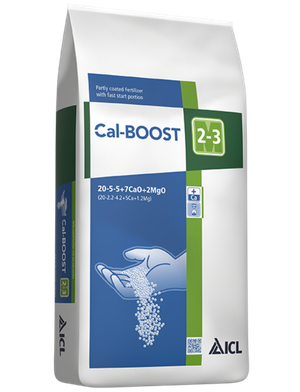
Cal-BOOST 20-5-5+7CaO+2MgO, a controlled release fertilizer, offers the following benefits:
- Coated N for optimal nutrient use efficiency
- Greener leaf color thanks to N, Ca, Mg and S
- Higher Calcium level in substrate, contributing to plant quality
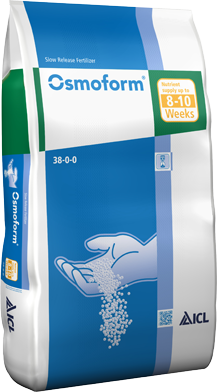
Osmoform High N 38-0-0, a slow release fertilizer, offers the following benefits:
- provides additional nitrogen during the first 10 weeks of growth
- slow-release nitrogen
- suitable for all cultivation systems
* Osmoform slow release fertilizers contain methylene urea chains of varying length, which gradually decompose. The release rate is influenced by temperature, microbial activity and moisture.
Supplying Calcium and Magnesium (+ Nitrogen) with Controlled Release Fertilizers
Lower peat content results in reduced buffering capacity for calcium and magnesium, making targeted fertilization strategies even more important.
Cal-BOOST 20-5-5+7CaO+2MgO is an extremely efficient product in relation to this specific nutrition need.
For personalized guidance, contact your regional technical support by visiting your country’s website or fill in the form you can reach from the banner at the bottom of this page.


Our knowledge
Tips & tricks, disease prevention, crop and market related information
Explore our knowledge