


 Whatsapp
  X
X  Mail
Mail  Copy link
 A Guide to Wood Fiber: Properties, Cultural Practices, and Agronomic Use
Understanding how to manage wood fiber for consistent crop performance in ornamental plants, helps choosing it as peat alternative
On this page:
Peat has long been a highly reliable material for growing plants. However, due to evolving legislation and changing perceptions, its use is gradually being reduced. Comparing peat and its alternatives based on their respective properties and performances, can be misleading. Materials such as wood fiber require management approaches tailored to their own physical and chemical characteristics, which may differ from those associated with traditional peat-based mixes. As a result, the distinct characteristics of non-peat materials lead to growing media that require adjusted cultural practices.
A general overview on how wood fiber influences substrate’s characteristics can be found on our dedicated article. In this article we’ll focus on wood fiber’s properties, which influence growers decisions when shifting to wood fiber.
Wood Fiber Has Specific Physical and Chemical Properties
Peat-free growing media generally require closer attention to both nutrition and water management. These substrates typically have lower buffering capacity and reduced nutrient retention compared to peat—two key properties that influence crop stability. Wood fiber(s) are characterised by:
- nitrogen immobilization
- low water retention
- good air content
- high saturated hydraulic conductivity
This last characteristic gives rapid water drainage capacity to the growing medium, when fully saturated. This provides excellent root aeration and prevents waterlogging, but at the same time requires more frequent irrigation and precise nutrient management to avoid leaching. In fact, compared to peat, these substrates typically have lower buffering capacity and reduced nutrient retention—two key properties that influence crop stability.
When shifting to wood fiber, it is essential to begin by understanding the specific type of wood fiber included in the growing medium, like explained in this article. Being aware of its specific characteristics helps support consistent crop performance:
- It is important to identify the type of woodfibre used in the mix and understand its specific requirements
- Crop management strategies should not rely solely on the experiences of other growers, as results can vary depending on the substrate composition
- Production guidelines and recommendations provided by the growing media supplier are a valuable reference point
Wood Fiber Processing and Quality Control: Key Cultural Considerations
When wood fiber is included in the growing media, several aspects of crop management require attention:
- Nutrition one of the primary challenges associated with wood fiber is nitrogen immobilization (N-fixation / N-drawdown), which can reach and sometimes exceed 300–400 mg N/L of wood fiber. To maintain nutrient availability throughout the crop cycle, specialized fertilizer solutions can be utilized depending on crop duration. Because peat-reduced substrates have lower buffering capacity, it is essential to monitor nutrient levels over time and adjust fertigation or topdressing once the initial nutrient charge declines. Macro- and micronutrients are generally deficient, with the exception of potassium in certain materials. Additionally, sulfur deficiency can sometimes pose a problem. To support nutrient availability throughout the crop cycle, the following ICL solutions can be considered:
- Cal-BOOST: Designed for peat-reduced and peat-free substrates, it supports ornamental plant production in situations of nitrogen drawdown and when additional calcium and magnesium are required
- Osmocote N: Provides a sustained supply of nitrogen and some potassium, suitable for longer-term crops such as nursery stock
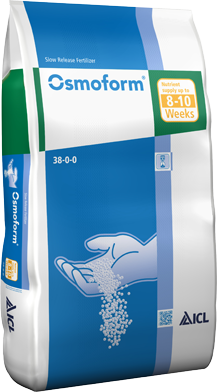
- Osmoform High N: A slow-release fertilizer suited to short-cycle crops, including bedding and pot plants
- Moisture Management: water management practices should be adapted as peat-reduced growing media behave differently from that of peat-only mixes. Dig deeper on this subject by reading our article on moisture measurement on peat-based substrates vs peat alternatives. H2Gro, a blend of surfactants incorporated into growing media, is designed to improve water distribution, enhance rewetting, and optimise water holding capacity leading to more efficient water use and reduced waste.
- pH Management: pH levels should be closely monitored, particularly during the first weeks of cultivation. Growers using peat-reduced mixes often observe greater pH variability compared to traditional peat media. Explore the article on how pH develops and behaves in new substrates. Typically, pH may rise initially and then decrease during the early stages of crop development. If not carefully managed, these fluctuations can affect root growth, nutrient availability, and overall plant performance. Regular monitoring and timely adjustments are therefore recommended.
Use of Wood Fiber in Growing Media for Ornamental Production
Wood fiber can be an effective component for reducing peat usage while maintaining crop performance, provided it is evenly incorporated into the mix and supported by an appropriate nitrogen strategy. Maintaining correct air-filled porosity is critical for healthy root development, and wood fiber contributes positively to improving aeration within the growing medium. However, balance is essential: high proportions of a single peat alternative may lead to structural instability over time. Substrates with high wood fiber content may experience shrinkage or slumping, particularly in longer crop cycles. Therefore, crop duration must be carefully considered when designing the mix.
Advantages and Limitations
Key Advantages:
- Effective raw material to reduce peat use, aligning with evolving environmental legislation and market expectations.
- Enhances substrate total porosity and air-filled porosity for healthy root development.
- Supports consistent crop performance when paired with appropriate management strategies.
Key Limitations:
- Lower buffering capacity and reduced nutrient retention compared to peat.
- Risk of nitrogen immobilization (N-fixation) requiring tailored fertilization.
- Potential for shrinkage or structural slumping in long-term crops when used in high proportions, which can lead to a reduction of macropores and an increase in micropores, negatively affecting root development.
- Greater initial pH variability requiring close monitoring during early growth stages.
- Compared to peat, wood fibers have lower water retention and reduced available water for root absorption.
Conclusion
With appropriate nutrition, water management, and pH control, wood fiber can be successfully integrated into high-performing growing media. For tailored nutrition recommendations and support, contact your regional technical advisor via your country’s website or the contact form available on the bottom of this page.


Essential Bibliography
- Bunt, A.C. (1988). Media and mixes for container-grown plants. Unwin Hyman – London.
- Cattivello, C., Zaccheo, P. (2nd ed. 2024). I substrati di coltivazione. EdAgricole – Bologna.
- Gruda, N.S. (2019). Increasing sustainability of growing media constituents for containerized crop production. Agronomy, 9(6), 313.
- Gruda, N.S. (2021). Advances in horticultural soilless culture. Burleigh Dodds Science Publishing.
- Handreck, K., Black, N. (4th edition 2010). Growing media for ornamental plants and turf. UNSW Press Book.
- Jackson, B.E., Wright, R.D. (2009). In-depth look at pine tree substrate properties. Nursery Management & Production, 25(2), 34-38.
- Maher, M., Prasad, M., Raviv, M. (2008). Organic soilless media components. In: Raviv, M., Lieth, J.H. (eds.), Soilless Culture: Theory and Practice. Elsevier.
- Raviv, M., Lieth, J.H. (eds.) (2008). Soilless Culture: Theory and Practice. Elsevier.


Our knowledge
Tips & tricks, disease prevention, crop and market related information
Explore our knowledge