


 Whatsapp
  X
X  Mail
Mail  Copy link
 C:N Ratio in Peat-free and Peat-reduced Substrates
What happens if plants don’t take the available nitrogen? Peat substitutes often contain raw materials with a wide C:N ratio, which can lead to nitrogen immobilization and early growth problems.
On this page:
If one wonders why plants do need a lot of nitrogen, the answer is simple: it’s because nitrogen drives their growth in its whole. Understanding how it behaves in these new substrates is essential for maintaining uniformity, preventing nitrogen deficiencies, and ensuring strong root development. In this article we uncover the relevance of carbon-to-nitrogen ratio, an important parameter to grow healthy plants especially when using substrates containing wood fibers or wood chips, coir, bark, hemp, etc.
What Is the C:N Ratio: an explanation of the carbon-to-nitrogen proportion
The carbon‑to‑nitrogen (C:N) ratio describes how much carbon and nitrogen are present in an organic material. Decomposing microorganisms use carbon as an energy source, but they also need nitrogen to build proteins and reproduce. An average correct ratio goes between 10:1 and 12:1. When a material contains a lot of carbon but very little nitrogen, microbes cannot find enough nitrogen within that material and to continue decomposing it, they draw nitrogen from the surrounding substrate, locking it temporarily away from the plant. This process is known as nitrogen immobilization. It happens when ratio is over 30:1.
Why Nitrogen Immobilization Matters in Peat-free and Peat-reduced Substrates
Peat substitutes have been used for decades, but earlier materials such as clay, loam, leaf mold, and composts rarely caused nitrogen immobilization. Today’s peat‑reduced and peat‑free substrates rely heavily on raw materials with a wide C:N ratio, above all wood fibers, but also wood chips, hemp, miscanthus, flax, chestunt and coconut materials. When microorganisms break down these carbon‑rich sources, they immobilize plant‑available nitrogen.
This reduces the nitrogen available to young plants, often resulting in slower early growth, pale foliage, and uneven development. Understanding the C:N ratio is therefore essential when working with new substrate mixes, as it directly influences how much nitrogen compensation is needed.
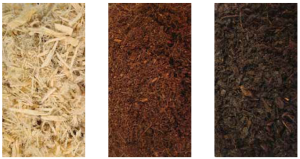
Wood fiber, coconut fiber and bark are the most widely used peat substitutes.
Depending on the proportion of peat-substitutes used, growers can expect a mild to significant nitrogen demand throughout the entire cultivation period. A visible indicator of this ongoing decomposition is the settling or sinking of the substrate over time.
How to Compensate Immobilized Nitrogen in Practice
Growers typically compensate for nitrogen immobilization in several effective ways:
- Increase the Osmocote dosage – if the substrate already contains Osmocote controlled‑release fertilizer (mixed in or spot applied), the dosage can be increased by 0.5–1 kg per m³.
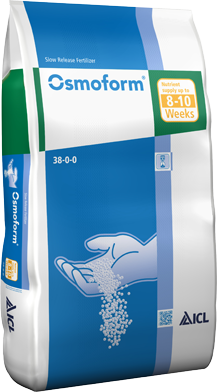
- Add specialized nitrogen fertilizers – controlled‑release nitrogen sources such as Cal-BOOST 20-5-5+7CaO+2MgO (2-3M), or Osmoform 38‑0‑0 (8–10 weeks) or Osmocote N (5–6 months) provide reliable compensation depending on substrate composition and cultivation duration. They can be used individually or in combination with a standard Osmocote base fertilization.
In all cases, both dosage and longevity of controlled‑release fertilizers must be adjusted to the crop’s nutrient demand and the nutrient levels already present.
How to Increase Nutrient Efficiency and Reduce Leaching in Outdoor Container Nurseries
Substrates containing higher amounts of coconut fiber or wood fiber offer improved drainage and a higher air‑filled pore volume, which are both beneficial for root development. However, in outdoor container nurseries, these properties also increase the risk of nutrient leaching.
For open outdoor systems, nutrient supply should therefore rely primarily on coated controlled‑release fertilizers. Selecting the correct release longevity (3–4 to 12–14 months) and the right Osmocote type is essential for maintaining nutrient efficiency. Dosages must then be adapted to the crop’s specific nutrient requirements.
ICL conducts annual trials using a custom‑developed method to measure nutrient leaching. These trials consistently show that only optimized nutrient strategies ensure high nutrient efficiency and stable crop performance.
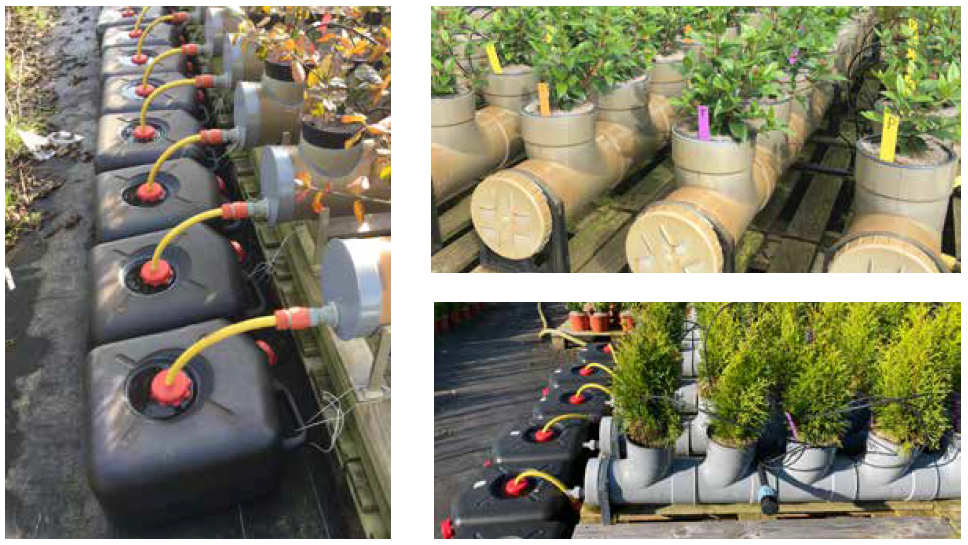
For measuring nutrient leaching in container nurseries, ICL developed a special custom-made method.
Conclusion: Nitrogen Strategy Is the Key to Success
Peat‑reduced and peat‑free substrates behave differently and nitrogen management is one of the most important factors determining crop success. By understanding the C:N ratio, anticipating nitrogen immobilization, and adjusting fertilization strategies accordingly, growers can maintain uniform growth, reduce losses, and get the best performance from modern substrate mixes. With the right combination of controlled‑release fertilizers, correct longevity, and careful monitoring, new substrates can deliver same results as peat mixes throughout the entire cultivation cycle.
For personalized guidance, contact your regional technical support by visiting your country’s website or fill in the form you can reach from the banner at the bottom of this page.



Our knowledge
Tips & tricks, disease prevention, crop and market related information
Explore our knowledge