


 Whatsapp
  X
X  Mail
Mail  Copy link
 Iron Deficiency in Ornamental Plants: Symptoms and Treatment
Iron is an essential micronutrient involved in chlorophyll formation and several metabolic processes that support healthy plant growth.
On this page:
Although required only in small quantities, iron plays a critical role in photosynthesis and energy production. Because iron is immobile within the plant, deficiency symptoms appear first on young leaves and new shoots.
Iron deficiency, commonly known as iron chlorosis, is a widespread issue in ornamental horticulture, especially in crops grown in alkaline substrates or irrigated with water high in bicarbonates. Importantly, the disorder is rarely caused by insufficient iron fertilization. In most cases, iron is present in the growing media but becomes unavailable due to high pH, root stress, or competition with other nutrients. Acid‑loving species are particularly sensitive.
Which are the Iron Deficiency Symptoms of Ornamental Plants
Iron deficiency produces a very characteristic set of symptoms, beginning at the top of the plant:
- Interveinal chlorosis on young leaves – pale or yellow tissue with green veins; in severe cases, leaves may become almost white
- Stunted growth – reduced chlorophyll limits photosynthesis and slows shoot development
- Premature leaf drop – severely chlorotic leaves may fall early
- Poor flower development – reduced bud formation and weaker flowering
- Leaf necrosis (advanced stages) – brown, dead patches on the youngest leaves
Because older leaves remain green, iron deficiency is easy to distinguish from nitrogen or magnesium deficiency.
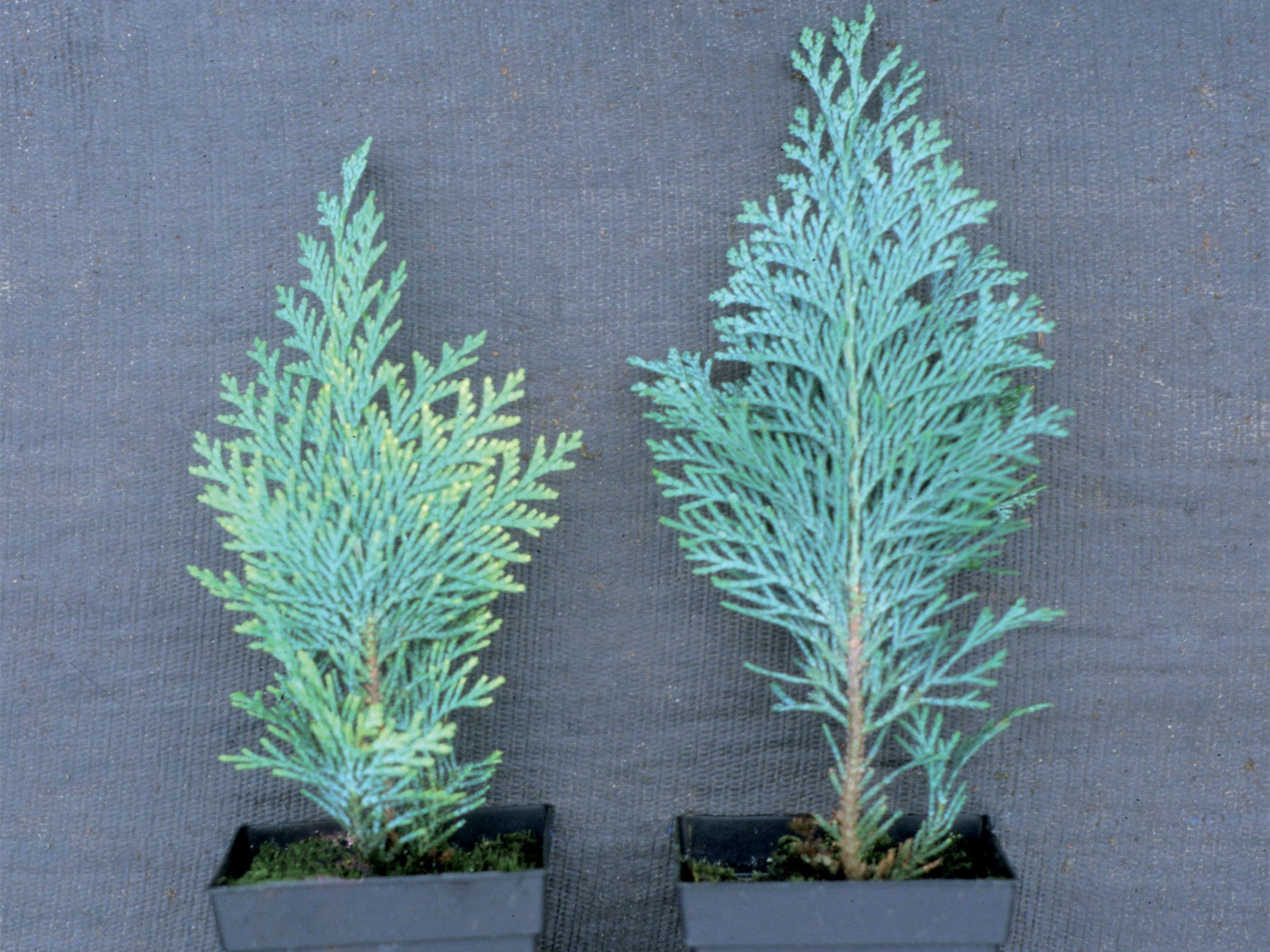
Chamaecyparis lawsoniana ‘Columnaris’ showing iron deficiency induced chlorosis.
Iron Deficiency Effects on Ornamental Plants
Iron plays a central role in chlorophyll formation and energy production. When plants cannot absorb enough iron, several negative effects follow:
- Reduced photosynthesis – Iron is essential for chlorophyll synthesis. Low availability limits energy production and slows growth.
- Increased susceptibility to stress – chlorotic plants are weaker and more vulnerable to diseases, pests, drought, and temperature extremes.
- Overall decline in plant quality – chronic deficiency leads to weak growth, poor flowering, and reduced market value.
Iron deficiency is most often linked to high pH, excess bicarbonates, waterlogging, low temperatures, or nutrient antagonisms rather than a lack of iron in the substrate.
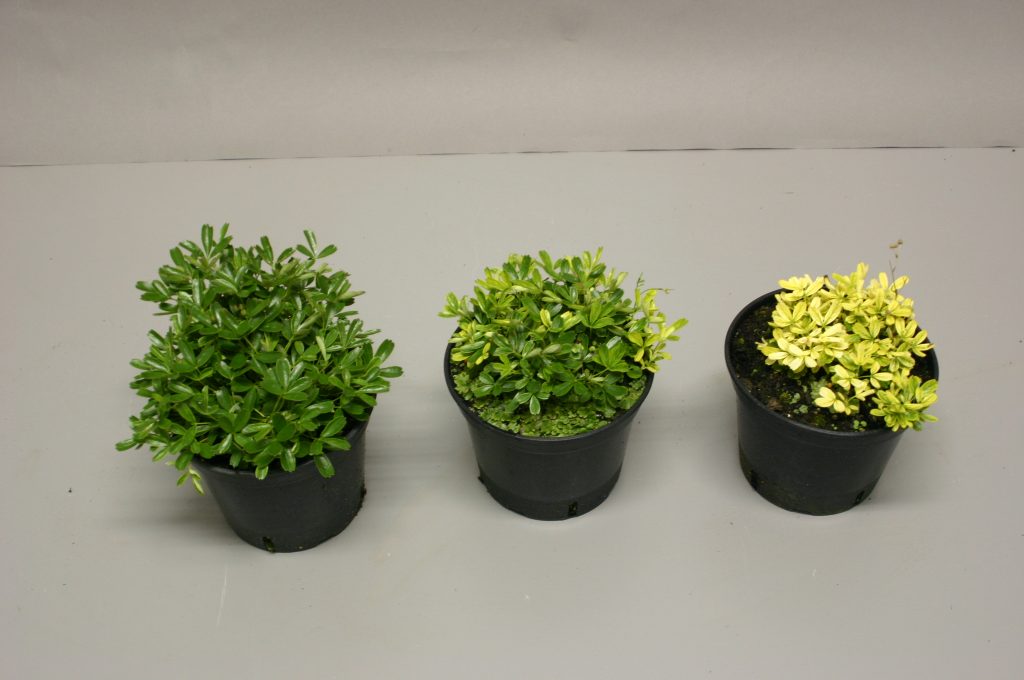
Three plants of Potentilla tridentata ‘Nuuk’ showing iron deficiency of different severity.
How to Manager Iron Nutrition to Avoid Deficiencies
Effective management focuses on improving iron availability and supporting healthy root uptake:
- Analyse substrate and irrigation water: check pH and bicarbonate levels. Iron deficiency is common in alkaline conditions.
- Use iron chelates: Fe‑EDDHA or Fe‑DTPA provide iron in a form that plants can absorb efficiently.
- Manage pH: lower high pH using acidifying fertilisers or elemental sulfur. Prevent pH rise by using irrigation water with low bicarbonate content. pH levels have a significant effect on nutrient availability.
- Improve root conditions: avoid waterlogging, ensure good aeration, and maintain optimal temperatures to support root uptake.
- Add organic matter: in open fields, compost or well‑decomposed manure improves soil structure and micronutrient availability.
- Monitor plants regularly: early detection of chlorosis allows timely correction before growth and quality are affected.
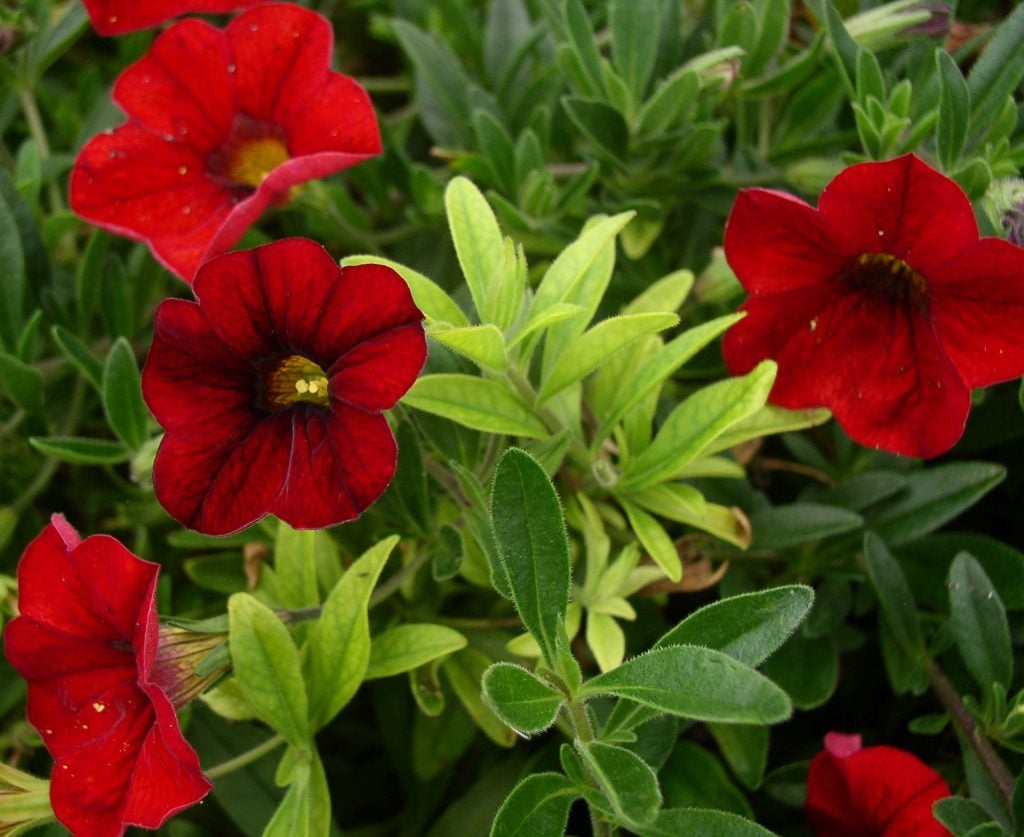
Young pale leaves of Calibrachoa with symptoms of iron deficiency.
Iron deficiency in floriculture production can be a difficult problem to avoid, especially if you operate in alkaline soils or on substrates where the pH has risen. Proper soil or substrate management and nutrient integration are essential to keep plants healthy and vigorous.
Iron deficiency is a common nutritional disorder in ornamental horticulture, particularly in alkaline substrates or when irrigation water contains high bicarbonates. Because the issue is usually poor uptake rather than lack of iron, effective management focuses on pH control, water quality, and maintaining healthy root conditions. With proper monitoring and timely correction, plants can quickly recover their colour, vigour, and ornamental value.
How to Fix Iron Deficiency in Ornamental Plants
Instead of relying solely on iron‑based fertilizers, applying a balanced micronutrient package such as Micromax Premium ensures a complete, well‑proportioned supply of essential trace elements with 15 % of iron. This supports strong, uniform growth and reduces the risk of micronutrient imbalances.
Iron‑deficient plants need a targeted boost to restore healthy growth and leaf color. Peters Professional water‑soluble fertilizers (NPK + trace elements) provide an immediate, balanced supply of nutrients, supported by the exclusive M‑77 technology that enhances uptake and helps plants return quickly to a normal growth curve.
To prevent deficiency symptoms from developing, your local ICL technical advisor can design a tailored nutrition program using AngelaWeb 3.0. This approach combines CRF (Controlled Release Fertilizers) with WSF (Water‑Soluble Fertilizers) to match your crop, substrate, water quality, and production goals. In many cases, the optimal combination includes Osmocote 5 together with water-soluble products Peters or Universol.
For personalized guidance, contact your regional technical support by visiting your country’s website. You find a link to your country web site on the top right corner of this page.


Our knowledge
Tips & tricks, disease prevention, crop and market related information
Explore our knowledge