


 Whatsapp
  X
X  Mail
Mail  Copy link
 Magnesium Deficiency in Ornamental Plants: Symptoms and Treatment
Magnesium is a secondary macroelement that plays an essential role in various physiological processes in plants
On this page:
Magnesium (Mg) is the central atom of the chlorophyll molecule and plays a key role in photosynthesis, enzyme activation, and carbohydrate transport. Because magnesium is mobile within the plant, deficiency symptoms appear first on older leaves, as the plant reallocates magnesium to support new growth.
Magnesium availability can be reduced by very low substrate pH, nutrient antagonisms (especially excess potassium or calcium), or leaching in light, low‑CEC substrates. Magnesium deficiency is a common nutritional disorder in ornamental crops, and if left untreated, it can compromise plant health and final production quality.
Which are the Magnesium Deficiency Symptoms of Ornamental Plants
Magnesium deficiency typically begins on the older, lower leaves, where the plant withdraws magnesium to support new growth. Characteristic symptoms include:
- Interveinal chlorosis on older leaves – yellowing between the veins while the veins remain green. This occurs because magnesium is a key component of chlorophyll.
- Leaf curl – in more advanced cases, older leaves may curl upward or downward as tissue weakens.
- Stunted growth – reduced chlorophyll limits photosynthesis, slowing overall plant development.
- Premature leaf drop – severely affected older leaves may fall early.
- Reduced fruit or flower development – in fruiting or flowering ornamentals, magnesium deficiency can reduce quality and uniformity.
The contrast between green veins and yellow interveinal areas is a key diagnostic feature.
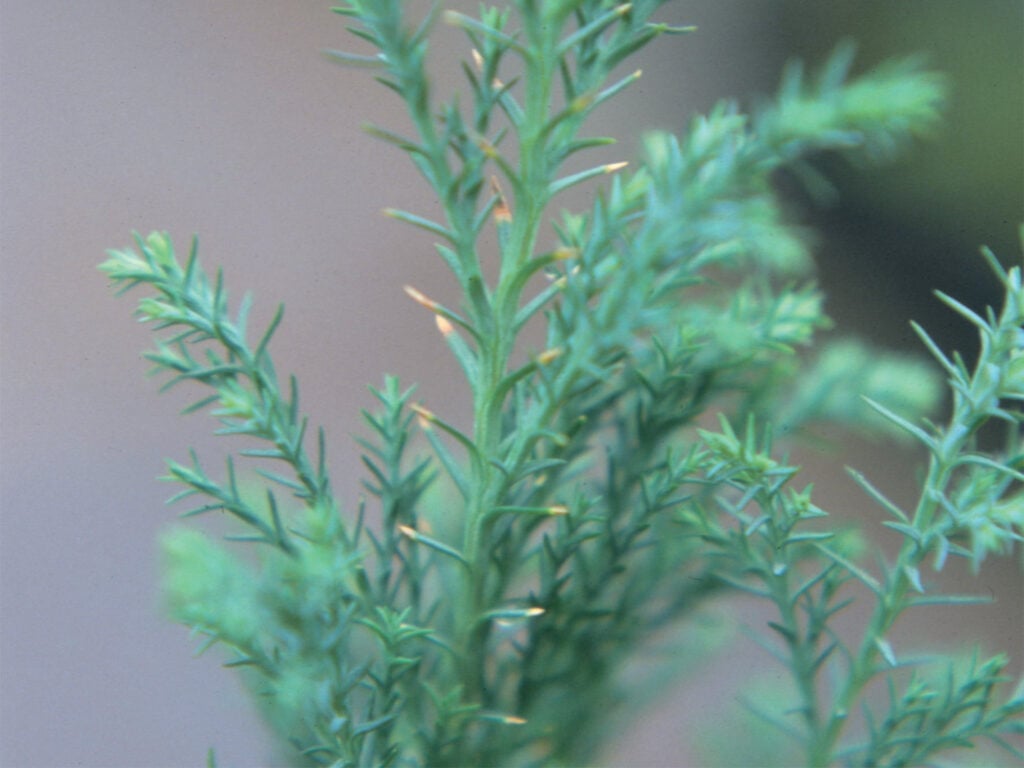
Chlorosis in magnesium-deficient Chamaecyparis lawsoniana ‘Ellwoodii’
Magnesium Deficiency Effects on Ornamental Plants
Magnesium plays a central role in energy production and nutrient balance. When plants cannot absorb enough magnesium, several negative effects follow:
- Reduced photosynthesis – as the central atom of chlorophyll, magnesium deficiency directly limits the plant’s ability to capture light energy.
- Poor nutrient absorption – magnesium deficiency can impair the uptake of other nutrients, leading to secondary deficiencies.
- Lower yields and reduced quality – in ornamental and horticultural production, magnesium deficiency leads to weaker growth, poor coloration, and reduced market value.
These effects are often linked to low pH, nutrient antagonisms, or irregular fertilisation, rather than a lack of magnesium in the fertiliser program.
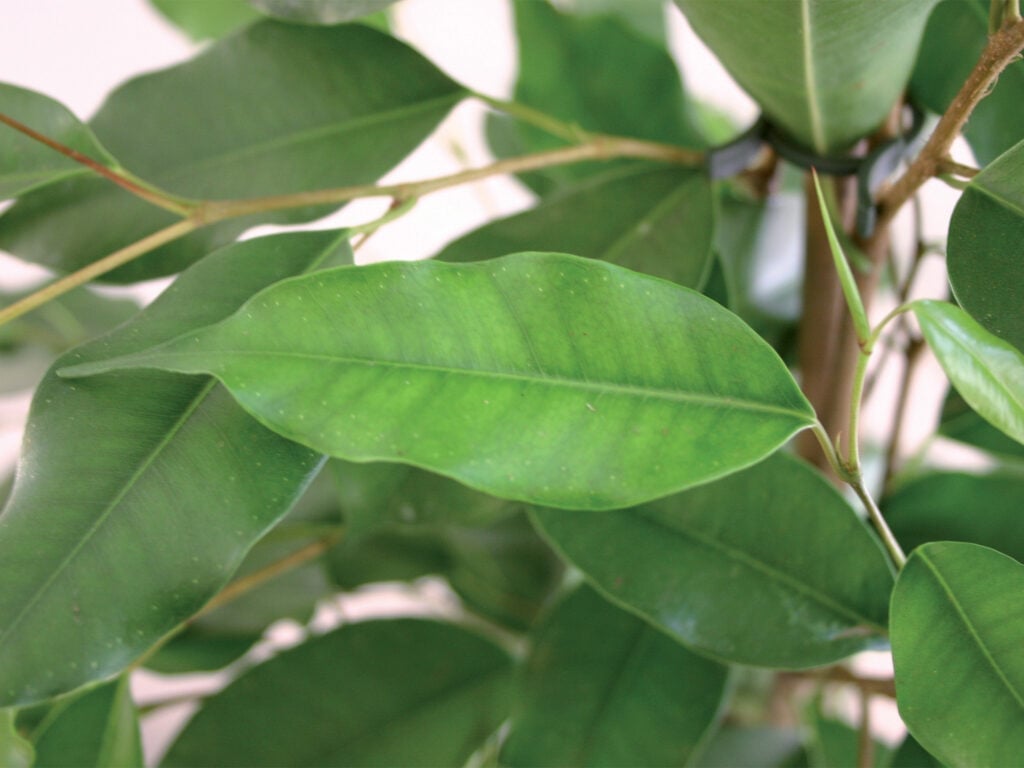
Light green spots with reduced chlorophyll content caused by magnesium deficiency are visible in Ficus leaves.
How to Manage Magnesium Nutrition to Avoid Deficiencies
Effective management focuses on improving magnesium availability and preventing nutrient competition:
Visual assessment, substrate analysis, and leaf analysis: begin with visual diagnosis and confirm with substrate or foliar analysis when needed.
Fertilization: apply magnesium sulphate (Epsom salt) or controlled‑release fertilizers containing magnesium. Calcium–magnesium carbonate can also be used preventively as a pH‑correcting component in substrates.
Foliar applications: for rapid correction, apply magnesium‑containing foliar fertilizers at recommended rates.
Organic matter: in open fields, incorporating compost or well‑decomposed manure improves long‑term magnesium availability.
pH management: very acidic substrates reduce magnesium availability. Adjust pH toward the optimal range for the crop.
Irrigation management: avoid excessive irrigation that leads to nutrient leaching. Well‑planned irrigation helps maintain magnesium availability.
Crop rotation: in field production of cut flowers, rotating crops helps prevent nutrient depletion in soils used repeatedly for similar species.
Regular monitoring: track plant response and adjust fertilization and cultural practices as needed.
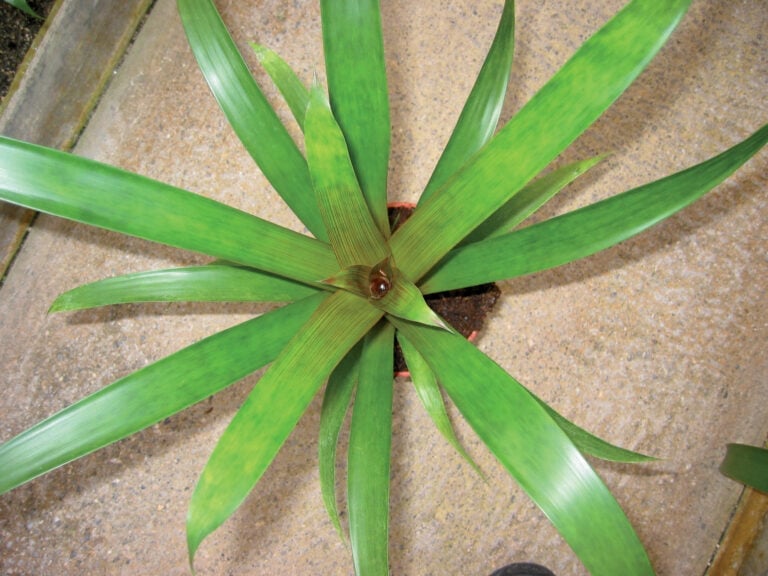
Chlorotic spots caused by magnesium deficiency on the leaves of Guzmania
Final Consideration
Magnesium deficiency is a frequent issue in ornamental horticulture, especially in low‑buffer substrates or when fertilisation is unbalanced. Because magnesium is mobile, symptoms appear first on older leaves, making early diagnosis straightforward. With proper nutrient balance, pH management, and regular monitoring, growers can prevent magnesium deficiency and maintain strong, uniform plant growth.
How to Fix Magnesium Deficiency
Instead of relying solely on magnesium‑based fertilizers, applying a balanced micronutrient package such as Micromax Premium ensures a complete, well‑proportioned supply of essential trace elements. This supports strong, uniform growth and reduces the risk of micronutrient imbalances.
Magnesium-deficient plants need a targeted boost to restore healthy growth and leaf color. Peters Professional water‑soluble fertilizers (NPK + micronutrients) provide an immediate, balanced supply of nutrients, supported by the exclusive M‑77 technology that enhances uptake and helps plants return quickly to a normal growth curve.
To prevent deficiency symptoms from developing, your local ICL technical advisor can design a tailored nutrition program using AngelaWeb 3.0. This approach combines CRF (Controlled Release Fertilizers) with WSF (Water‑Soluble Fertilizers) to match your crop, substrate, water quality, and production goals. In many cases, the optimal combination includes Osmocote 5 together with water-soluble products Peters or Universol.



Our knowledge
Tips & tricks, disease prevention, crop and market related information
Explore our knowledge