


 Whatsapp
  X
X  Mail
Mail  Copy link
 Phosphorus Deficiency in Ornamental Plants: Symptoms and Treatment
Phosphorus is a mobile element in the plant. P deficiency occurs starting from the oldest, basal leaves. It leaches in substrates, not in soil.
On this page:
Phosphorus (P) is essential for root development, energy transfer, and early growth. When phosphorus becomes limited, plants struggle to build a strong root system and maintain compact, healthy growth. Deficiency develops gradually and often remains unnoticed until symptoms become more visible, especially in cold (below 13 °C), wet, or high‑pH substrates (above 6.5) where P availability is naturally reduced.
Which are the Phosphorus Deficiency Symptoms of Ornamental Plants
- Leaf coloring – plants often develop dark green foliage with purple‑brown margins or veins caused by anthocyanin accumulation—one of the classic signs of P deficiency.
- Leaf necrosis – in advanced stages, necrotic spots or margins may appear, and older leaves may die prematurely.
- Stunted growth – plants remain small and compact, with reduced vigor and poor establishment.
- Delayed flowering and reduced bud formation – flowering is slowed, and plants may produce fewer buds or bloom later than expected.
- Reduced root development – phosphorus directly influences root initiation and elongation. When P is deficient, roots remain shallow, poorly branched, and less efficient at absorbing water and nutrients.
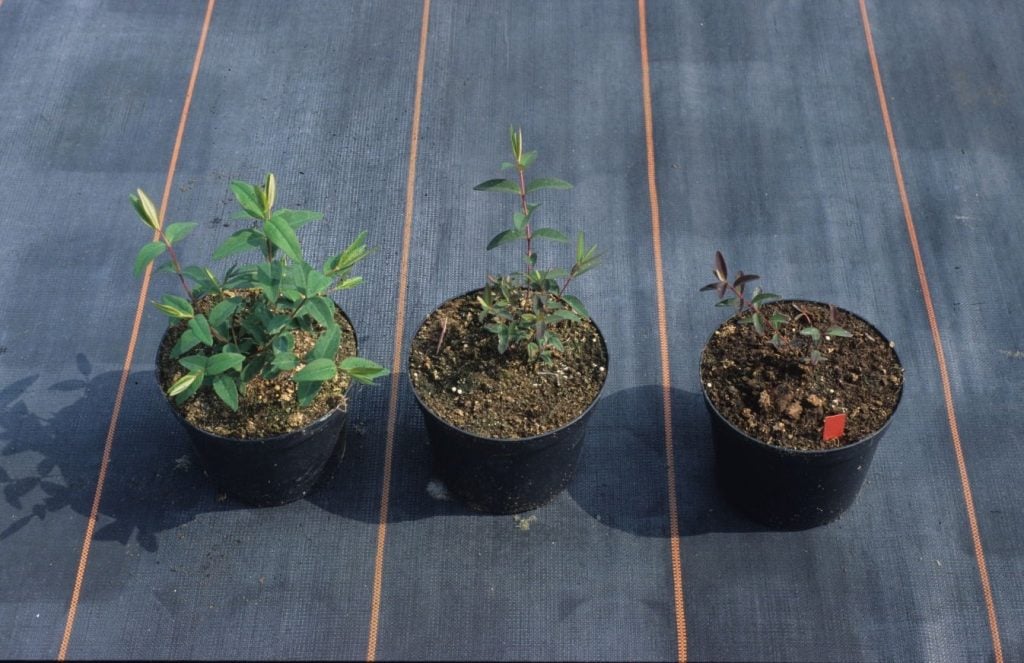
Phosphorus-deficient Hypericum (right) shows stunted growth and dark purple leaf colour.
Phosphorus Deficiency Effects on Ornamental Plants
- Lower yields and reduced ornamental quality – phosphorus is essential for energy transfer, photosynthesis, and metabolic activity. Deficiency limits these processes, resulting in weaker growth, fewer flowers, and reduced overall plant performance.
- Impaired resilience – plants lacking phosphorus are more susceptible to abiotic and biotic stress. A poorly developed root system increases vulnerability to water stress, while weakened plants are more prone to diseases and pest infestations.
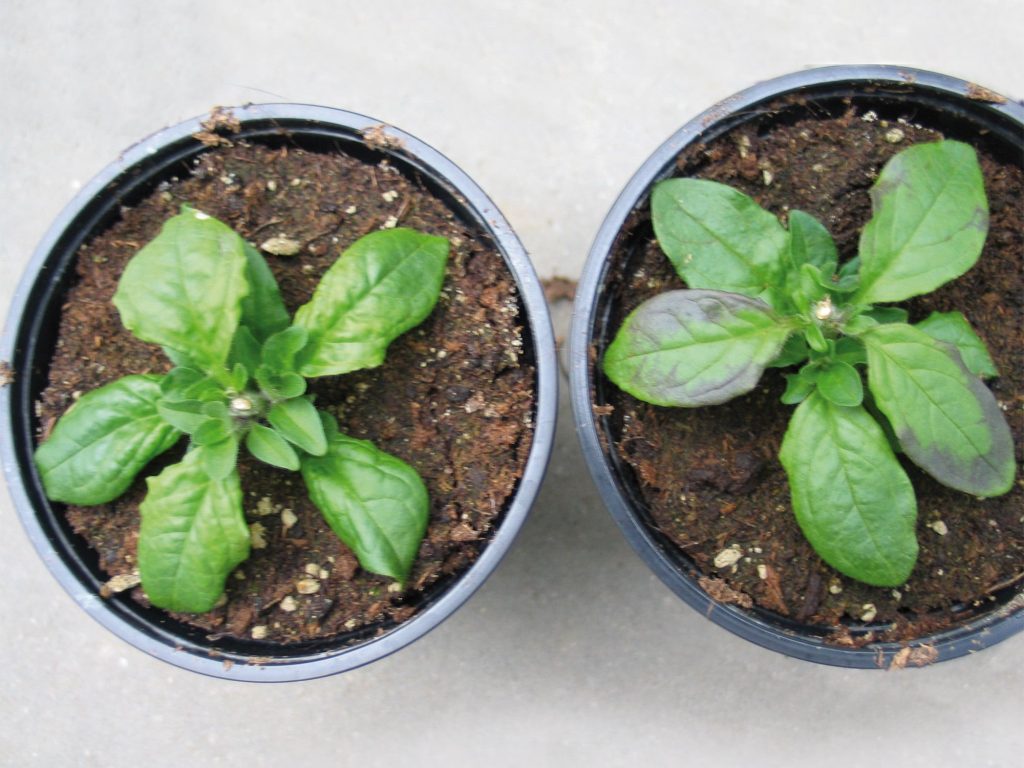
Petunia plant (right) with purplish leaves caused by phosphorus deficiency.
How to Manage Phosphorus Nutrition to Avoid Deficiencies
- Phosphate fertilization: Correct deficiency by supplying phosphorus through appropriate fertilizers. Although P is a primary macronutrient, its requirement is lower than nitrogen or potassium. It is especially important during the rooting phase. Fertilizer choice should match crop needs—some species require limited P supply (e.g., blue hydrangea, certain Australian natives).
- Field‑grown nurseries: Because phosphorus is less mobile in soil, it should be applied before or during planting to ensure availability when roots are developing. Controlled‑release fertilizers (CRF) are highly effective in overcoming P fixation and ensuring a steady supply.
- pH management: Check and adjust substrate pH. High pH reduces phosphorus solubility, while very low pH can also limit availability. Maintaining the optimal pH range improves P uptake and overall nutrient balance.
- Temperature management: In protected environments, maintain suitable temperatures. Cold substrates significantly reduce root activity and phosphorus uptake.
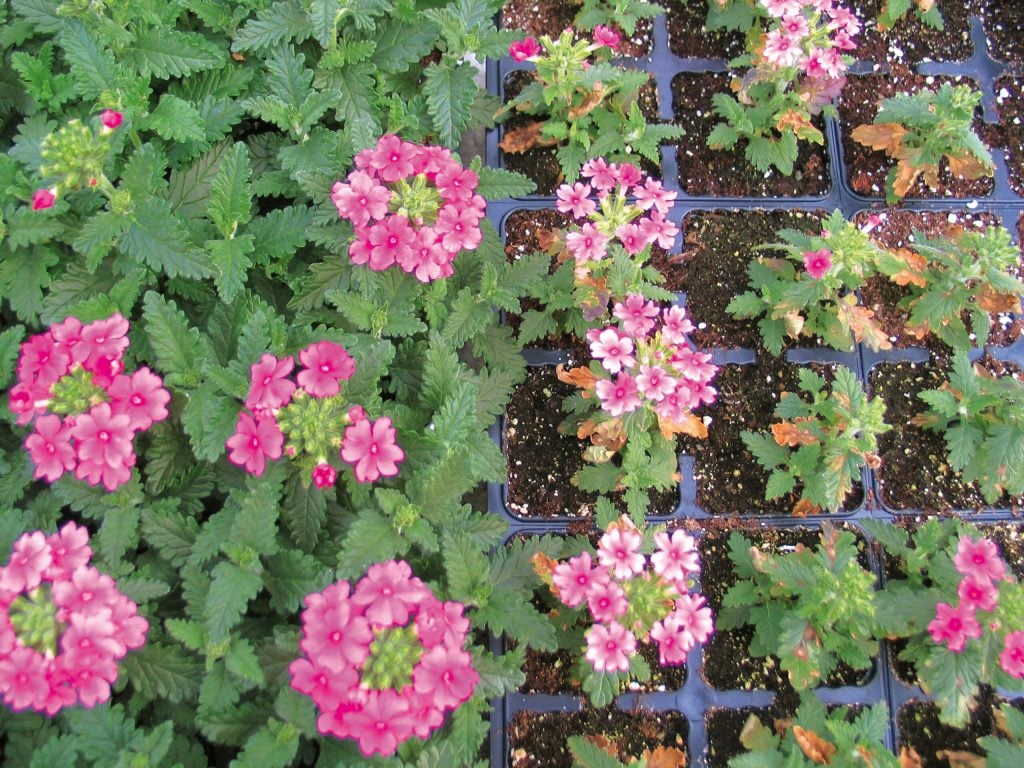
Verbena plants (right) showing symptoms of phosphorus deficiency like stunted growth and leaf necrosis.
Phosphorus deficiency is a common issue in ornamental horticulture but can be effectively managed through substrate analysis, appropriate fertilizer selection, and proper pH and temperature control. While preventing deficiency is important, excess phosphorus should also be avoided, as it can leach from the substrate and contribute to environmental problems such as water pollution.
How to Fix Phosphorus Deficiency in Ornamental Plants
Phosphorus-deficient plants need a targeted boost to restore healthy growth and leaf color. Peters Professional water‑soluble fertilizers (NPK + micronutrients) provide an immediate, balanced supply of nutrients, supported by the exclusive M‑77 technology that enhances uptake and helps plants return quickly to a normal growth curve.
To prevent deficiency symptoms from developing, your local ICL technical advisor can design a tailored nutrition program using AngelaWeb 3.0. This approach combines CRF (Controlled Release Fertilizers) with WSF (Water‑Soluble Fertilizers) to match your crop, substrate, water quality, and production goals. In many cases, the optimal combination includes Osmocote 5 together with water-soluble products Peters or Universol.
For personalized guidance, contact your regional technical support by visiting your country’s website.


Our knowledge
Tips & tricks, disease prevention, crop and market related information
Explore our knowledge