


 Whatsapp
  X
X  Mail
Mail  Copy link
 Potassium Deficiency in Ornamental Plants: Symptoms and Treatment
Potassium (K) is a primary macronutrient essential for healthy plant growth. It regulates photosynthesis, enzyme activation, water balance, and stress tolerance. It is a very mobile element. Its deficiency is first visible in the basal part of the plant.
On this page:
Potassium (K) is essential for water regulation, stress tolerance, and strong cell structure. When levels are insufficient, ornamentals lose vigor, become more sensitive to abiotic stress, and show visible decline in leaf and shoot quality. Potassium deficiency typically appears first on older leaves, as K is mobile within the plant.
Which are the Potassium Deficiency Symptoms of Ornamental Plants
- Leaf symptoms
- Marginal browning and necrosis – one of the most typical signs. Leaf edges turn brown, then dry and necrotize.
- Interveinal yellowing – chlorosis often begins at the leaf margins and progresses inward, creating a mottled appearance.
- Leaf curling – leaves may curl upward along the edges. In severe cases, premature leaf drop can occur.
- Stunted growth – plants remain smaller, with shorter stems and reduced overall vigor.
- Weak stems – potassium deficiency weakens cell structure, making stems more prone to bending, flopping, or breaking.
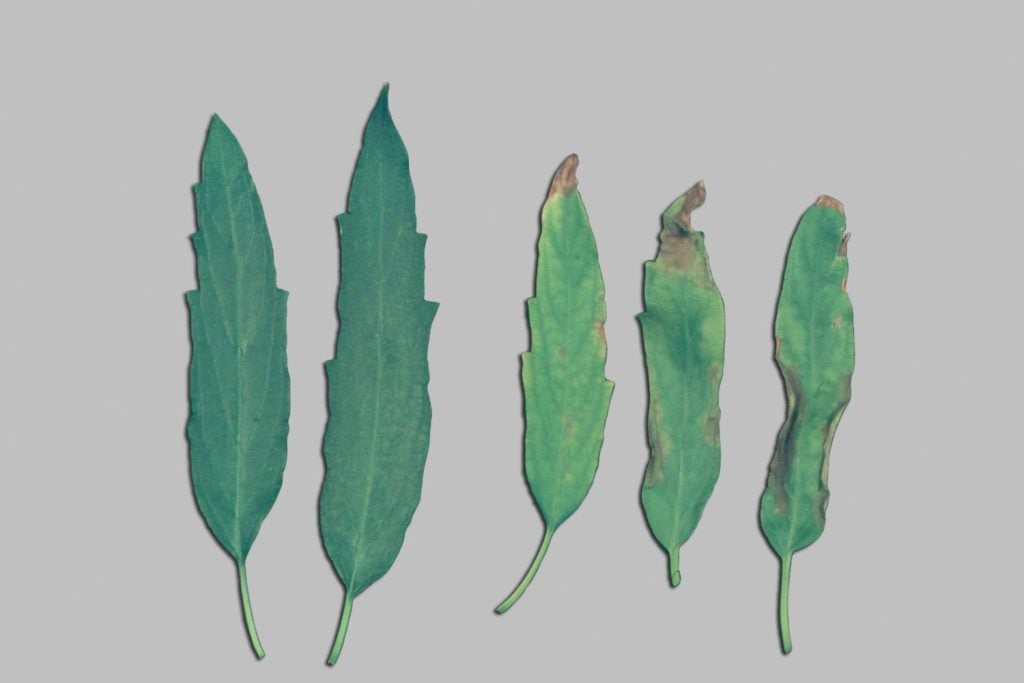
Potassium-defficient leaves of Caryopteris with chlorosis and necrotic margins.
Potassium Deficiency Effects on Ornamental Plants
Lower yields and reduced ornamental quality – flowers may be smaller, fewer, and less uniform, reducing marketability and economic return.
Reduced resilience – potassium plays a central role in osmoregulation and overall plant strength, so deficient plants are far less resilient under stress. They become more vulnerable to drought, cold, and salinity, as their ability to regulate water balance is compromised. At the same time, weakened tissues and reduced metabolic activity lower the plant’s natural defenses, making potassium‑deficient crops more susceptible to diseases and pest attacks. Together, these factors significantly reduce the plant’s capacity to withstand environmental and biotic pressures.
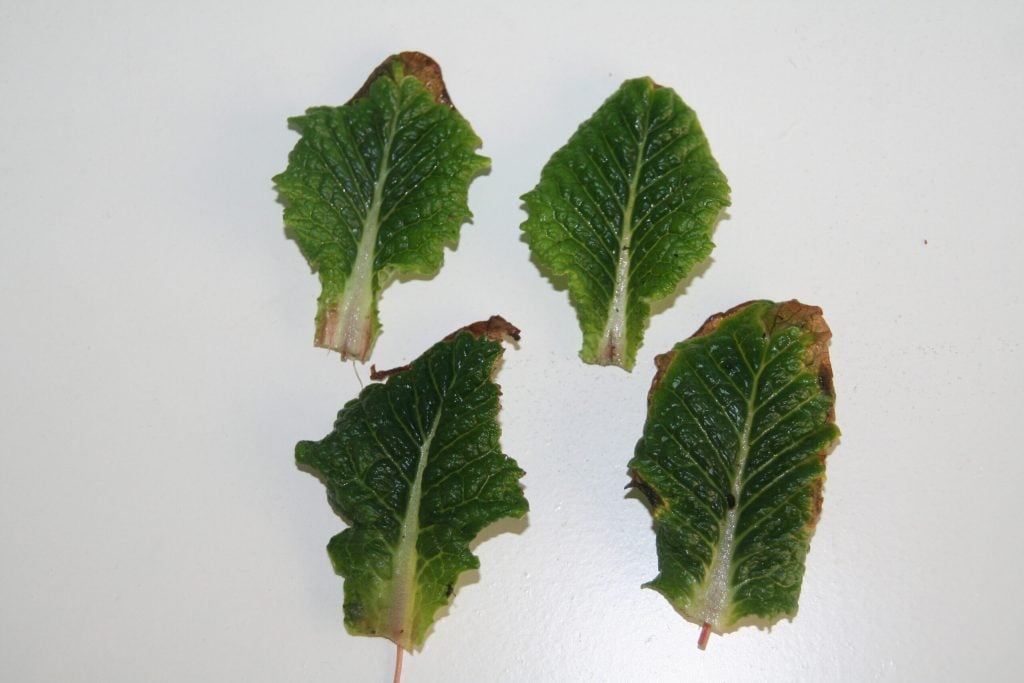
Primula showing potassium deficiency symptoms as marginal necrosis on leaves.
How to Manage Potassium Nutrition to Avoid Deficiencies
- Substrate analysis – a substrate test is the first step. It identifies potassium levels and helps determine the severity of the deficiency and the correct nutritional strategy.
- Fertilization -based on analysis results, supplement potassium using:
- balanced fertilizers with an appropriate K:N ratio
- potassium sulfate (K₂SO₄) for targeted correction
Apply fertilizers evenly and at the correct timing during the crop cycle.
- pH management – nutrient availability, including potassium, is influenced by substrate pH. For optimal K uptake, maintain pH between 6.0 and 6.5. Adjust if necessary.
- Irrigation management – proper irrigation scheduling helps prevent nutrient leaching—one of the common causes of potassium deficiency in container crops.
- Foliar applications – in severe cases, foliar sprays containing potassium can provide a quick, temporary boost while root‑zone levels are corrected.
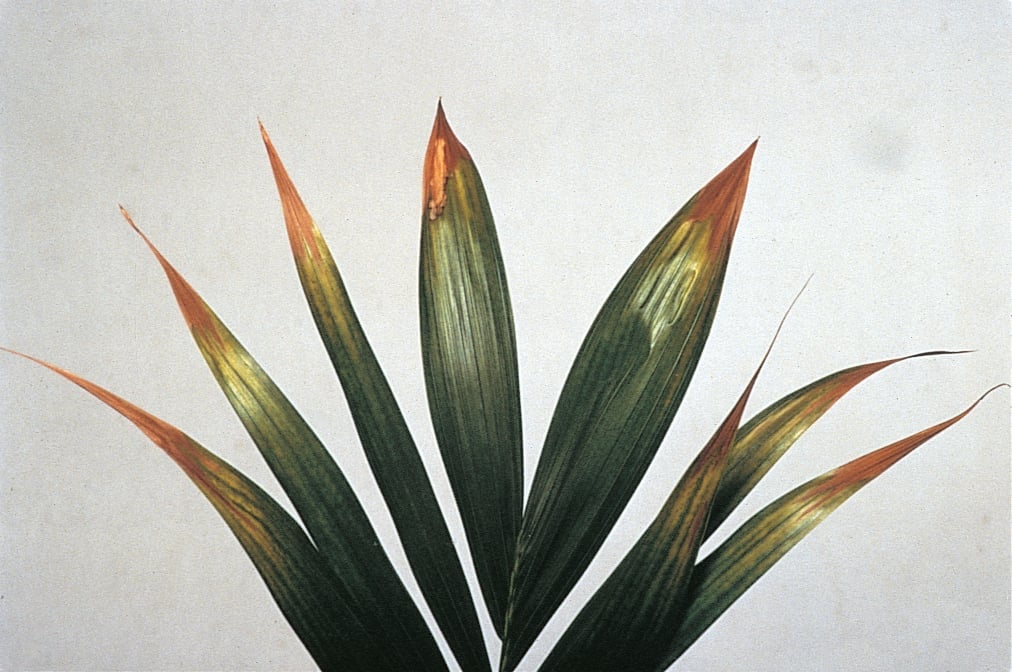
The leaves of potassium-deficient Kentia with marginal necrosis.
Final Considerations
Preventing potassium deficiency is essential, but excess potassium should also be avoided, as it can cause nutrient antagonisms, especially with magnesium and calcium. Regular monitoring of substrate nutrient levels, combined with close observation of plant health, ensures effective management and supports strong, high‑quality ornamental production.
How to Fix Potassium Deficiency in Ornamental Plants
Potassium-deficient plants need a targeted boost to restore healthy growth and leaf color. Peters Professional water‑soluble fertilizers (NPK + micronutrients) provide an immediate, balanced supply of nutrients, supported by the exclusive M‑77 technology that enhances uptake and helps plants return quickly to a normal growth curve.
To prevent deficiency symptoms from developing, your local ICL technical advisor can design a tailored nutrition program using AngelaWeb 3.0. This approach combines CRF (Controlled Release Fertilizers) with WSF (Water‑Soluble Fertilizers) to match your crop, substrate, water quality, and production goals. In many cases, the optimal combination includes Osmocote 5 together with water-soluble products Peters or Universol.
For personalized guidance, contact your regional technical support by visiting your country’s website.



Our knowledge
Tips & tricks, disease prevention, crop and market related information
Explore our knowledge