Whatsapp
  X
X  Mail
Mail  Copy link
 Iron in Turf Management
Understanding why iron is applied, how it works and how to make better decisions about its use in turf management.

On this page:
Iron is one of the most widely used tools in turf management, yet it is also one of the most misunderstood. It is routinely applied to improve turf color, support plant health and form part of seasonal management programs. However, while iron is an essential plant nutrient, most iron applications are not made because the turf is deficient in iron.
Understanding that distinction is important.
The role of iron as a micronutrient is very different from its role as a turf management tool. Knowing when iron is needed, why it produces such a noticeable visual response and how different iron formulations behave helps turf managers make better decisions and get more from every application.
This article explains ICL’s approach to iron in turf management, separating common misconceptions from the underlying agronomy.
What is iron?
Iron (Fe) is an essential micronutrient required for healthy turf growth. Unlike macronutrients such as nitrogen, phosphorus and potassium, iron is only needed in very small quantities.
Typically, it makes up less than 0.05% of the turf plant, but despite these low concentrations it plays an essential role in normal plant function.
Micronutrients are sometimes referred to as trace elements because they are required in much smaller amounts than macronutrients. However, “small amount” should never be confused with “low importance.”
Without sufficient iron, normal plant processes cannot function efficiently.

Typical mineral composition of turfgrass plant dry matter, showing potassium as a major macronutrient alongside nitrogen, phosphorus, calcium, magnesium and sulphur.
Unlike nutrients that become part of the plant’s physical structure, iron is primarily involved in the plant’s physiology. It supports the biochemical processes that allow the plant to grow, produce energy and respond to environmental conditions.
Iron is also abundant in most soils. Even high sand-content sports turf rootzones usually contain significant reserves of iron, while loam soils typically contain much more.
The challenge is rarely how much iron is present in the soil, but how much of that iron is available for the plant to absorb.
Soil pH, oxygen levels and soil chemistry all influence iron availability, which is why turf growing on high-pH rootzones can still develop iron deficiency despite containing substantial total iron.
What does iron do?
Iron performs several essential functions within the turf plant, making it critical for healthy growth and development.
One of its most important roles is supporting chlorophyll production. Chlorophyll is the green pigment responsible for capturing sunlight during photosynthesis, allowing the plant to produce the energy required for growth. Without sufficient iron, chlorophyll production is reduced and the plant begins to lose its healthy green appearance.
Iron also supports photosynthesis itself by acting as a cofactor for enzymes involved in the process. Beyond photosynthesis, it contributes to plant respiration, helps regulate enzyme activity and supports the plant’s ability to manage oxidative stress by reducing the impact of harmful free radicals. Iron also plays a role in cell wall development and other physiological processes that contribute to overall plant health.
Although these functions are essential, it is important to keep them in perspective. Under normal growing conditions, most turf receives enough iron from the soil to support these physiological processes. For this reason, the majority of iron applications made by turf managers are not intended to correct a nutritional deficiency.
Why do turf managers apply iron?
Although iron is an essential plant nutrient, correcting iron deficiency is not the primary reason most turf managers apply it.
Instead, iron is used because it provides a unique combination of agronomic and aesthetic benefits that are difficult to achieve with other nutrients.
The most obvious is color.
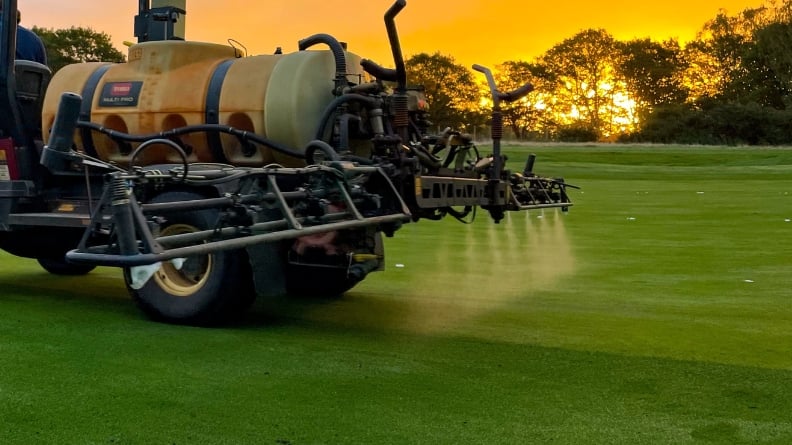
Iron is routinely applied as part of professional turf management to enhance presentation and support specific management objectives throughout the season.
Iron produces a rich, natural green appearance without encouraging excessive leaf growth. This makes it particularly valuable during periods when maintaining presentation is important, but additional nitrogen would create unwanted growth, increase mowing requirements or produce softer turf surfaces.
This is why iron has become a routine part of many turf management programs. It is commonly applied during autumn and winter to maintain colour when growth naturally slows, but it is equally valuable throughout the growing season wherever improved presentation is required without increasing growth rates.
In specific situations, iron applications may also be used to support turf affected by iron deficiency, particularly on high-pH rootzones where iron availability is restricted. However, these situations represent a relatively small proportion of routine applications.
Iron may also contribute to broader turf management programs.
For most turf managers, iron is best viewed as a management tool rather than simply another plant nutrient.
If soils already contain iron, why do we still apply it?
This is one of the most common questions in turf management.
If iron is abundant in most soils, why do turf managers continue to apply it?
The answer lies in the difference between total iron and available iron.
Most soils contain large reserves of iron. Even sports turf rootzones typically contain sufficient iron to meet the plant’s nutritional requirements under normal conditions. Analysis of more than 15,000 sports turf soil samples showed that only a small proportion would require iron applications based on plant nutrition alone.
However, plants can only absorb iron when it is in a soluble form. Soil pH, oxygen levels and soil chemistry all influence how much iron is available for uptake. As soil pH increases, iron becomes progressively less available, which is why iron deficiency is more likely on alkaline or calcareous soils despite those soils containing significant total iron.
Just as importantly, many iron applications are made for reasons unrelated to plant nutrition.
Applying iron to improve turf color is a management decision rather than a nutritional one. In these situations, the objective is not to increase the amount of iron within the plant but to improve turf presentation while avoiding the additional growth associated with nitrogen applications.
Understanding this distinction helps explain why routine iron applications remain an important part of turf management, even where soil analysis shows adequate iron levels.
When is iron needed?
Iron applications broadly fall into two categories: correcting a nutritional deficiency and achieving a turf management objective.
From a nutritional perspective, genuine iron deficiency in turf is relatively uncommon. It can occur where soil or root-zone conditions restrict iron availability, particularly at high pH. In these conditions, turf may contain insufficient plant-available iron even when the soil contains adequate total iron.
Chelated iron products can be particularly useful where plant uptake is the objective because chelation helps maintain iron availability under conditions where conventional iron sources can become insoluble.
Far more commonly, however, iron is applied to achieve a specific management objective. This might include improving color, maintaining presentation during periods of slower growth, or incorporating iron into a wider nutrition or integrated turf management program.
The most appropriate product depends on how the iron is being applied and whether other nutrients are required alongside it.
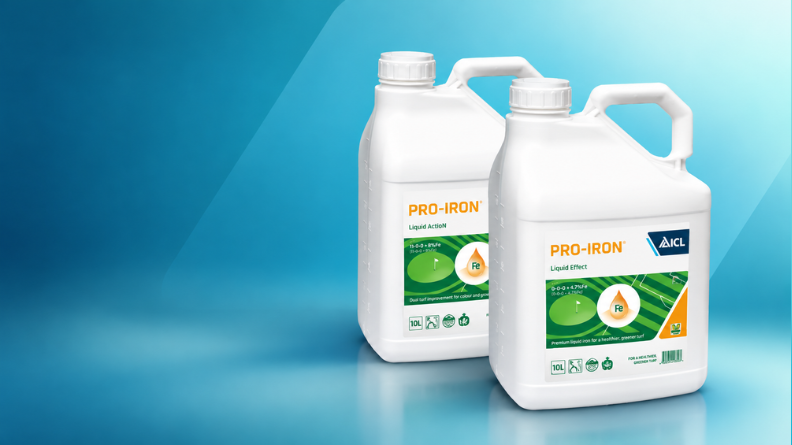
Pro-Iron Liquid Effect and Pro-Iron Liquid ActioN offer two approaches to liquid iron application, depending on whether iron is required independently or alongside nitrogen.
For liquid applications, Pro-Iron Liquid Effect allows iron to be managed independently of the wider nutrition program, with application rates adjusted to the turf response required. Its broad tank-mix compatibility also allows it to fit into existing spray and Integrated Turf Management (ITM) programs.
Pro-Iron Liquid ActioN combines iron and nitrogen to improve turf color while also applying nutrition. It is designed for programs where consistent turf response, healthy growth and efficient application are the priority.
Where a water-soluble fertilizer approach is preferred, Sportsmaster WSF Iron provides another way to incorporate iron into a spray program.
The choice should therefore be based on the objective of the application, the formulation required, and how the treatment fits into the wider turf nutrition program.
Why does iron make turf greener?
One of the biggest misconceptions in turf management is that iron applications produce a greener turf because they rapidly increase chlorophyll production.
At first glance, that seems logical. Iron is essential for chlorophyll formation, chlorophyll is green, and turf becomes greener after an iron application.
The reality is more nuanced.
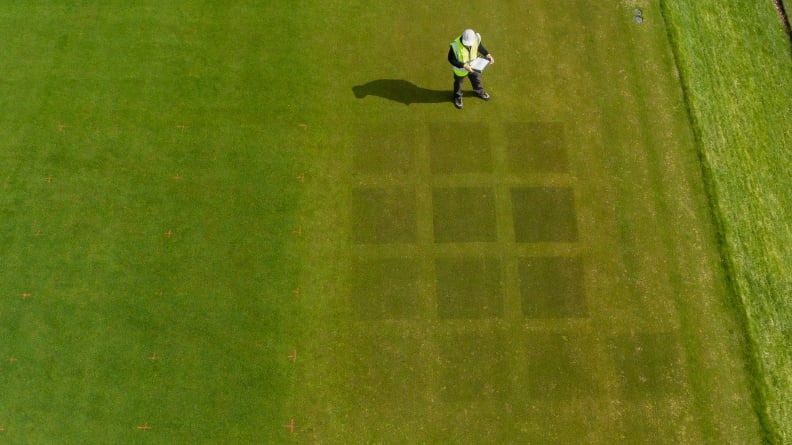
Trial plots demonstrating how different iron formulations and application rates produce different turf responses.
Iron is undoubtedly essential for chlorophyll production and healthy plant function. If a turf plant is genuinely deficient in iron, correcting that deficiency will support normal chlorophyll development.
However, this is not what explains the rapid color response seen after most routine iron applications.
The immediate green-up is primarily a visual effect.
Following application, iron oxidises on the leaf surface, leaving fine deposits that darken the turf canopy. This staining creates the rich green appearance that turf managers associate with iron, often within hours of application and even when little or no new plant growth is occurring.
This helps explain why iron can produce such a rapid visual improvement during periods of slow growth. If the response relied solely on new chlorophyll production, significant color changes would only occur as new tissue developed. Instead, the visual response is almost immediate because the colour comes largely from iron deposits on the leaf surface rather than from newly synthesised chlorophyll.
This theory is supported by trial work comparing different iron formulations. Despite clear differences in turf color following application, chlorophyll measurements showed little difference between untreated turf and most iron-treated plots. In other words, the turf looked significantly greener without a corresponding increase in chlorophyll content.
Understanding this distinction helps turf managers set realistic expectations. Iron remains an essential nutrient, but most routine applications are made to improve turf presentation rather than to increase chlorophyll production.
Common misconceptions
Iron is one of the most widely used products in turf management, but it is also one of the most misunderstood. Separating fact from assumption helps ensure iron is used for the right reasons.
Myth: Turf managers apply iron because the turf is deficient.
Reality: Most sports turf soils contain sufficient iron to meet the plant’s nutritional requirements. Iron is more commonly applied to improve presentation or achieve a specific management objective than to correct a deficiency. Genuine deficiencies are most likely on high-pH soils where iron availability is restricted.
Myth: More iron always means healthier turf.
Reality: Iron is an essential micronutrient, but more is not necessarily better. Excessive applications can blacken leaf tissue, stain hard surfaces and provide little additional benefit. Iron should be applied to achieve a clearly defined objective rather than simply because it produces a visible response.
Myth: All iron products behave the same.
Reality: Different formulations behave very differently. Iron sulphate provides a rapid visual response but quickly becomes unavailable in the soil, while chelated iron remains available for plant uptake for longer and is particularly valuable on high-pH soils where conventional iron sources become insoluble.
Myth: If turf becomes greener after an iron application, it must have been deficient.
Reality: The rapid green-up following most iron applications is largely due to iron deposits on the leaf surface rather than a sudden increase in chlorophyll production. A greener surface does not necessarily indicate that the turf was lacking iron beforehand.
Understanding iron in context
Iron has earned its place as one of the most valuable tools available to turf managers. It supports essential plant processes, helps maintain presentation throughout the season and provides flexibility when colour is required without stimulating excessive growth.
At the same time, understanding why iron works is just as important as knowing when to apply it.
Most routine applications are management decisions rather than nutritional corrections. By recognising the difference between plant nutrition, iron availability and visual response, turf managers can choose the right product, apply it for the right reason and set realistic expectations for the results they achieve.